Monday, February 12, 2018

If Cruz is worried about unenthusiastic Republicans, he should look at his own vote on the budget


"Do not be deceived, God is not mocked; for whatever a man sows, that he will also reap."
Galatians 6:7

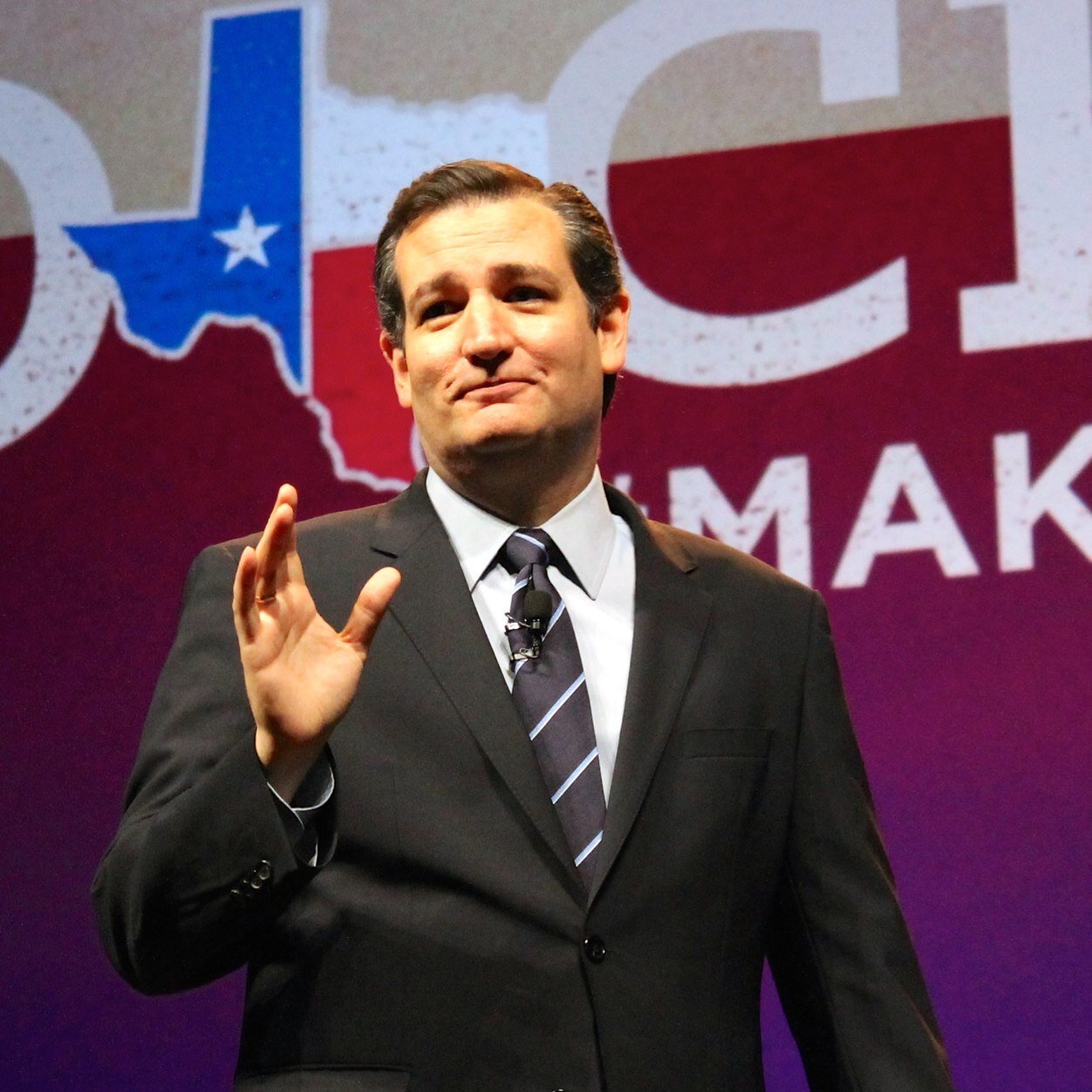
Ted Cruz over the weekend:
U.S. Sen. Ted Cruz is preparing Texas Republicans for a turbulent election year amid super-charged Democratic enthusiasm — including in his own re-election campaign.

....

Addressing the Fort Bend County GOP on Friday night, Cruz warned of an "incredible volatility in politics right now," calling Democrats "stark-raving nuts" in their opposition to Trump. He pointed to Trump's recent State of the Union address and Democrats' reluctance to applaud, saying the scene "underscores the political risk in November."

"Let me tell you right now: The left is going to show up," Cruz said, delivering the keynote address at the party's Lincoln Reagan Dinner. "They will crawl over broken glass in November to vote."
Maybe.

It's possible we will face a challenging general election environment.  Democrats are livid.  Republicans are, at best, inconsistent.

But what possible reason could Republican voters have to not care?!?
The massive two-year budget deal proposed by Senate leaders Wednesday raises budget caps by $300 billion in the next two years, increases the debt ceiling and offer up nearly $90 billion in disaster relief for hurricane-ravaged Texas, Florida and Puerto Rico.

About $165 billion would go to the Pentagon and $131 billion to non-defense programs.

"Our members who are focused on the military are very happy where we landed with that," Ryan told Hewitt on his radio show in reference to the defense spending caps.

The debt ceiling will be raised by the appropriate amount until March 2019.
And who, pray tell, voted for the spending bill?!?
Bottom Line: It's still too soon to tell what the environment will look like in November, but if you're wondering why Republicans might stay home in large quantities, actions like last week's spending bill stunt would be a good place to start.

#TXLEGE: Kristin Tassin [Huffman's educrat opponent] gave superintendent $350,000 annual salary (plus "benefits")


"Let him who stole steal no longer, but rather let him labor, working with his hands what is good, that he may have something to give him who has need."
Ephesians 4:28

Kristin Tassin is the liberal school board president challenging incumbent Senator Joan Huffman from the left.

A few weeks back, on a hunch, we sent in an open records request to Ft. Bend ISD (where Tassin is the board president) to see the contract of their superindent.

View it for yourself:


Dupre's current salary is shown on the amended contract above, Dupre's full list of benefits and perks can be found in his original contract from 2013:


Bottom Line: The socialized education bureaucracy loves to use children as human shields, but bureaucrats making more than twice what the Governor of Texas illustrates their real intention.

Saturday, February 10, 2018

Educrats across Texas throw a HILARIOUS Tantrum


"If you see the oppression of the poor, and the violent perversion of justice and righteousness in a province, do not marvel at the matter; for high official watches over high official, and higher officials are over them."
Ecclesiastes 5:8

A few days ago, Empower Texans put out a call for whistleblowers to report illegal electioneering at various ISD's.

Hilarity ensued.

First, Texas Observer:
I will vote in support of public education in the interest of the more than 5 million Texas school children.”

That’s the oath Texas Educators Vote shopped to public school districts across the state last year as part of the teacher coalition’s campaign for school board resolutions that promote voting among eligible students and staff. The group’s pledge, and the idea that public schools might promote voting to the extent that they even transport students and staff to and from the polls, was so hyper-partisan and offensive to some Texas conservatives that they asked state Attorney General Ken Paxton to declare school district attempts to encourage voting illegal “electioneering.”

That resulted in a nonbinding legal opinion Paxton issued last month, in which he questioned whether school districts that promote or facilitate voting are serving any “educational purpose.” As Quorum Report first noted last week, Paxton’s opinion gave the arch-conservatives at Empower Texans just the creative spark they needed to launch the “ISD Whistleblower Project,” which asked teachers to confidentially rat out educators who dare to promote voting on campus.

This week Twitter responded with the #blowingthewhistle hashtag, which public education supporters used in thousands of tweets to mock Empower Texans while simultaneously elevating public school teachers as selfless, unsung heroes. “I am #blowingthewhistle on teachers who sneak and give students lunch money when their accounts are at $0,” tweeted Devon Bradley, a teacher at Crosby Elementary School. Non-teachers chimed in, too. “I’m #blowingthewhistle on my wife for spending every free moment for the better part of last year helping one of her Kindergarten students get hearing aids,” wrote @ColinHildinger.
And the Trib:
Laura Yeager founded Texas Educators Vote in fall 2015 to spur local educators to practice what they preached. Why, she wondered, were Texas teachers talking about the importance of political participation in class, but not always modeling that behavior themselves?

More than two years later, her civic engagement effort has stirred up a right-wing maelstrom, leading conservative organizations and some powerful elected officials to question whether it's breaking the law.

Headed up by the influential group Empower Texans, adversaries say the educators’ organization, and others like it, might be using illegal tactics to boost liberal policies. Yeager counters that her group is merely trying to promote voting — and is only drawing backlash because staunch conservatives are worried public education-focused voters will unseat their candidates.

Some public education advocates allege that Empower Texans has had its eye on teachers' groups since last year, when the Texas Legislature's failure to reach a deal on a sweeping school finance overhaul left many educators across the state fuming. Education groups pledged to take that anger to the polls.

Since its early days, Texas Educators Vote, along with several partner groups, has been promoting a version of its “culture of voting” resolution. That document suggests school boards encourage students and employees to vote by implementing “no cost” incentives, including driving students and staff to polling places if district policy allows. More than 100 school boards in the state have signed on to some version of the proposalwhich — like Texas Educators Vote — doesn't back any particular party or candidates. The group on its website does ask supporters to vote “in support of the more than 5.4 million Texas school children.”

Conservative groups in general and Empower Texans in particular are deeply suspicious of the resolution, which they allege promotes electioneering on the taxpayers’ dime.

“Voting in mass, they would influence statewide office and state legislative races. Locally, the combined voter block would have the mass to virtually guarantee approval of tax ratification elections and bond propositions. All it takes is registration, indoctrination and mobilization,” Tom Fabry, treasurer of the Frisco Tea Party, wrote for Empower Texans in November. “And it’s all being done under the guise of ‘civic responsibility.’”

....

Later that fall, Yeager said, she became aware that [Empower Texans] was submitting records requests to school districts across the state in what she called an effort at intimidation.

....

At least some of those inquiries appear to be sparked by concerns about Scott Milder, a longshot Republican challenger to conservative favorite Lt. Gov. Dan Patrick. Milder — who founded a public education advocacy group with his wife, Leslie, in 2004 but stepped down from the organization’s helm Nov. 22 to focus on his campaign — is an explicit target of Empower Texans. In explaining the reason for its public records requests, the group has cited complaints from teachers that Milder’s campaign newsletter was disseminated across a school district.

Milder’s group, Friends of Texas Public Schools, is one of Texas Educators Vote’s partners.

Troy Reynolds, the founder of Texans for Public Education and an administrator in Splendora ISD, said his district received several records requests from Empower Texans, including one specifically regarding Milder and one asking for communications including words like “election,” “cross-over” and “primary.”

Reynolds called those efforts a “bullying technique” — and a waste of taxpayer resources.

“[Dan Patrick] is spending thousands of public school man hours doing opposition research for himself,” Reynolds said. “They know that they’re hampering our day-to-day operations.
LOL, think we've struck a nerve?!?

It's also hilarious that they're objecting to what is, essentially, political opposition research 101.

If you're interested in more, check out the twitter hashtag #blowingthewhistle.

Bottom Line: It's amazing how thin-skinned bureaucrats making six-figure salaries to propagandize vulnerable children can be....

Friday, February 9, 2018

How "Missing Middle" Health Care Reforms can reduce costs across Texas


"So not only is this trade of ours in danger of falling into disrepute, but also the temple of the great goddess Diana may be despised and her magnificence destroyed, whom all Asia and the world worship.”
Acts 19:27

On the final day of TPPF's Policy Orientation, we attended a panel "Mid-Level Medical Providers Could Improve Care Shortages."  That's a longwinded way of saying that not every medical issue needs to be treated by a licensed physician.  As a website that often works on housing issues at the local level, we found this discussion very similar to the conversation about "Missing Middle" housing.

Texas currently has a shortage of health care providers across the state.  36 counties have zero physicians.  80 counties have five physicians or fewer.  While this is often a problem in rural areas, there are parts of the cities that aren't much better.  East Austin and East Houston are the two most obvious examples.

Given the geographically dispersed nature of the issue, a broad based coalition is emerging to promote "scope of practice" reform.  TPPF has been joined by the AARP and the left-leaning Center for Public Policy Priorities.  The proposed reforms would enable nurse practitioners to perform many functions currently limited to licensed physicians.

Supporters made fairly standard free-market arguments in favor of the reforms.  Fewer regulations will mean more providers.  More providers means more competition which means more options at lower prices for health care consumers.

Rep. Tom Oliverson, a licensed physician, spoke against the proposal.  Oliverson spoke about an alleged need for "training requirements" that were comparable between physicians and nurse practitioners.  Oliverson also spoke about the need to "standardize" training across the practitioner field.  This was all to be done to protect public safety.  To be honest, Rep. Oliverson's arguments sounded very similar to the types of complaints cab companies make against Uber, a point we raised during Q&A.

We continued the conversation with Oliverson after the panel concluded.  Oliverson spoke about health care as a special case where we need to "get it right in advance."  We remain unconvinced, as we believe decentralized consumers can digest far more information far more efficiently than a government licensing board (*).  Nevertheless, we appreciate Rep. Oliverson's candor and willingness to engage the issue.

Bottom Line: There is a politically created shortage of medical providers across this state.  This shortage drives up costs, which accrues to the benefit of current providers.  Scope of practice reform will help alleviate that shortage, which will in turn lower costs and increase options for consumers.

-------

* -- It's also worth pointing out that nurse practitioners are still pretty heavily regulated, they're just not as heavily regulated as licensed physicians.

Thursday, February 8, 2018

How can we, REALISTICALLY, eliminate property taxes?!?


"But the former governors who were before me laid burdens on the people, and took from them bread and wine, besides forty shekels of silver. Yes, even their servants bore rule over the people, but I did not do so, because of the fear of God."
Nehemiah 5:15

Final TPPF Policy Orientation panel of the afternoon: "Should Texas Eliminate Property Taxes?!?"; it's not easy, but it's worth doing.

The most important takeaways is that, for eliminating property taxes to become viable, you need binding restraints on local spending...FIRST.  That's because bonds currently issued by local governments are obligations against property tax revenues.  Thus, you need to bind future spending and debt before you can wind down current obligations.

Furthermore, if you don't curtail spending at the local level, you're likely to (realistically speaking) end up in a situation where property taxes survive but we have higher state sales taxes as well.

Otherwise, some notes:
  • Property taxes are a really inefficient mechanism for government to raise money.
  • Businesses pay half of property taxes.
  • Property tax elimination raises complicated legal questions re: debt obligations of local governments.
    • Note: This is probably a surmountable obstacles, but it's potentially fraught with unintended consequences.
  • Swapping school district M&O taxes for sales taxes is the most realistic achievable step in the short to medium term.
  • Taxing "professional services" could help modernize the sales tax system...but good luck getting the legislature to raise taxes on lawyers.
Bottom Line: It can be done, but it needs to be done carefully, and nobody should underestimate the potential for unintended consequences.

Taxpayer Funded Lobbying: Financial and Spiritual ABOMINATION


"While they promise them liberty, they themselves are slaves of corruption; for by whom a person is overcome, by him also he is brought into bondage."
2 Peter 2:19

This morning, TPPF hosted a Policy Orientation Panel, "Should local governments use Taxpayer Money to hire lobbyists?!?"  Obviously, anyone who's read this website for more than 5 minutes knows where we stand.  But it was still an interesting discussion.

From a strategic perspective, the most important takeaway is that nobody was willing to show up to defend the practice.  This despite the fact that TPPF extended "over 20" invitations to groups one would expect to be supportive.   That's notable because we've learned from experience that when people are no longer willing to show up at TPPF to defend a practice, it's often a sign that those involved know they've lost the argument.

The panel featured local Austin attorney Roger Borgelt and a staffer for Representative Matt Shaheen [Note: Shaheen had been originally scheduled to speak on the panel, but came down with the flu yesterday].  Borgelt began by explaining how, during the annexation debates the past few sessions, all of the support came from average citizens while all the opposition was taxpayer funded.  This is true for any number of public policy reforms that would reduce the size of government.

Moderator Chuck DeVore asked if, in banning taxpayer funded lobbying, we would simply be transferring the problem to local governments who would hire bureaucrats dedicated to "government relations."  That's obviously one workaround political subdivisions would try, but it would still represent an improvement over the status quo.  At a minimum, if a political subdivision wants to hire a full-time bureaucrat to perform "government relations," they'll have to disclose it in their budgets.  Furthermore, it's better to have a local bureaucrat representing their political subdivision full time rather than a capitol lobbyist who could have any other number of clients with any number of other potential conflicts of interest.

During Q&A, TPPF attorney Chance Weldon pointed out that taxpayer funded lobbying is a form of compelled political speech.  As such, it's flagrantly unconstitutional.  We'd never thought about that before, but Weldon is absolutely correct and there should probably be a lawsuit.

As for this Author, we asked a question that pointed out how taxpayer funded lobbying is a gatekeeper issue that needs to be addressed before any number of other limited government reforms (eg. Property Taxes, Bond Transparency, Parental Educational Choice) can become politically feasible.  Taxpayer funded lobbying inherently tips the scales in favor of big government.  Disconcertingly, we also learned that public sector unions are growing faster in Texas than anywhere else in the country.

Bottom Line:  Local governments have no right to use taxpayer money to lobby the legislature.  For every public entity that lobbies, there's a private entity that holds the same position.  Ending this practice is a necessary step if we're ever going to get serious about restoring government in Texas to it's constitutional framework.

Wednesday, February 7, 2018

Where does Texas' sharing economy go from here?!? (Also: #TROXROX)


"And no one puts new wine into old wineskins; or else the new wine bursts the wineskins, the wine is spilled, and the wineskins are ruined. But new wine must be put into new wineskins.
Mark 2:22

This afternoon, TPPF held a policy orientation panel entitled "Where does Texas' sharing economy go from here?!?"  #atxcouncil member Ellen Troxclair was joined by Senator Don Huffines and representatives from HomeAway and Uber.  The panel touched on past unpleasantness before examining the future for Short term rentals and transportation.

Senator Huffines opened with a discussion of economic liberty, explaining "I believe in the free market."  Senator Huffines decried incumbent industries "legislating away their competition" and pointed out that taxi companies did so "decades ago." Councilmember Troxclair echoed the point and reminded that the legacy taxi industry showed no interest in reducing their own regulatory burden during the discussion in Austin two years ago.  The Uber representative stated that, while their primary goal was regulatory certainty for their business, they'd love to takes a "deregulate the taxis" approach but that the taxi companies were the ones who wouldn't come to the table.

On short-term rentals, the HomeAway rep was optimistic about their chances to pass a bill next session.  Because other cities beyond Austin have begun to abuse their authority, she believed legislators who hadn't previously given the issue much thought were coming around.  She also pointed to Florida and Arizona as states with the best short-term rental laws.  For our part, we pointed out during Q&A that the only reason this bill failed last session was because it was referred (and ultimately killed) to a house committee with a Democrat committee chair who had been a previous president of the Texas Municipal League.

Council member Troxclair called Austin's current STR regulations "completely ineffective."  She pointed out that four properties were responsible for an inordinate amount of the complaints under the old rules.  She also explained that STR regulations weren't actually eliminating short term rentals, but simply driving them underground (which means that the spend-a-holic city government loses a source of revenue).

Other obvserstations:

  • Uber "very concerned" about potential sick leave mandate from the City of Austin.
  • Uber hoping to deploy early stage aerial vehicles in DFW in 2023; will require significant interface with the FAA.
  • Last session, lege passed a bill to pre-empt municipal regulations on autonomous vehicles.
  • 96% of auto collisions are driver related; autonomous vehicles eliminate almost all of them.
    • Note: This is why autonomous vehicles are way, way, way safer than traditional automobiles.
  • Uber began to investigate using their platform for search and rescue purposes after Hurricane Harvey.
  • Short Term rentals typically have longer stays, and more repeat business, than traditional hotels; this frequently makes STR guests more respectful of the surrounding neighborhoods than comparable hotel guests.
Bottom Line: For as much as it fell short, last session's Uber bill was nevertheless an important signal to the marketplace.  More work remains to be done, but Texas is already an attractive place to do business.  If we can preempt future municipal debacle like the 2016 era unpleasantness in Austin, some really exciting things are going to happen (especially in transportation) over the next few years.