Thursday, March 17, 2016

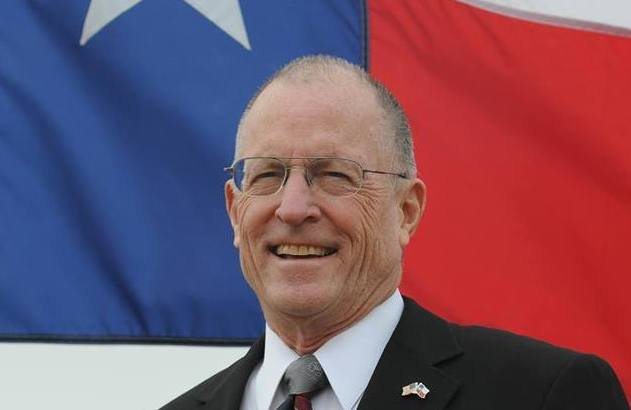
Pio Renteria receives ETHICS COMPLAINT over #STR Conflict of Interest


"Dishonest scales are an abomination to the Lord,
But a just weight is His delight."
Proverbs 11:1

[Author's Note: It's worth reminding readers that we are a resident of Council Member Renteria's district.]

In a development that should surprise no-one, the anti-property rights bloc on the Austin City Council believes in short-term leases for me, but not for thee:
The owner of a short-term rental business has filed an ethics complaint against City Council Member Pio Renteria, alleging that he violated city conflict-of-interest rules by pushing for an ordinance approved last month that will eventually phase out short-term rental units in Austin that are not owner-occupied, otherwise known as Type 2 STRs.

Thomas J. Clark, CEO of TurnKey Vacation Rentals, argues in the complaint he filed last month with the city’s Ethics Review Commission that Renteria’s ownership of a Type 1 STR unit – meaning it is owner-occupied – presented a clear conflict of interest.

“It really is a direct conflict for him to be ruling on and advocating against Type 2s,” Clark told the Austin Monitor on Tuesday. “If he remained an active operator for a Type 1, that helps him.”

The Ethics Review Commission was scheduled to hold a preliminary hearing on the matter during its March 9 meeting but postponed it until its next meeting, on April 13, because Renteria was out of town at a conference. Renteria was unavailable for comment Tuesday, but spokesman Nick Solorzano said that the Council member intended to show up and contest the complaint.

The property in question is a one-bedroom home that has been listed by Renteria and his wife, Lori, on popular STR site Airbnb since January 2012. At one point, at least, the couple marketed the home to South by Southwest visitors. “SXSW Cottage – Smoking allowed!” said the listing.

Clark also alleges in his complaint that Renteria did not register the STR until 2014 and therefore did not pay the required fees and taxes during the two previous years of operation.

Clark filed the original complaint on Feb. 18, five days before Council voted 9-2 to adopt the short-term rental ordinance. At the time, Clark contended that Renteria’s public advocacy on the issue in the months prior to the ordinance’s adoption were a violation of the city’s ethics ordinance.

Not only did Renteria vote to adopt the final ordinance on Feb. 23 that phased out Type 2 STRs, but during the discussion that day, he voted to kill an amendment to an ordinance proposed by Mayor Steve Adler that would have prevented a total phase-out. Adler’s amendment failed, 5-6. Had Renteria recused himself from the vote, the amendment still would have failed, since it needed a majority to pass.

But Clark argues that Renteria’s participation still influenced the outcome. “I think the vote should be voided,” he said. “He skewed the entire process, and I think they should start over.”

Solorzano said Renteria had rented out his property on only a few occasions in order to make enough money to pay increasingly high property taxes. He has not rented out the property since March 2015, before the debate over STRs began, and he does not intend to do so again, said Solorzano.

“It was never a money-making thing for him – it was just to pay his taxes,” he said. “He does not intend to use it that way anymore.”

Solorzano added that he was confident the commission would understand that. “We think it’s pretty open and shut,” he said about the complaint.

Solorzano declined to comment on whether Renteria may have violated city ordinance by operating the STR between 2012 and 2014 without a license, saying he was unfamiliar with the details of his boss’s rental history.

Detailing Election Irregularities in Texas' 2016 Primary


"You shall not steal, nor deal falsely, nor lie to one another."
Leviticus 19:11

From Laura Pressley:
Breaking News for 2016 Primaries:  Similar Illegalities and serious election irregularities, that occurred in Pressley's election, recently recurred in Texas counties during the 2016 Primaries. 
  • Hart InterCivic electronic voting machines, used in over 100 counties in Texas, do not store ballot images as required by law for recounts, 
  • Poll Watchers witnessed more corruption errors on main tabulation computers on election night, 
  • Texas Secretary of State's Election Division issued waivers for counties to not print backup/results tapes for Early Voting and Election Day before equipment left the polling places, 
  • Secretary of State's Election Division issued waivers to all 254 Texas counties to not audit paper ballot results, 
  • Poll watchers were obstructed from monitoring main tabulation computers on Election Day, 
  • A county refused to post precinct results and attempted to charge a fee for official precinct level Early and Election Day voting results as required by law, and 
  • Votes were flipped on computer screens.
Read the whole thing here.

Wednesday, March 16, 2016

Meet Texas' Largest CORPORATE WELFARE program you've never heard of....


"Dishonest scales are an abomination to the Lord,
But a just weight is His delight."
Proverbs 11:1

Did you know local school districts can give massive tax abatements to politically connected corporations while having the state make up the difference?!?  (Neither did we):
Property taxes are the largest source of funding for Texas public schools, and big industrial projects can add lots of new money to the school system quickly. Annova’s LNG terminal alone would be worth more than the tax base of one-quarter of Texas school districts. Companies pay most of their tax bill to the local school districts. For certain big projects, though, districts can forgive most of that sum using the Texas Economic Development Act, a 15-year-old program that’s often known by its place in the tax code, Chapter 313. That program actually makes it worthwhile for school districts to give away millions in tax revenue.

Under the law, if a school district grants a tax break for a desirable new project, the state is obliged to cover the difference. The cost of the deal comes out of the state budget. In its application to Point Isabel ISD, Annova said its terminal would be valued at $1.4 billion, but wanted the school district to pretend for the next 10 years that it was worth just $25 million. The tax break, Annova told the district, would be “a key component” in its decision to build. In fact, as local activists learned, the whole point of the Chapter 313 program was to lure business to Texas that might go elsewhere. If the school board rejected Annova’s deal, maybe the company really would pack up and leave. The school board vote, then, wasn’t going to be just another sternly worded resolution — it could be, locals hoped, the Achilles’ heel that could kill the project for good.

Residents knew they had momentum on their side, having won over so many other local officials. But as they had recently learned, schools hardly ever say no to a Chapter 313 deal. No district had ever rejected one this big. In fact, the program is built to encourage schools to give away the state’s money. Schools have no incentive to reject a deal, and often gain millions by handing out tax breaks.

....

In most cases, Chapter 313 deals are both a windfall for companies and a way for school districts to turn a neat profit. When districts sign away millions in corporate tax breaks, the state of Texas pays them back and lets them negotiate side deals with the company worth millions more. The rationale behind these generous terms is to lure big capital-intensive projects to Texas when corporate honchos are considering other states. Companies must pledge to create a certain number of high-paying jobs, and claim that the tax break is “a determining factor” in their decision to build in Texas.

The scale of Chapter 313 dwarfs its better-known counterparts, the Texas Enterprise Fund and Emerging Technology Fund. Those two programs came under scrutiny in recent years as reporters and legislators found evidence that the governor had used them as slush funds for his friends. But at least those programs had a limit. Since 2003, the Legislature has spent $781 million from the two funds, which is $43 million less than Chapter 313 will cost the state in the next two years.
It's a lengthy article, but seriously, read the whole thing here.

-----

One more gem:
As a job creation program, Chapter 313 has been incredibly costly too — as of 2013, each job credited to a 313 project cost the state $350,000, well more than any other program the state runs.
-----

Finally, kudos to the Governor:
Last session, the Legislature even tried to expand the program with a bill that would have cost an extra $50 million every year. Governor Greg Abbott vetoed it, writing that “while the program may sometimes have a positive impact on local economic development, serious concerns exist about its oversight, its transparency, and its value to the taxpayers.”

Tuesday, March 15, 2016

The Next Great #SxSW Swindle


"Dishonest scales are an abomination to the Lord,
But a just weight is His delight."
Proverbs 11:1

From the Guardian:
Very quietly, and a little secretly, an unprecedented gathering of American mayors has arrived in Austin, Texas.

Twenty mayors, from Kansas City, Sacramento, Portland, Albuquerque, Baltimore and elsewhere, have been drawn here to the SXSW festival, though most have a packed schedule that is closed to journalists and the public. Amazon; Google; Austin’s HomeAway vacation rentals firm; and Maven, General Motors’ ride-sharing service, have been privately pitching to them. They’ve held a little startup shark tank. They’re touring new designs for space-efficient housing and hearing about surveillance technology.

Government has been a hot topic throughout the annual technology conference in Austin. It’s the first time a sitting president has visited, and the event comes at a time when the FBI-Apple debate is stirring tension between civic offices and tech companies. Tech companies seeking to get around regulation are also noticing just how much trouble a mayor can cause.

Over a cocktail reception at city hall, the mayors talked about how to attract engineers to their cities, how to negotiate with union-resistant startups, and what they can do to get Google Fiber to pick them.

“First of all, we’ve all been wanting to come to South By for a while, and this is a great excuse,” said Sacramento mayor Kevin Johnson. “And then there’s just the reality: the biggest problems just can’t be solved without tech right now.”

....

A lot of this, Stanton said, comes down to “coolness”. “The game is talent – a place like Austin built a brand that’s cool. Phoenix is cool, too.”

At the private mayoral shark tank, Stanton sat with his 20 fellow mayors over breakfast burritos and coffee and listened as startups gave their all, hoping to score lucrative city contracts.
Read the whole thing here.

Monday, March 14, 2016

Actions have Consequences: TUITION DEREG REPEAL Returns!!!


"Do not be deceived, God is not mocked; for whatever a man sows, that he will also reap."
Galatians 6:7

Unfortunately, UT got their tuition hike; now, the fallout begins:
It's been over a year since I first wrote about the regrettable impact tuition deregulation has had on the cost of higher education in Texas, and against my sincerest hopes, all we've gotten is a year older. Despite significant increases in state funding last session, Texas colleges and universities continue to impose ever-increasing tuition and fee hikes on students as the simplest method of expanding their already-substantial operating budgets.

Recently, the University of Texas Board of Regents announced tuition and fee increases for nearly all system schools beginning in the 2016-2017 academic year — an announcement that happened to coincide with the board’s decision to pay six-figure bonuses to several top-level administrators. The average resident undergraduate at UT-Austin can now expect to pay $304 more than last year, and they’re not alone. Those at Texas A&M University will pay an additional $208 per year in new tuition and fees, and students at the University of Houston will see their costs rise by $208 as well — a number that doesn't even include all mandatory fees.

These tuition increases have not gone unnoticed by members of the Texas Legislature. On March 1, Lt. Gov. Dan Patrick and Senate Higher Education Chairman Kel Seliger sent a letter to the leaders of our state's public universities, asking them to explain the rationale behind these tuition hikes, and provide specific financial data supporting their necessity. As Patrick and Seliger state in their letter, "These increases combined with excessive bonus programs, indicate that our state universities have lost sight of their primary mission to provide a high quality education at an affordable cost to Texas families."

....

Last session, I filed Senate Bill 233, the Higher Education Accountability Reform (HEAR) Act, to bring these rising costs under control and return a measure of accountability to our institutions of higher education. Though ultimately unsuccessful, this legislation would have capped annual increases on tuition and fees at no more than the rate of inflation, keeping the cost of higher education within reach for the average Texas family. The idea behind this straightforward, fiscally responsible proposal comes from a familiar place: the Texas Constitution.

In addition to requiring the state Legislature to pass a balanced budget every two years, the Texas Constitution also includes a "spending cap" provision that prevents state spending from increasing faster than the state's economic growth. This provision forces the Legislature to appropriately prioritize the needs of Texans and manage our state's limited resources without depending on new tax increases year after year.

Our institutions of higher education, on the other hand, are governed by no such spending cap. As a result, public colleges and universities routinely approve new programs and spending on the backs of students without soberly assessing whether these new priorities truly align with the mission of educating the next generation of Texas leaders.

They say that necessity is the mother of invention. But unless our public universities are faced with the necessity of reducing costs, they will never be appropriately motivated to combat wasteful spending, address administrative bloat or find new ways to keep college affordable for students. The issue is simply a matter of priorities — a commonsense understanding of the difference between wants and needs.
Read the whole thing here.

Sunday, March 13, 2016

Revelation 3:1-6 -- The DEAD Church (Part 2)


And to the angel of the church in Sardis write,

‘These things says He who has the seven Spirits of God and the seven stars: “I know your works, that you have a name that you are alive, but you are dead. Be watchful, and strengthen the things which remain, that are ready to die, for I have not found your works perfect before God. Remember therefore how you have received and heard; hold fast and repent. Therefore if you will not watch, I will come upon you as a thief, and you will not know what hour I will come upon you. You have a few names even in Sardis who have not defiled their garments; and they shall walk with Me in white, for they are worthy. He who overcomes shall be clothed in white garments, and I will not blot out his name from the Book of Life; but I will confess his name before My Father and before His angels.

“He who has an ear, let him hear what the Spirit says to the churches.”’
Revelation 3:1-6

Pastor Danny Forshee.  Great Hills Baptist Church. June 15, 2014:


Outline:
  1. Commands (vv. 2-3)
    A. Be Watchful
    B. Strengthen that which remains.
    C. Remember the Basics
    D. Hold fast and be faithful
    E. Repent perpetually in Sanctification
  2. Promises (vv. 4-5)
    A. Negative -- If you don't repent, Jesus will rebuke you.
    B. 3 Positive
         i. They will walk with Him in white.
        ii.  Jesus will not blot out their names from the Book of Life.
       iii,  Jesus will confess their name.
Highlights:
  • The city of Sardis was captured because the people had fallen asleep.
    • Hobby Lobby and Pastor Saeed as examples of awake people.
  • "We tied a knot in the rope of Faith and held on."
  • "If they won't come to your church, bring your church to them."
  • To know what is right, but not not do it and compromise: "is very dangerous."
  • "I'm telling you: REPENT, turn towards Jesus Christ and He will do ABSOLUTE miracles in your life."

Saturday, March 12, 2016

Texas' COMPROMISED Elections


"You shall not steal, nor deal falsely, nor lie to one another."
Leviticus 19:11

From Senator Hall:
Texas election laws are not being followed in many counties. Without this consistency, and with the "it's the way we do it" attitude, this has greatly opened the door to fraud. The true intent of the Legislature was to ensure voter integrity at the highest expectation is achieved. Unwarranted waivers allowing election officials to ignore law that was intended to protect the integrity of elections and a blatant disregard for the intent of the legislature is creating unprecedented opportunity for voting fraud in Texas.

Because current Texas election practices and procedures are inconsistent, it is not possible to truthfully validate any election result or conduct a legally sufficient ballot recount in the Texas counties where “electronic” voting, without a paper trail, is being allowed. The procedures for assuring vote integrity, which are clearly stated in the Texas Constitution and Texas Election Code are not being followed.

Texas election laws mandate a system of checks and balances that include paper and electronic tabulation of election results when the polls open and close to prevent fraud and corruption of votes cast electronically. Specifically, Chapters 65 and 66 of the Texas Election Code provide that when polls close, precinct election returns (Results/Tally tapes) are to be printed, signed, and distributed into official election envelopes at the polling location, prior to the equipment leaving the building.

....

Currently, there are at least four different procedures being followed throughout Texas with regard to retention of paper backup election records for electronic voting. Many counties conduct precinct level voting.

Some of these counties print the tapes and some do not. Likewise, there are counties using countywide voting locations. Some of them print tapes and some do not. Without the printed tapes there is no way to validate the computerized election results. These inconsistencies in election record retention are breeding ground for election fraud and is an unacceptable practice for anyone who believes in the rule of law. Unfortunately many of these inconsistencies are driven by waiver letters, which direct counties to ignore the above election laws. These waivers are being provided by the Texas Secretary of State’s Election Division Office.

....

Regardless if Texas counties use precinct voting locations or countywide voting locations, all Texas counties should consistently instruct their election judges to a) print and sign Zero Tapes when the polls open for early voting and on election day, and b) print and sign precinct returns (audit tapes/Tally/Results tapes) directly when the polls close at the polling location, when the polls close for early voting and on election day.

In addition, the Secretary of State’s office should cease issuing waivers that instruct county election officials to operate elections unlawfully and in an inconsistent manner across the state. Vote integrity is one of the most sacred responsibilities of our government. Without integrity, we have no legitimate government.
Read the whole thing here.