"For we do not commend ourselves again to you, but give you opportunity to boast on our behalf, that you may have an answer for those who boast in appearance and not in heart."
2 Corinthians 5:12
“The oil industry pollutes significantly,” Biden said. “It has to be replaced by renewable energy over time. Over time.”
Not a lot to add. That remark speaks for itself. Its' negative impact on Texas is obvious.
We were actually in the process of writing a long post about whether the GOP would respond to this...when the Governor and John Cornyn released the following statement:
That's actually a good start. But this needs to reach saturation level. Between now and election day, Biden's remark about eliminating the energy industry as we know it has to be inescapable.
Bottom Line: They don't deserve this level of gift. But they got it. We'll see what they do with it.
"He who walks with wise men will be wise,
But the companion of fools will be destroyed."
Proverbs 13:20
Government-mandated production limits are dead in Texas (for the time being), but gol-ly did some true colors get revealed:
But the discussion about prorationing amounted to hardly anything other than politics, Sitton said. Before Tuesday's meeting, Sitton wrote a post on his personal website titled "Politics win, Texans lose." He expressed similar sentiments on Twitter.
"I wish I could explain why so many Texans will lose their jobs while oil production drops in the US worse than anywhere else," Sitton tweeted, "but politics beats data, so there are no answers. Just 'free market.'"
Instead, the discussion at the RRC devolved into a philosophical “free market” discussion versus a fact-based, data-driven discussion. I worked to focus on the data, follow the law, and quantify the reality of hundreds of thousands of Texas energy workers losing their jobs and businesses. Political groups, representing oil interests from all over the world worked to keep the debate from even happening.
The whole thing sounds like Franklin Roosevelt, circa 1935.
But here's the funny thing: We've never actually supported Sitton. He was the establishment guy in 2014. We voted for Mark Miller that fall. While we certainly did intend to vote for him this fall, that became moot after he lost his primary.
Apparently, he didn't lose that primary a moment too soon.
Adios muchacho.
Bottom Line: Honestly, it's astonishing we even had to have this conversation. Government mandated crude oil production caps help nothing. But at least the elected official who pushed this policy will be out of office soon.
One solution proposed to my agency, the Texas Railroad Commission, is to “prorate” or
limit the production of crude oil in Texas. That proposal will be considered at the May 5
meeting. The Commission adopted “prorationing” in the late 1920s, but abandoned the
practice after 1973.
....
Over the last few weeks, I have thought long and hard over whether this is a direction
Texas should take. A lot has changed since our state last prorated oil production. For
example, in 1950, Texas controlled over 20 percent of the world's oil supply, today we
control roughly 5 percent. Given this, a government mandate cutting oil production
twenty percent across the board would not have a significant impact on worldwide oil
supply. Furthermore, industry is already reducing production on its own. By allowing the
free market to work, producers can determine for themselves what level of production is
economical.
Virtually every major trade association has come out against this policy from the Texas
Oil and Gas Association which represents small to large companies spanning every sector
of the industry. The Texas Alliance of Energy Producers stated in its testimony against
proration that a vast majority of its 2,600 members "employ 20 people or less."
Diamondback Energy credited the competitive free market in allowing it to grow from 10
to 700 employees since 2007, and said it would halt all drilling in Texas if the state implements proration.
....
[T]he truly bold decision in governance is to not give in to pressure and to say no.
Implementing an antiquated policy simply because it exists is not bold. I refuse to do
something just to say I took action, because taking the wrong action can actually make
things worse.
A few thoughts:
We weren't previously aware that this was even under consideration.
Over the long run, this would only handcuff Texas producers while helping all of the various petroleum producing global bad guys.
Most of the production cutbacks are already taking place, so-called "proration" would only make ramping back up in the future more difficult.
So-called "proration" removes the incentive to innovate.
We don't know with 100% certainty that this is the case, but we've heard that some of the bigger producers have escape clauses in some of their contracts that would kick in if the state took this action.
Note: Like we said, we don't know this with 100% certainty...but it would explain a lot.
Bottom Line: This would seem fairly obvious. Yet, apparently, it isn't. Kudos to Commissioner Christian for sticking to his guns.
"Be diligent to know the state of your flocks, And attend to your herds;" Proverbs 27:23
UPDATE:
A futures contract for U.S. crude prices dropped more than 100% and turned negative for the first time in history on Monday, showing just how much demand has collapsed due to the coronavirus pandemic.
Doesn't change the original post, it just makes it truer.
U.S. crude prices plunged to their lowest level in more than 30 years on Monday as traders continue to fret over a slump in demand due to the coronavirus pandemic. The price of the nearest oil futures contract, which expires Tuesday, was the hardest hit, detaching from later month futures contracts with a drop of more than 50%. This suggests that some believe there could be a recovery later in the year.
West Texas Intermediate crude for May delivery tanked 52%, or $9.45, to $8.97 per barrel, the lowest level since 1986.
Brutal.
There's really not a lot to say. Obviously, Texas isn't a one industry state the way it was in the 80's. But there's no way around oil at less than $10.
We are going to have to cut spending on a hitherto unfathomable level. It's inevitable. The money simply doens't exist. The only real question is how to best structure those spending cuts to maximize long-term recovery.
Bottom Line: Next session got a lot more interesting next session.
"Do not remove the ancient landmark, Nor enter the fields of the fatherless;" Proverbs 23:10
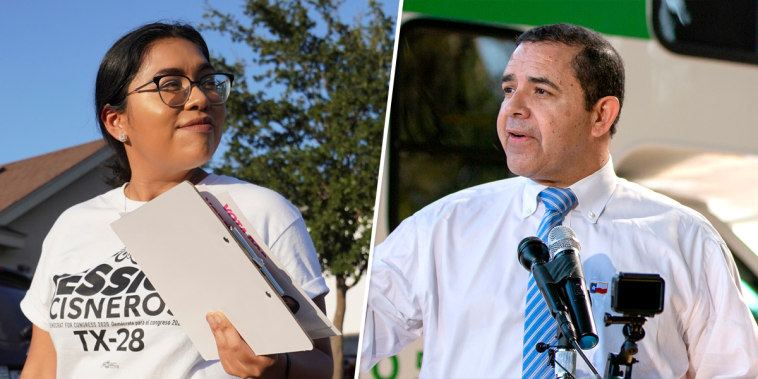
The Texas Observer has a write up on the Democrat primary in CD-28. Interesting read, but mostly what you'd expect. This nugget about Henry Cuellar's 2006 race...however...stands out (rather significantly):
While Cuellar may have been viewed as a turncoat by plenty of Democrats, many in Laredo were eager to have their first hometown congressman in 20 years. Laredo was becoming a verifiable boomtown thanks to its lucrative trade and energy industries, and business leaders wanted a champion in Congress.
Cuellar, who had nurtured relationships with the region’s power brokers and business elite for nearly 20 years, was the perfect fit. As he ramped up his primary campaign, he tapped into a ready-made coalition of Webb County’s bankers, ranchers, oil and gas barons, and trading moguls who eagerly pumped hundreds of thousands of dollars into his coffers. Cuellar said he was better equipped to represent the new district and often quipped on the trail that “Ciro has done zero.”
Rodriguez won by a razor-thin margin of 145 votes, but Cuellar demanded a recount. Election officials found nearly 500 new votes in Webb County and neighboring Zapata—enough to swing the election in Cuellar’s favor. The batch of new votes immediately prompted suspicions of vote tampering, evoking comparisons to the infamous “Box 13” ballot-stuffing scandal in South Texas that helped Lyndon Johnson win his 1948 Senate race. “There is no way on God’s green earth that 177 ballots showed up for Cuellar [in Webb County] and zero for Rodriguez,” Cal Jillson, a political science professor at Southern Methodist University, said at the time. “You have to look at this as one that will go down in Texas lore as a stolen election.”
Cuellar’s campaign declared victory. Rodriguez filed a lawsuit alleging voter fraud, which the courts eventually shot down. When all was said and done, Cuellar had eked his way into Congress by a margin of 58 votes.
Laredo had itself a congressman.
[Note: Emphasis added.]
Wow.
We said our piece about this race back in August. We stand by it. The TL,DR version is that we suspect, in a district that contains 70% of the Eagle Ford shale, Jessica Cisneros' support for the Green New Deal will play very poorly.
Thus, we suspect Cuellar wins fairly easily.
That being said, "we suspect" is not the same thing as "guaranteed outcome."
In the event this race does end up closer than expected, would anybody put...shenanigans...past the vote counters in Laredo?!?
We certainly wouldn't.
Bottom Line: Keep an eye on this race tomorrow night.
"He who works deceit shall not dwell within my house; He who tells lies shall not continue in my presence." Psalm 101:7
Obviously, this website doesn't like former Congressman Joe Barton. In 2017, we were one of the first to call for his resignation over...all that. But the truth is that we've not been a fan for a lot longer than that.
Unfortunately, the article doesn't deliver the goods.
Turns out, Barton's launching an energy related lobby operation. OK, fine. There's a lot to criticize about the legislative/lobby revolving door.
But that's not where the Observer goes.
Instead, they attack him for...getting the ban on crude oil exports lifted:
[T]his week he reemerged with a lengthy retrospective in the Dallas Morning News humbly titled “I knew my bill to lift the ban on U.S. oil exports was important. I hardly expected it to change the world.” It’s an unusually revealing account of how Barton greased the congressional skids for one of the most consequential policies for oil and gas and the environment in modern political history.
....
The former lawmaker from Ennis paints himself as a shrewd legislative tactician with deep connections and policy know-how. He does not undersell the world-changing impacts of his handiwork. Not only is the U.S. now the top oil producer, but the introduction of American oil around the world has “destroyed OPEC’s ability to control world oil prices” and created a more “transparent” global energy market.
....
But as he details in his column, Barton set out to do the biggest favor of his career back in early 2014, when the Permian Basin was in the early days of a massive boom. New fracking technologies made it highly profitable to access the region’s huge reserves of oil hidden in dense shale formations. But fossil-fuel producers were sounding the alarm that the country’s existing domestic refining capacity couldn’t handle all of the newfound black gold.
So some of Texas’ oil behemoths began leaning on Barton to end the ban on crude oil exports from the United States, warning that the industry’s future depend on it.
Furthermore, how is Barton's effort a "bailout?!?" Congressional action certainly expanded the markets available to Texan/American energy companies. But expanding markets is hardly a "bailout."
Half of Saudi Arabia’s oil production was torched over the weekend thanks to a drone strike.
It remains in question as to who is responsible for the attack — Yemen’s Houthi rebels claimed responsibility, but U.S. intelligence is reported to believe Iran is ultimately behind it (and the President indicated this on Twitter, too).
Nevertheless, roughly 5.7 million barrels per day of oil are out of commission.
Had this happened a decade ago, the world might have spun into a frenzy. But after a Monday morning cost-per-barrel spike of 14 percent — which is largely being chalked up to uncertainty — prices dropped almost four percent.
Todd Staples, President of the Texas Oil and Gas Association, told The Texan, “Events like this are certainly meaningful and impactful but the good news for consumers is that hopefully the impact on price will be moderated somewhat, and that is largely due to the resurgence of the American energy industry.”
Saudi Arabia is responsible for roughly 12 percent of worldwide oil production. With half of that temporarily gone (Saudi Arabia said after the attack full production levels would return in two to three weeks time), America (18 percent) and Russia (11 percent) are the only producers remaining above five percent of worldwide production.
So why did this significant hit to worldwide oil production not result in a worldwide panic? Well, Texas likely has a lot to do with it.
“Without the vast supplies that the State of Texas has provided to energy consumers, it’s wild to think about the largest attack and disruption on [oil supply] in history — and yet the price impact has been pretty marginal,” Nick Loris, an energy and environmental economist with the Heritage Foundation told The Texan.
Put differently, innovation is changing geopolitical reality.
This is unambiguously good.
-------
To be honest, the West Texas energy renaissance is the only reason to maintain Republican control of government (both state and federal).
For all of their other flaws, the GOP generally has the good sense to leave the energy industry alone. Yesterday's news is the result. Meanwhile, Democrats want to restore Saudi dominance.
On most issues, the difference between the parties is one of degree rather than kind. Not energy development (with its geopolitical implications). O
n energy, there really is a difference.
The GOP ought to tell that story.
-------
To be fair, both John Cornyn and Glenn Hegar were quoted in the Texan article cited above.
It's a start.
They ought to do a lot more.
Because this is the only unambiguously good aspect of the GOP's record.
-------
Bottom Line: We could use a lot more stories like these.
"When the righteous are in authority, the people rejoice; But when a wicked man rules, the people groan." Proverbs 29:2
[Note: We lost the piece of paper on which we took notes. This blog post is written from memory. We ask your indulgence.]
We attended Chip Roy's town hall last night, hosted by TPPF:
During his introductory remarks, Roy discussed the border, health care, and energy. All standard stuff for Roy. The Q&A with conservatives audience members was also pretty standard. But the Q&A with left-leaning audience members was where it got interesting.
While talking about energy, Roy made the point that lower natural gas prices were a direct consequence of the shale revolution. Because of those lower natural gas prices, the United States is the only country in the world to reduce its carbon emissions over the past five years. If you want to accomplish something on climate change, increasing U.S. natural gas exports should be your #1 goal (at least in the short/medium term). Chip Roy literally made this point in his prepared remarks.
But that wasn't good enough for some audience members:
One woman assailed Roy for questioning some of the doom and gloom scenarios, but couldn't come up with a policy ask.
A guy who couldn't acknowledge that Chip Roy was answering his question even as Chip Roy repeated what he said above about natural gas.
Another guy who asked Roy "where do you get your information" about climate issues. Roy specifically cited a UT-Austin professor and Texas state government statistics. The man said Roy refused to answer the question.
Therein lies the fascinating part.
It's one thing to argue that there have been unintended environmental consequences from the increase in carbon emissions over the past 200 years. That might very well be the case. In that context, a discussion about reducing carbon emissions might be worth having.
Likewise, in that context, you have to acknowledge that collapsing natural gas prices have done more to reduce carbon emissions than anything else.
That will never be good enough for the global warming cultists. And that's fine. Don't waste your breath.
But natural gas prices are a wedge that should be driven between those concerned about the unintended environmental consequences of carbon emissions and the global warming cultists.
And Chip Roy showed us how.
Bottom Line: This distinction is an important one to make moving forward, and it's good to see Chip Roy doing so on his own.
That's important to remember as you read the following detail about the so-called "Green New Deal" we noticed this morning:
Ban affordable energy. GND calls for the elimination of all fossil fuel energy production, the lifeblood of American industry and life, which includes not only all oil but also natural gas — one of the cheapest sources of American energy, and one of the reasons the United States has been able to lead the world in carbon-emissions reduction.
Sooo...the Democrats' federal-level majority hinges on a district in West Houston...and their hot new idea is to ban Oil and Gas?!?
Do they realize what people in West Houston do for a living?!?
Texas is leading a global energy REVOLUTION. It's still in its early stages, but if allowed to unfold, it will put various global bad guys [eg. Putin and the Saudis] out of business. Making matters better, this global energy offers the opportunity for a lot of people in Houston to get rich.
All we need is for the politicians and the bureaucrats to stay out of the way.
Given this backgroud, it's imperative that Congresswoman Fletcher vote on the afore mentioned proposal.
Bottom Line: Given the industry in which many of them work, we suspect there aren't too many voters in West Houston who support banning fossil fuels....
The City of Georgetown made a costly blunder, and residents are now paying for it.
City officials lost millions of taxpayer dollars after a failed gamble on green energy, and now Georgetown residents will pay higher electricity bills to help make up the losses.
The story began in 2012 when Mayor Dale Ross and city officials began transitioning the city’s entire power supply to solely renewable energy: they signed long-term contracts with wind and solar companies for set amounts of energy at a fixed-rate price, betting that the costs would be lower than if they used other energy sources.
The move to 100 percent renewables sparked national praise for the mayor, even earning him a spot in Al Gore’s “An Inconvenient Sequel” environmental movie. Gore called Georgetown a “trailblazer” when he visited the town in 2016.
The mayor said the decision was based on dollars and cents, one that would save the people of Georgetown money.
“This is a long-term pocketbook issue,” Ross said in August. “It’s a win for economics and a win for the environment.”
But now, just seven years later, the mayor and city officials are scrambling to renegotiate the contracts. They bought far too much energy at a far too expensive price.
Back in 2012, this website wasn't focused on local/regional issues. But we remember this discussion very clearly. And we remember opponents raising two objections:
Wind is an unreliable, inefficient, source of energy...thus these contracts would inevitably beget higher electric rates for consumers.
This sort of collusion between big business and big government would grease the skids for Williamson county turning blue.
Here we are, seven years later, and both of those predictions have come to pass.
-------
Bonus question: Who among Mayor Dale Ross's cronies got wind energy contracts?!?
Follow up: Among Mayor Dale Ross's cronies that got wind energy contracts, how many were Travis County Democrats?!?
Follow up II: Among Mayor Dale Ross's Travis County Democrat cronies that got wind energy contracts, to what extent did Obama-era "clean energy" subsidies grease the skids?!?
-------
Bottom Line: Higher costs for consumers. Bigger government for citizens. But at least the Mayor's cronies got paid....
"who exchanged the truth of God for the lie, and worshiped and served the creature rather than the Creator, who is blessed forever. Amen." Romans 1:25
Today's Washington Examiner has a piece about the latest project from the Attorney General's office:
The climate change court fight between California cities and big energy companies such as Exxon Mobil is widening as Republican attorneys general from 15 states filed a court brief Friday opposing the cities’ climate lawsuits.
The attorneys general argue that the cities and municipalities suing the companies in federal court are overreaching in using local “nuisance” ordinances as a way to find a court remedy to the complex issue of global warming.
The 15 states filing the amicus brief opposing the lawsuit include Texas, Louisiana, Wyoming, Colorado, West Virginia, Indiana, Alabama, Arkansas, Georgia, Kansas, Nebraska, Oklahoma, South Carolina, Utah, and Wisconsin.
States such as Texas, Louisiana, Wyoming, and West Virginia are big oil, natural gas, and coal producers. Ken Paxton, Texas' attorney general, was often in Washington with then-Oklahoma AG Scott Pruitt when many of those states were fighting the Obama administration’s Clean Power Plan climate rules.
The brief, filed in the District Court for Northern California, also argues that the nature of the lawsuit clearly makes it a national policy issue that one court is not in the position to decide. If the suit proceeds, it will lead to an avalanche of similar lawsuits all over the country, with conflicting judgments and results in their states.
Then God blessed them, and God said to them, “Be fruitful and multiply; fill the earth and subdue it; have dominion over the fish of the sea, over the birds of the air, and over every living thing that moves on the earth.” Genesis 1:28
Arnold Schwarzenegger is undoubtedly best known for his legendary heroics on the silver screen. Covered in mud, he survives the Predator – killing it by exploiting its one weakness. As the Terminator, he protects John Connor from a homicidal shape-shifting machine to save humanity. An unhappy construction worker, he can’t remember who he is, but finally recalls and with his last breath saves thousands of lives by releasing air into the Martian atmosphere.
Like the character he played in Total Recall, Mr. Schwarzenegger must be having a tough time remembering who he is – a former Republican Governor.
In Austin for the South by Southwest festival, he revealed he has hired a team of California lawyers to sue oil and gas companies for “first degree murder” by “knowingly killing people all over the world.” Instead of acting like a Republican, Mr. Schwarzenegger must be trying to play the hero again. The only problem is this isn’t the movies, this is real life, and there is nothing to “save” us from.
Like many of us, Mr. Schwarzenegger had a long commute to work. After he was elected Governor of California, he decided not to move to the Governor’s Mansion at the state capitol in Sacramento, but instead traveled more than 100 miles for seven years from his mansion in Brentwood, Calif.. The only difference: he took a private jet, which cost around $30,000 a roundtrip and impacts the environment about the same amount as a small car does in three years. And when he’s not taking a private jet to work, he’s driving around in a five-ton,12-mile to the gallon Mercedes or going to lunch in a military-grade Hummer.
But now, according to the Governator it’s “absolutely irresponsible” for oil and gas companies to sell their products because they “know [their] product is killing people.” Wait a minute, here. So, it’s okay for oil and gas companies to sell their products to Mr. Schwarzenegger when he needs to fill up his private jet or Hummer, but it’s not okay for them to sell their products to regular folks so they can drive their vehicles to work? This kind of do-as-I-say-not-as-I-do hypocrisy is repulsive and offensive. Mr. Schwarzenegger is not a hero, he’s just another elitist Hollywood hypocrite telling you and me how to best live our lives.
The real heroes are the oil and gas workers – the landman, the roughneck, the petroleum engineer – who wake up every day and go to work to support their families and our way of life. Together, these workers produce around 10 million barrels of oil and 96 billion cubic feet of natural gas each day that fuel our cars, light our homes, and make plastics and many other items we use every day. The industry doesn’t just provide the raw materials to make the things we need – it creates jobs and grows our economy. In 2015, the oil and gas industry supported more than 10 million jobs in the United States with an average salary over $100,000 and contributes more than $1 trillion to our economy every year.
Despite what Mr. Schwarzenegger may think, the story of energy before oil and gas was simple – most work was done by human or animal muscle. This caused the vast majority of the population to live short lives of hard labor in extreme poverty. Before oil and gas were used to power the industrial revolution, the global average life expectancy was only 25 years old with 30 percent of children dying before age 15. During the 1800s, 80 to 90 percent of the population of the United States worked in agriculture and spent 74 percent of family income on food, clothing and shelter. Today, the average person lives more than three times longer than the average person in 1800. This is partly because climate-related deaths, such as starvation or hypothermia, have decreased 98 percent in the United States since the use of oil and gas became widespread at the beginning of the 20th Century.
It’s sad – but Mr. Schwarzenegger has gone from superstar hero to Hollywood hypocrite. On the one hand he routinely uses gas-guzzling jets and cars while on the other he sues oil and gas companies. Given this stunning hypocrisy, I have a question. If oil and gas companies are murderers for selling their product, does that make Mr. Schwarzenegger an accessory for being such a good customer?
AUSTIN – Management of the nation’s most preeminent national laboratory in the areas of nuclear weapons, nuclear nonproliferation, safeguards and security, environmental management, energy and other programs will be open for bid for the first time since 2005, and University of Texas System leaders today received strong support from regents to pursue this unique opportunity.
UT System Deputy Chancellor David Daniel and UT Austin President Greg Fenves, under the leadership of UT System Chancellor William H. McRaven, a recognized figure in national security, presented their case to the Board of Regents for consideration. Both McRaven and Daniel emphasized the UT System is uniquely positioned to provide excellent service in the national interest. The scale of the UT System and its academic and health institutions’ scientific assets could strongly position it for operational leadership of the Los Alamos National Laboratory (LANL), one of the U.S. Department of Energy’s (DOE) 17 national laboratories. LANL operates under the auspices of the National Nuclear Security Administration (NNSA), a semi-autonomous agency within the DOE.
Instead of routinely renewing the contract for the management of LANL, which is currently managed and operated by the University of California System in concert with industry partners Bechtel National, Inc. and others, NNSA has decided to open the bid process and invite new parties to make their case to manage the lab.
Daniel stressed that the U.S. needs the strengths of its universities’ scientific prowess to maintain its nuclear deterrent, to promote non-proliferation, to monitor for rogue nuclear threats and testing, to manage environmental land and groundwater challenges left from the Cold War era, and to tackle new threats to national security such as cyberattacks.
....
UT Austin President Fenves expressed enthusiasm for the opportunity to have his faculty and students collaborate and work with the Los Alamos team, learning from and contributing to solutions on national security challenges. He also referenced the critically important research opportunities that would accompany the role of leading the lab, specifically the advantages that would be presented UT Austin as a national top research-intensive university.
“For UT Austin, it would be a tremendous honor to help serve the nation. The important work at LANL is aligned with our research goals and priorities across the university,” Fenves said. “Our Texas Advanced Computing Center and Institute for Computational Engineering and Sciences illustrate just two examples of those synergies, and we have a strong track record of meeting security clearances.”
If the UT System proceeds, this will be the second time it competes for the LANL contract. It participated in the 2005 bid procurement as part of a larger team led by Lockheed Martin, but the contract ultimately was awarded to the University of California System and its industry partners. The UC System has been involved in the management of LANL for more than 70 years.
OK...so who understands why this is a hilarious ask?!?
Then, of course, there's the fact that beyond the whole Wallace Hall impeachment fiasco, UT fought (and, unfortunately, largely thwarted) Rick Perry's higher ed reform agenda.
Bottom Line: Even by their standards, UT asking Rick Perry for a prestigious federal contract is an act of chutzpah.
"I have fought the good fight, I have finished the race, I have kept the faith." 2 Timothy 4:7
We suppose we need to start this post with a confession/disclosure: Both of the events to which we will shortly refer are over 24 hours old. To be honest, when we first heard General Paxton mention this, we missed it's full significance. That being said, we can't find any other news reports discussing this...so we suppose it's a de facto exclusive.
We attended two events this week where Attorney General Ken Paxton spoke. On Monday, Wayne Christian was sworn in to his new seat on the Texas Railroad (ie. Oil and Gas) Commission. Yesterday, TPPF hosted a panel related to various acts of intimidation by global warming activists.
At both events, Paxton recounted various legal actions his office has taken against the federal government related to maintaining abundant and affordable energy. We didn't take detailed notes in either event, but we recall him saying that his office has sued the EPA 10 times in the past two years. Several of those lawsuits have been successful and others are working their way through the process.
But here's the most interesting line he used both times: "As Attorney General, my office has sued the Obama administration 21 times...and there's still a few days left."
Like we said, we didn't record his remarks or take detailed notes in either event, but there were at least 200 people in the room the first time and 25 the second time.
We don't know what it means, but there will be three and a half business days next week before the presidential handover.
Texas shale oil has fought Saudi Arabia to a standstill
Opec's worst fears are coming true. Twenty months after Saudi Arabia took the fateful decision to flood world markets with oil, it has still failed to break the back of the US shale industry.
The Saudi-led Gulf states have certainly succeeded in killing off a string of global mega-projects in deep waters. Investment in upstream exploration from 2014 to 2020 will be $1.8 trillion less than previously assumed, according to consultants IHS. But this is a bitter victory at best.
North America's hydraulic frackers are cutting costs so fast that most can now produce at prices far below levels needed to fund the Saudi welfare state and its military machine, or to cover Opec budget deficits.
Scott Sheffield, the outgoing chief of Pioneer Natural Resources, threw down the gauntlet last week - with some poetic licence - claiming that his pre-tax production costs in the Permian Basin of West Texas have fallen to $2.25 a barrel.
"Definitely we can compete with anything that Saudi Arabia has. We have the best rock," he said. Revolutionary improvements in drilling technology and data analytics that have changed the cost calculus faster than almost anybody thought possible.
The 'decline rate' of production over the first four months of each well was 90pc a decade ago for US frackers. This dropped to 31pc in 2012. It is now 18pc. Drillers have learned how to extract more.
Mr Sheffield said the Permian is as bountiful as the giant Ghawar field in Saudi Arabia and can expand from 2m to 5m barrels a day even if the price of oil never rises above $55.
"and for me, that utterance may be given to me, that I may open my mouth boldly to make known the mystery of the gospel," Ephesians 6:19
Last Saturday, Ted Cruz spoke at a big Agribusiness event in Iowa. He restated his opposition to ethanol mandates and other forms of central planning. Cruz's remarks below:
Highlights:
"I don't think Washington should be picking winners and losers when it comes to energy."
Energy policy: "Should be driven by the market."
"People are pretty fed up, I think, with politicians who run around and tell one group one thing, tell another group another thing and then they go to Washingon and they don't do anything they said they would do."
Re wind energy: "Once again, I don't think it should be the Federal government dictating that."
"When it comes, in the energy business, to anyone engaging in picking winners and losers; and listen, I've put this more broadly for corporate welfare, I have been an outspoken opponent of corporate welfare."
"I've been outspoken on allowing the Export-Import bank expire."
"I have every bit of faith that businesses can continue to compete, can continue to do well, without having to go on bended knee to Washington asking for subsidies, asking for special favors; I think that's how we got into this problem to begin with."
Strong BiPartisan agreement "outside of Washington" on immigration and border security.
Gang of 8: "Was a bad bill."
"The radical left loves attacking people as anti-Science whenever anyone dares question their computer models on global warming....The hardcore left loves ridiculing Christians who believe scripture that says 'God created the Heaven and the Earth.'....But when it comes to biotech, these same voices become the most anti-Science zealots we've ever seen."
Cahnman's Musings just attended an exhilirating conference call with Governor Rick Perry, who dialed in from Israel. Governor Perry spoke in detail about Texas A&M's new campus in Nazareth (yeah, that Nazareth) and Texas' deepening economic relationship with the Jewish state. Texas relationship with Israel is based upon our shared Judeo-Christian values of faith, free-enterprise, and prudent stewardship. Under then-Agriculture Commissioner Perry's leadership, Israel was an early partner in Texas' economic ascent. Today, the relationship remains strong. Texas and Israel face similar challenges and opportunities, with energy and water up front. Yesterday, Governor Perry spoke at a water conference in Tel Aviv. While Cahnman's Musings strongly disapproves of the proposed water financing slush fund 'infrastructure bank', we concur with Governor Perry's assessment that new technologies currently being deployed in Israel will play a major role in Texas over the coming decades. Speaking about the new A&M satellite, Governor Perry gave special thanks to Israeli President Shimon Peres and Texas A&M President John Sharp. The new campus, which is slated to open in two years, is A&M's second satellite in the region. Texas A&M has committed to raise $70 million in support of the project. Asked by Cahnman's Musings about the relevance of this project to the Genesis quote listed above, Governor Perry said "to be able to assist a country whose faith is intertwined with our own is deeply humbling and very satisfying." Amen, Mr. Governor!!!