Showing posts with label Peter Thiel. Show all posts
Tuesday, June 30, 2015
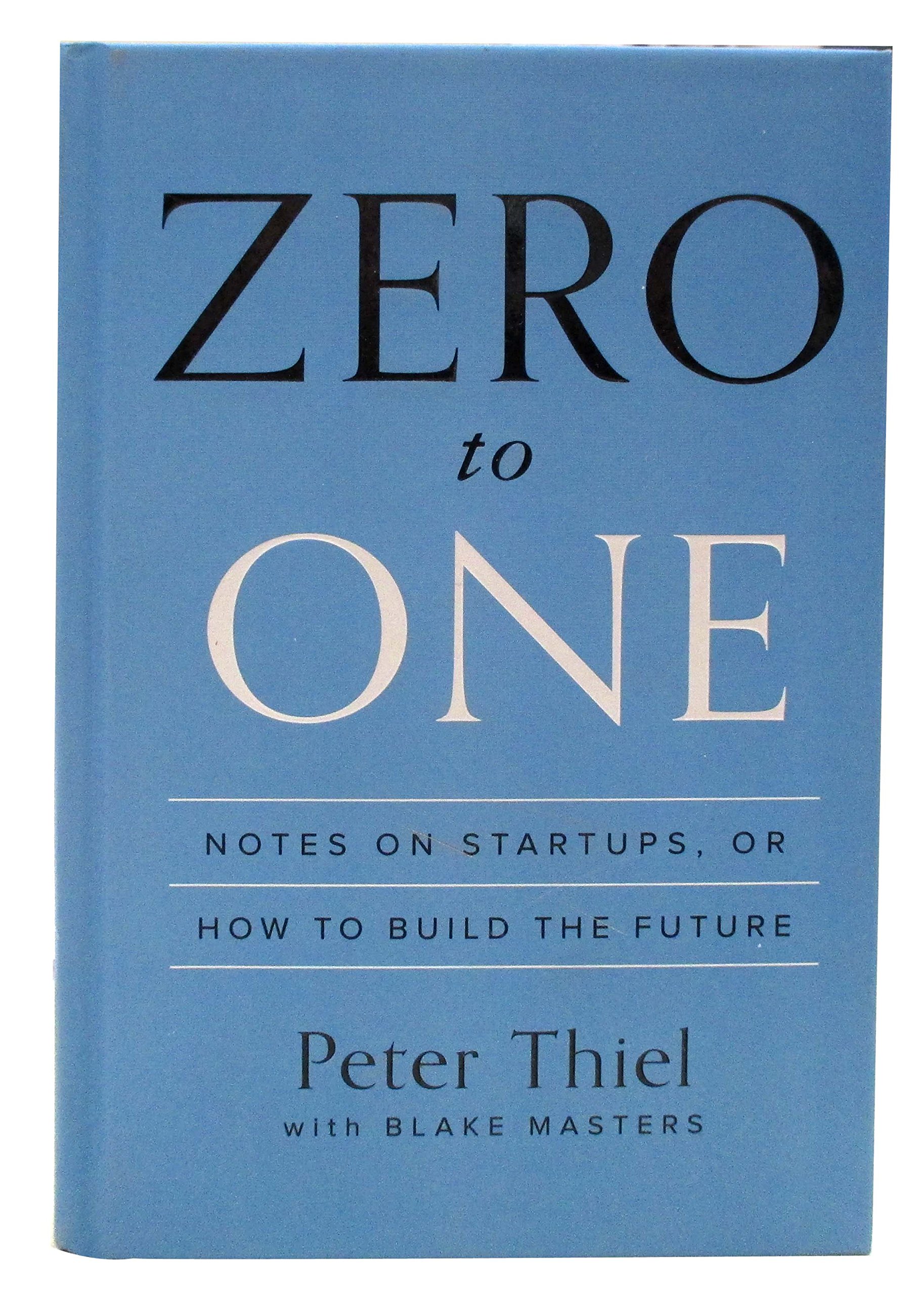
Book Review: Zero to One, by Peter Thiel
"And no one puts new wine into old wineskins; or else the new wine bursts the wineskins, the wine is spilled, and the wineskins are ruined. But new wine must be put into new wineskins."
Mark 2:22
Peter Thiel is one of the most successful American entrepreneurs of the past quarter century; Zero to One is his opus on success.
Success is a difficult concept to discuss, because every successful company is unique. Thiel encourages would be entrepreneurs to seek "monopoly capitalism" where you create "the kind of company that's so good at what it does that no other firm can offer a close substitute" (24-5). Unlike government enforced monopolies "[T]he dynamism of new monopolies explains why old monopolies don't strangle innovation...the history of progress is a history of better monopolies businesses replacing incumbents" (33).
Thiel condemns stale, conventional, thinking. Unfortunately, there's far too much of it across American society, especially in American business. As he explains: "[E]very moment in business happens only once. The next Bill Gates will not build an operating system. The next Larry Page or Sergey Brin won't make a search engine. And the next Mark Zuckerberg won't create a social network. If you are copying these guys, you aren't learning from them....The act of creation is singular, as is the moment of creation, and the result is something fresh and strange....Unless they invest in the difficult task of creating new things, American companies will fail in the future no matter how big their profits remain today" (Emphasis added) (1).
Great fortunes require contrarian thinking. That's why you do something different in the first place. Thiel identifies four cultural factors that inhibit it: incrementalism, risk aversion, complacency, and 'flatness' (97-8). Air B'n'b, Netfilx, and Uber are recent examples of companies that embraced contrarian thinking. They figured out "[T]he best place to look for secrets is where no one is looking" (104).
Successful startups usually become 'mature' over the course of 5 to 10 years. Thus, they require a type of long term thinking that is itself contrarian. Thiel asks "[W]hy would professional [Venture Capitalists], of all people, fail to see the power law? For one thing, it only becomes clear over time, and even technology investors too often live in the present" (87). Short term thinking begets bankruptcy.
While Thiel's book isn't political, it did provide us with one major insight. In the realm of politics, the Tea Party is the equivalent of a tech startup. He explains "what a startup has to do: question received ideas and rethink business from scratch" (11). If there's one trait that defines the Tea Party, it's a rejection of the bogus assumptions that have dominated the political process for far too long. The proof is in the ending of the Ex-Im bank and the strongest Republican presidential field ever.
When one of the most successful entrepreneurs of the past quarter century speaks, you listen. Peter Thiel details the pitfalls of conventional thinking and the opportunities available to those who reject it. Zero to One: Notes on Startups, or How to Build the Future is required reading for anyone interested in changing the world.
Saturday, November 29, 2014
From Zero to One: Peter Theil speaks at U.T.
"No one sews a piece of unshrunk cloth on an old garment; or else the new piece pulls away from the old, and the tear is made worse. And no one puts new wine into old wineskins; or else the new wine bursts the wineskins, the wine is spilled, and the wineskins are ruined. But new wine must be put into new wineskins."
Mark 2:21-22
Peter Theil spoke recently at U.T; we didn't attend, but our friends at Emergent Order produced this fantastic video of the talk:
Highlights:
- There's no real formula for success.
- Each moment in business only happens once.
- Courage is in shorter supply than brilliance; you need both.
- As an entrepreneur, aim for monopoly.
- Find something no one else is doing and develop a niche.
- The people who have monopolies generally don't talk about it.
- There's a natural tendency to imitate what's worked for others that often shows up in business.
- "Catching the last wave."
- In a military context, Generals tend to fight the last war.
- Most fields are not "complete."
- New discoveries still exist.
- Frequently, "you can get to the frontier relatively quickly."
- There's a difference between copying things and doing new things.
- Disruption is a "chronic buzzword."
- "When you set out to disrupt, you're already taking your bearings by existing industries."
- The goal you should have as an entrepreneur isn't to destroy old things but to create new things.
- Focus on some combination of short term and long term with less on the medium term.
- Tech companies don't go public until much later in the game than they used to....
- Monopolies become bad in a static, unchanging, world.
- At first: Pick a small market, take it over, and scale it.
Thursday, October 23, 2014
Glenn Beck, Peter Thiel, and Disruptive Innovation
"No one sews a piece of unshrunk cloth on an old garment; or else the new piece pulls away from the old, and the tear is made worse. And no one puts new wine into old wineskins; or else the new wine bursts the wineskins, the wine is spilled, and the wineskins are ruined. But new wine must be put into new wineskins."
Mark 2:21-22
Peter Thiel, founder of PayPal, early player in several other well known technology companies, and author of the new book: Zero to One: Notes on Startups, or how to build a future sat down with Glenn Beck the other day to discuss several topics:
Highlights:
- Out of the box thinking in a world plagued by conformity.
- If there's another terrorist attack on the U.S., our civil liberties will go out the window.
- The government is much more abusive than Google.
- "Google doesn't have guns."
- "It feels like the system is on Autopilot."
- Tech, as an industry, has been lightly regulated.
- The culture of D.C. and Silicon Valley are radically different.
- Most members of Congress "are in the middle ages" re: Science and Technology.
- Author's Note: Then there's Lamar Smith....
Highlights:
- Silicon Valley -- Generally "politically quite naive."
- Instincts libertarian, but become liberal because it's cool.
- As soon as the establishment says "don't read that," it's cool again.
- The Hippies took over the country at Woodstock; 3 weeks after moon landing.
- Believing a better world is possible is radically countercultural these days.
Highlights:
- Reforming systems from within hasn't worked.
- Create empowering pathways
- Most people are scared and when you're scared, you retrench.
- If you're a slacker with low expectations, you will meet them.
- We're going to get to Mars in 20 years.
- Computers haven't been regulated while everything else has been.
- Eventually, the old crony system falls apart
- But when?!?
- "What FDR did in the New Deal, I don't think you could do that today."
Highlights:
- "You want to do one thing where, if you didn't do it, it wouldn't get done."
- Apple had "an incredible run of innovation under Jobs."
- "It's hard to maintain innovation once you get past a certain size."
- Innovation frequently dies with the Founding generation.
- Monopolies are bad when they're protected by government, in technology they go away over time.
Subscribe to:
Posts (Atom)

