Showing posts with label Spending. Show all posts

Wednesday, December 2, 2020

#TXLEGE: Patrick should make school choice the precondition for any marijuana bill

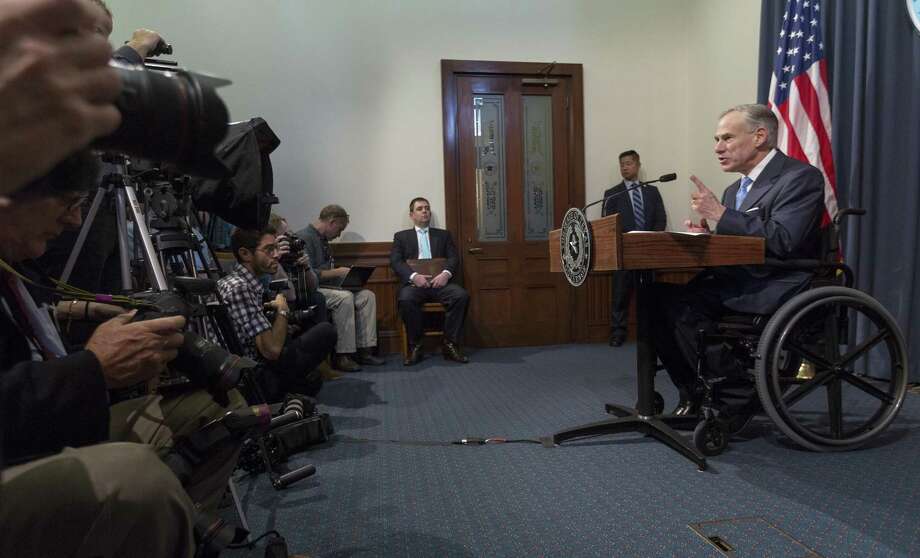
Note: We had originally planned to crop this photo to only
show Patrick and Phelan, but Abbott being irrelevant in the
 background is likewise apt.

"Show us Your mercy, Lord,
And grant us Your salvation."
Psalm 85:7

The biannual boomlet of "will Texas or won't Texas legalize marijuana this session?!?" has started. This time, it's accompanied by a subplot related to the budget. Allow us to cut to the chase.

Dan Patrick is still the Lieuentant Governor.

So, no. Marijuana legalization isn't happening. LOL.

That being said, if he's smart enough to take it, there's an opportuity for Patrick.

It's not a secret that Patrick has recently taken a tactical retreat on school choice. That house hasn't left him any option. But, if the house wants to try and force Dan Patrick to do something he doesn't want...well...two can play at that game.

Besides, in the extraordinarily unlikely chance the house were to agree to it, that would be a good trade.

Bottom Line: There's nothing Patrick can lose. There's potentially something he can gain. No brainer.

Tuesday, July 21, 2020

#TXLEGE: The Budget Outlook Remains Pretty Brutal


"Son of man, when a land sins against Me by persistent unfaithfulness, I will stretch out My hand against it; I will cut off its supply of bread, send famine on it, and cut off man and beast from it."
Ezekiel 14:13

Hoo boy:
Texas Comptroller Glenn Hegar delivered bleak but unsurprising news Monday: Because of the economic fallout triggered by the coronavirus pandemic, the amount of general revenue available for the state’s current two-year budget is projected to be roughly $11.5 billion less than originally estimated. That puts the state on track to end the biennium, which runs through August 2021, with a deficit of nearly $4.6 billion, Hegar said.

Those figures are a significant downward revision from Hegar’s last revenue estimate in October 2019, when the comptroller said the state would have over $121 billion to spend on its current budget and end the biennium with a surplus of nearly $2.9 billion. The state, Hegar said, will now have roughly $110 billion to work with for the current budget.

Hegar’s latest estimate, he stressed in a letter to Gov. Greg Abbott and other state leaders, carries “an unprecedented amount of uncertainty” and could change drastically in the coming months, thanks to the pandemic and, to a lesser extent, a recent drop in oil prices.

“We have had to make assumptions about the economic impact of COVID-19, the duration and effects of which remain largely unknown,” Hegar wrote. “Our forecast assumes restrictions [on businesses and people] will be lifted before the end of this calendar year, but that economic activity will not return to pre-pandemic levels by the end of this biennium.”
Keep in mind:

  • This is just the current two-year budget cycle, the numbers are even worse for the next cycle (although, to be fair, there are several years for the economy to recover in the interim).
  • This doesn't account for the way they have to backfill the regular Medicaid shortfall.
Bottom Line: Next session is going to be miserable for the powers that be (the silver lining, of course, is that they deserve it).

Thursday, July 2, 2020

Budget Hole Grows Deeper


"Son of man, when a land sins against Me by persistent unfaithfulness, I will stretch out My hand against it; I will cut off its supply of bread, send famine on it, and cut off man and beast from it."
It’s the beginning of another month, which as of late has meant another report from the comptroller’s office showing a decline in sales tax collection in Texas compared to last year.

On Tuesday, Texas Comptroller Glenn Hegar said state sales tax revenue totaled $2.67 billion in June, 6.5 percent less than in June 2019.

Sales taxes remitted to the state in June consist mostly of taxes collected by businesses in May.

“The decline in state sales tax collections was driven principally by steep drops in remittances from oil- and gas-related sectors,” said Hegar. “Collections from the construction and amusement service sectors were also sharply down.”

The state’s sales tax is the biggest source of revenue for the state government—accounting for more than 57 percent of Texas’ total tax collections.
Bottom Line: Budget cuts, they are a-comin'!!!!

Thursday, May 14, 2020

#TXLEGE: Jane Nelson Gives Us an Idea


"There is desirable treasure,
And oil in the dwelling of the wise,
But a foolish man squanders it."
Proverbs 21:20

A leading lawmaker has announced the state budget process will require every agency to utilize zero-based budgeting in the wake of a projected shortfall due to the Chinese coronavirus and government-ordered shutdowns that have devastated the Texas economy.

“As I meet with each agency to review their appropriation requests, I will begin at zero,” said State Sen. Jane Nelson (R–Denton), the head of the Senate Finance Committee which will prepare the state next budget.

Requiring zero-based budgeting—a powerful tool to rein in expanding bureaucracy and administrative bloat—for every agency in every budget has been a legislative priority of Texans for Fiscal Responsibility for years.
Yes. Absolutely. One Hundred Percent. Plus one.

However, even if Nelson is successful, this won't be the last time we need this level of fiscal cleansing.  Unfortunately, this level of fiscal cleansing is difficult to achieve.  It only ever seems to happen during major economic downturns.

It needs to become a regular thing.

This gives us an idea: Why not make zero-based budgeting part of the sunset process?!?

Agencies already have to go through sunset.  They already have to review their operations.  They already have to dedicate the resources.  While they're at it, why not make them build their budget from scratch?!?

Bottom Line: Nelson's directive is a worthwhile response to the current crisis.  But the current crisis will certainly not be the last crisis.  Zero-based budgeting as part of the sunset process will inevitably make us stronger whenever next time inevitably shows up.

Saturday, April 25, 2020

West makes (half of) a good point


"Because of the transgression of a land, many are its princes;
But by a man of understanding and knowledge
Right will be prolonged."
Proverbs 28:2

Allan West has a blog post about the Dennis Bonnen/Drew Darby/Mary Gonzalez triangle of the past few days:
Republicans in Texas Sucking up to the Left?

We have a Republican legislator, who is in a “leadership” position here in Texas, in dire need of our dubious “Stuck on Stupid” recognition. His name is Dennis Bonnen. What he has just done is most egregious in nature, and is the reason for the question posed as the title to this missive.

[Long description of Mary Gonzalez that can summarized by saying she's very liberal.]

This goes beyond being stuck on stupid, it is a special kind of stupid, and dangerous at that. Let me pose a question, does anyone believe that in California, their State Assembly Speaker would appoint a solid conservative to a major committee, such as Budget? Does anyone believe that in any blue controlled state legislative body, let’s say Virginia, that they would appoint a conservative to a key committee?

So, why is it here, in Texas, the preeminent constitutional conservative red state in America, that we have a Texas House Speaker taking this action?
West isn't wrong to ask the question.

It's about time somebody did.

If Texas' alleged incumbent "leadership" cares a whit about the long term future, that is a question for which they ought to have an answer.

That being said, the post also illustrates why we can't get too excited.  West is correct that placing Mary Gonzalez on LBB illustrates that the leadership of the Texas house has bad priorities.  But would Allan West really be happy with Drew Darby.

Because, if you're content with Drew Darby over Mary Gonzalez, that ain't gonna get Texas where it needs to go.

As we explained on Thursday, the biggest difference between Drew Darby and Mary Gonzalez is honest.  Yes, it's certainly true that Mary Gonzalez likes to spend taxpayer money for lots of dubious causes.  But Mary Gonzalez will at least tell you that to your face.  Drew Darby, on the other hand, will tell you what you want to hear to your face while undermining your position behind closed doors.

It's the difference between spending money on unions in El Paso vs. spending money on good ol' boys in San Angelo.

Neither is good.

Still, kudos to Allan West for breaching the subject.

It certainly warrants discussion.

Bottom Line: It's certainly the case that the so-called 'leadership' in the Texas house doesn't have the best priorities....

Thursday, April 23, 2020

#TXLEGE: Bonnen replaces Dishonest, Unlikeable ,Liberal with Honest, Likeable, One


"Therefore, putting away lying, “Let each one of you speak truth with his neighbor,” for we are members of one another."
Ephesians 4:25

ICYMI:
AUSTIN – On Monday, Speaker Dennis Bonnen appointed Representative Mary González to the Legislative Budget Board. “Thank you Speaker Bonnen for entrusting me with this opportunity to serve as a member of the Legislative Budget Board. I am humbled to carry on the work of Representative Drew Darby as a valued member of the Board and trusted voice for our rural communities,” Gonzalez shared.

“Our state’s budget at its core is a reflection of the values of all Texans. In the face of our current health and economic crisis, we will have an even bigger task to provide resources that prioritize working families, our seniors, and our children’s future. I look forward to joining the Board and continuing the work to achieve a fiscally sound budget that puts Texas families first.”

The Legislative Budget Board is a committee of ten legislators responsible for working with state agencies to form the preliminary state budget in advance of each legislative session.
There's been a decent amount of ink spilled about this move.  Texas Scorecard has a good summary of Gonzalez's record.  Likewise, Kyle Biedermann.

The criticisms tend to revolve around Bonnen replacing an alleged Republican with an open Democrat.  That's certainly true.  Bonnen really did do that and it's very valid to criticize him for so doing.

It's also very much the case that Darby was on Bonnen's list during this Michael Quinn Sullivan episode, and that Bonnen continues to play those games.

Still, it's hard to get too upset.

She's replacing Drew Darby.

Historically, Darby supported high property taxes until doing so became politically untenable.  He's never lifted a finger on spending.  Darby's career record on fiscal policy has been smoke and mirrors interspersed with occasional intervals of doing the bare minimum.

While it's absolutely true that Mary Gonzalez will pursue a pretty liberal fiscal policy, she'll also tell you the truth about that that's what she's doing.

That's not nothing.

Bottom Line: Neither one would be our first choice for this position, however...we understand the arguments.

Monday, April 6, 2020

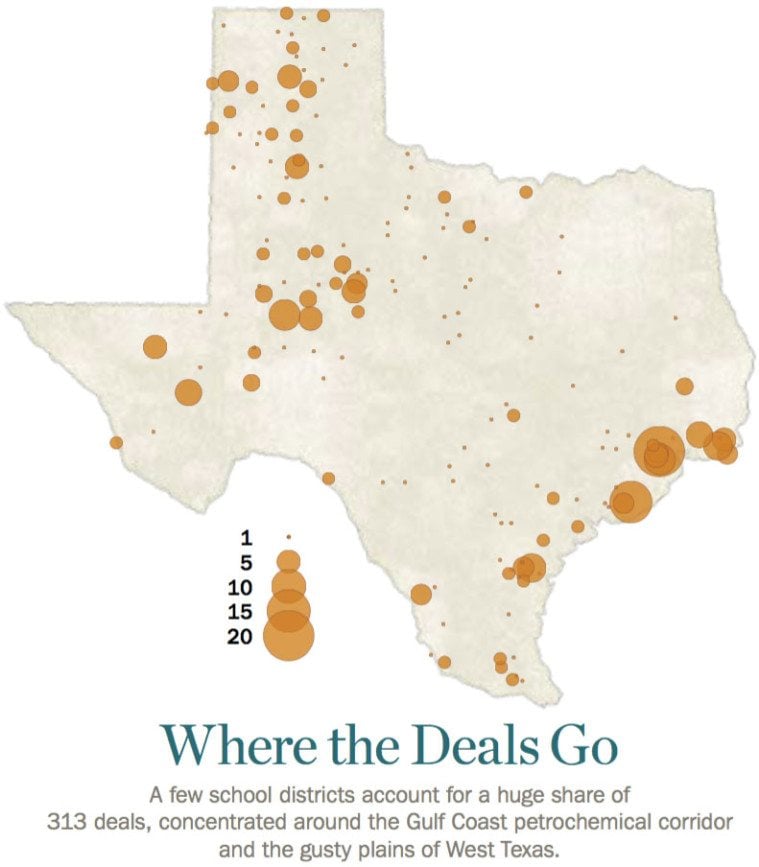
#TXLEGE: Chapter 313 should be the FIRST Thing To Go


"Dishonest scales are an abomination to the Lord,
But a just weight is His delight."
Proverbs 11:1

Interesting thought from Empower Texans this morning:


This is actually a really interesting proposal.  Because schools are still going to be clamoring for more money.  But nobody's going to want to raise taxes on individuals or homeowners.

The truth is that Chapter 313  carve outs don't serve any economic purpose.  They simply reward the people who hire the best lobbyists.  Bonus point: Eliminating chapter 313 would also make the school finance system more efficient over the long term.

Furthermore, it's absolutely true that there's widespread agreement between the left and the right on this subject.  We actually first learned about Chapter 313 from the Texas Observer.  UT professor Nathan Jensen has also done some fantastic work on the subject.

Chapter 313 is a subject that basically lines up all of the honest people across the political spectrum vs. all of the dishonest ones (aka. the overwhelming majority of legislators).

Bottom Line: Even in good times, special interest carve outs are bad policy...but in the coming crunch, there really isn't any excuse.

Friday, March 20, 2020

TPPF's "Recovery Agenda" Good Place to Start


"But those who wait on the Lord
Shall renew their strength;
They shall mount up with wings like eagles,
They shall run and not be weary,
They shall walk and not faint."
Isaiah 40:31

All of this please:


Additional thoughts:
  • The federal stuff might be complicated, but there's no good reason for the state stuff to not happen.
  • There's a pretty good case to make for completely abolishing the FDA, although dramatically streamlining it might be a more realistic proposal.
  • "Eliminate regulations not necessary for public health and safety" = 90%(+) of all regulations.
  • Across all levels of government, MASSIVE, unprecedented, deregulation is the only way we'll be able to generate the levels of growth we'll need to climb out of this fiscal mess.
  • We're surprised efficiency audits weren't included on this list, because identifying pure waste ought to be step one for climbing out of this fiscal hole.
  • We're not sure why "Expanding Telemedicine" falls under the Texas legislature section, because it's our understanding that the primary obstacles are federal.
  • "Scope of practice" (ie. Allowing nurses to perform tasks traditionally performed by so-called 'licensed physicians') reform, if not outright abolition, should also be on this list.
  • Texas has had applications for Medicaid waivers pending since Dubya's final year in office.
Bottom Line: Most of this should have been done decades ago, but since that didn't happen, no time like the present.

Saturday, February 22, 2020

TRS Caves


"Alas, sinful nation,
A people laden with iniquity,
A brood of evildoers,
Children who are corrupters!
They have forsaken the Lord,
They have provoked to anger
The Holy One of Israel,
They have turned away backward."
Isaiah 1:4

From Texas Scorecared:
In a win for teachers and taxpayers, the Teacher Retirement System of the Texas Board of Trustees has voted against following through on a planned move into Indeed Tower.

Established in 1937, TRS provides retirement and related benefits for more than 1.6 million Texas teachers, college professors, and other educational employees. It is supported by the State of Texas and manages a $150 billion trust fund established to finance member benefits. TRS is the largest public retirement system in Texas and is the sixth-largest public pension fund in the U.S.

First reported by Austin’s KXAN last month, TRS had signed a 10-year lease for three floors of office space at the Indeed Tower, a highly sought-after location for companies seeking extravagant downtown accommodations in close proximity to the city’s bar district.

The cost for the space? A jaw-dropping $326,000 a month.

Or, as one retired teacher who taught for 31 years in Texas public schools told Texas Scorecard, the costs of more than 135 retirees a month.
Bottom Line: This is a good start; now make them sell all that prime Downtown Austin real estate.

Monday, February 17, 2020

Trib Poll Continues to find that Voters are Incoherent Dimwits


"A fool has no delight in understanding,
But in expressing his own heart."
Proverbs 18:2

For crying out loud:
Texas voters still think that property taxes are too high and that the state spends too little on public education, according to the latest University of Texas/Texas Tribune Poll.
Taxes too high...but spending too low.  Got it.  SMDH.

If you're wondering why things are the way that they are in politics, this is a pretty good place to start.

For as much as you can make any number of criticisms about how state government operates, the truth is that legislators are often responding rationally to the incentives they face.

Cuz legislators get a lot more polling on this subject that we do.

Bottom Line: This is why elected officials tend to find debt to be the path of least resistance.  That doesn't make it good.  Or right.  But it is an explanation.

Monday, February 3, 2020

#TXLEGE: Maybe, just maybe, Jim Murphy isn't the best choice


"No one can serve two masters; for either he will hate the one and love the other, or else he will be loyal to the one and despise the other. You cannot serve God and mammon."
Matthew 6:24

We discussed the mess related to teacher retirement fund renting luxury office space a couple weeks ago.

The legislature is OUTRAGED!!!

(Outraged, they tell ya.)

So outraged they put someone in charge:


LOL, of course.

For those who don't remember, Jim Murphy is this guy:
HOUSTON – It appears that state Rep. Jim Murphy likes taxpayer-funded hats. Channel 2 Investigates identified him wearing a couple of them. One is for the 133rd District on Houston's west side, and the other remains unclear. 
Employment contracts between Murphy and the Westchase District, a governmental agency and political subdivision of the state, show Murphy banking a fixed monthly fee of over $26,000 a month. That is a whopping $312,000 a year. The contract also lists him as a "consultant" even though the website for the Westchase District clearly says he's the general manager. 
So what is the problem? 
State law says, "No member of the Legislature may hold any other office or position of profit, except as a notary public." 
In other words, a legislator cannot hold another taxpayer-funded job. 
Murphy is a five-time state representative.
[Note: We can't post the original TV report due to formatting issues, but we strongly recommend you click through the link above and watch the full report (approx. 5 minutes).]

Bottom Line: Foxes, henhouses, and all that.

Monday, December 23, 2019

#atxcouncil: Flannigan claims to be "fiscally responsible"


"The truthful lip shall be established forever,
But a lying tongue is but for a moment."
Proverbs 12:19

NGL, we literally LOL'd when we read this:
Council Member Jimmy Flannigan likes to refer to himself as the “fiscally responsible progressive” on the Council dais, pushing for ambitious action supported by the operational discipline needed to make sure money isn’t wasted.

Is this a joke?!?

Off the top of our head, Flannigan:
Furthermore, while we haven't been following council particularly closely of late, there's nothing about their current homelessness policies that's remotely fiscally responsible.  Council's current homelessness policies create other, bigger, problems than their fiscal impact.  But, in addition to the other problems, $8 million for a hotel is also fiscal lunacy.

In the rest of the article, Flannigan whines about the voter control property tax bill the lege passed earlier this year.  That's dumb.  Council has record setting revenues on an annual basis, and will continue to do so as long as the national economy remains strong.

Flannigan also claims, laughably:
wants the work done in advance to make sure the new system can remain funded to keep it operating at the level residents need.

“I’m laser-focused that whatever we do on transit, that it be financially and operationally sustainable, and we don’t befall the mistakes that cities in other parts of the country have made, where they do a big, shiny investment and then underfund operations or maintenance, or they set up a government structure that is incentivized to fail,” he said.
Flannigan's been on council for three years and hasn't lifted a finger to pursue governance reforms at CapMetro.

[Note: Had Flannigan proposed doing something along those lines three years ago, this website would have strongly supported such an effort.]

So, LOL.

Bottom Line: Flannigan certainly claimed to be fiscally responsible during his campaigns.  One could even argue that he was relatively so during his first year on council.  Since 2018, however, any such claims from Jimmy Flannigan are preposterous.

Tuesday, December 17, 2019

Chip Roy is completely correct


"The rich rules over the poor,
And the borrower is servant to the lender."
Proverbs 22:7

+1:
Highlights:

  • "This bill doesn't provide anything, the American people provide."
  • "This bill borrows."
  • "Our nation is $23 Trillion in debt, racking up $100 million worth of debt per hour."
  • "This bill is filled with massive policy changes, that we should debate, and vote on, individually."
  • "It has a bailout for big insurance."
  • "The bill changes the tobacco age nationwide."
    • Note: Are you serious?!?
  • "Turning Federalism on its head, with nary a whimper from Republicans who like to talk about the tenth amendment in speeches back home."
  • "The bill continues the giveaway to big corporations like Boeing in the form of Ex-Im for seven years."
  • "The bill funds bureaucrats who wish to target your second amendment rights."
  • "It funds abortion through Obamacare plans."
  • "The biggest problem is we haven't read the bill."
  • "The worst kind of bi-partisanship."
Apparently, this spending bill is longer than the original Obamacare bill.

It's disgraceful.

But kudos to Chip Roy for fighting the good fight.

Bottom Line: There's a reason why Chip Roy is one of the few elected officials that deserves re-election.

Friday, December 6, 2019

Another year; Yet Another $11 BILLION in Local Government Debt


"The rich rules over the poor,
And the borrower is servant to the lender."
Proverbs 22:7

From TPPF:
AUSTIN— Using the Public Information Act, the Texas Public Policy Foundation secured the release of new information from the Bond Review Board revealing local governments are awash in public debt. According to the agency, local debt totaled $365.3 billion in FY 2019, an increase of almost $11 billion over the prior year. Since FY 2017, Texas’ local governments have added more than $27 billion to the total. On a per capita basis, Texas’ local governments have accumulated enough debt to cost every man, woman, and child in Texas more than $12,500.

“Texas’ local governments are drowning in a sea of red ink,” said TPPF’s James Quintero. “New data reveals that local debt now totals $365 billion, representing an increase of almost $11 billion since last year and more than $27 billion added since fiscal year 2017. By running up the taxpayer credit card like this, local officials are courting higher taxes, bigger government, and unsustainable spending habits. Texas lawmakers cannot allow the status quo to continue. We need big, bold action from the statehouse next session.”
As a matter of context, when we started this stuff a few years ago, that number was $323 Billion.

That 13% growth clip is totally sustainable.

Keep Voting Republican.

Bottom Line: Wall St. makes its real money financing government debt, and it looks like local officials across the Lone Star state are all too willing to oblige.

Wednesday, September 25, 2019

#TXLEGE: Gonzalez and Springer Collude Against Public


"Dishonest scales are an abomination to the Lord,
But a just weight is His delight."
Proverbs 11:1

Barf:


So-called "water policy" is an ongoing act of larceny the state of Texas commits against its citizens.  You can read our full archive on the topic here.  Gonzalez and Springer continue this ignominious tradition.

[Note:  This one especially.]

As to the specifics of Prop. 2 this year, Texas Scorecard has details:

PROPOSITION 2: Oppose

How it reads: “The constitutional amendment providing for the issuance of additional general obligation bonds by the Texas Water Development Board in an amount not to exceed $200 million to provide financial assistance for the development of certain projects in economically distressed areas.”
What it means: The Texas Water Development Board will be allowed to issue bonds, and therefore go into debt, in order to continue financing water supply, sewer service, and drainage projects in economically distressed areas.
TFR Stance: Oppose Proposition 2
Our Reasoning: State-subsidized debt serves as a disincentive to properly prioritizing spending and distorts market forces.
Aka. Crony Capitalism.

What makes Prop. 2 particularly galling is that the lege got their so-called "water infrastructure development bank" in 2013.  But it's never enough.  Six years later (aka. long enough for voters to forget), they're asking for another slush fund.

[Note: We wonder who's gonna finance the relevant debt.]

Furthermore, there's a dirty little secret to which the lege hopes you never get wise: The state of Texas has plenty of water to meet all of its residential and commercial needs.  The only reason Texas has anything remotely resembling a water "shortage" is because we subsidize growing cotton (a water intensive crop) in the panhandle (an arid climate).  If rural cotton farmers paid market rates for water, it would change the game.

But, of course, a lot of that cotton is grown in Drew Springer's district...so Springer wants the rest of us to pay.

We don't know how Gonzalez et. al. are getting paid, although history would suggest approaching this question with the most cynical lens possible.

Bottom Line: Government (with its attendant friends and cronies) never satisfies its appetite for other people's money.

Friday, September 20, 2019

#TXLEGE: "Times"


"The wisdom of the prudent is to understand his way,
But the folly of fools is deceit."
Proverbs 14:8

A subtle, but insidious, sleight of hand:


"Times."

It's a single word...that means everything.

The relevant standard is not population growth "times" inflation.  It's population growth PLUS inflation.  Addition, NOT multiplication.

When measuring spending, the rate of population growth PLUS the rate of inflation yields a meaningful number: The amount of total spending that will keep spending per person constant.

Population growth "times" the rate of inflation, by contrast, means nothing (*).  It sounds good, but it's completely worthless.  It's a form of gaslighting beloved by scoundrel politicians.

Apparently, Texas' GOP 'leadership' has now adopted the so-called "times" standard.

Bottom Line: If you're looking for an example of how indefensibly corrupt and intellectually bankrupt the GOP in Texas has become, I can't think of one much better.

--------

* -- Except to give politicians excuses to spend.

Saturday, August 31, 2019

#TXLEGE: Even when they do something right, they still FAIL


"Preach the word! Be ready in season and out of season. Convince, rebuke, exhort, with all longsuffering and teaching."
2 Timothy 4:2

We had a two part reaction to this Texas Observer article:
The Texas Legislature never seems to pass up a chance to make voting harder, scarier, or more confusing. True to form, Texas was one of several states this year that restricted—rather than expanded—access to the polls.

HB 1888, which Governor Greg Abbott signed into law in June, goes into effect this week, effectively banning the use of mobile polling places, a strategy adopted by some counties to facilitate early voting in communities where people may have a harder time getting to a polling site. Travis County, for instance, has for the past several years operated dozens of temporary polling places at various times during the state’s two-week early voting window, opening up temporary sites at colleges, rural community centers, and senior living facilities. More than 28,000 people voted at those rotating polling sites last year, or nearly 6 percent of all Travis County votes cast during the 2018 midterm election.
You're welcome to read the rest of the article, but for the purposes of this blog post, all you have to know is that it exists..

-------

Our first reaction: GOOD!!!

So-called "rolling polling" is one of the subtle, ongoing, swindles whereby the government biases the system to support whatever the government wants; you can learn more about why this is so problematic here.

Truthfully, the effect of rolling polling on major elections (ie. general and primary) is minimal.  Turnout in those elections is high enough that a few tens-of-thousands of rolling polling voters probably doesn't move the needle.  At least not much.

However, in lower profile elections (ie. May locals/bonds), rolling polling can be huge.

When turnout is low, the government manipulating polling locations to produce a favorable electorate can have massive implications.

Not allowing the government to manipulate polling locations to produce a favorable electorate can only be considered a win for taxpayers.

So good riddance.

-------

Our second, more important, reaction: Why is this the first time we're hearing about this a hostile article in the Texas Observer?!?

Because it would have been nice to know about this both:
  • a) just to know

    and
  • b) so we can anticipate the type of attacks outlets like the Observer made in the afore mentioned article.
This author is one of the closer observers (pun not intended) of these sorts of local government debt/transparency issues.  Yet even we had no idea this bill had passed.  Until this morning.

That's a problem.

How do they expect supporters to promote them if they don't even tell us about one of the few unambiguously good things they did?!?

During session, Governor Abbott had no problem communicating with voters about that worthless Chick-fil-a bill.  Imagine if the Governor had put a fraction of that effort into informing voters about the rolling polling bill.  Because the rolling polling bill is the type of things voters are going to need to know about if the GOP wants to have any credibility on taxpayer issues.

Instead, they allow supporters to learn about this bill in a hostile Texas Observer article.

That's a communications failure.

-------

Bottom Line: Sure would've been nice to know about this three months ago....
Tuesday, June 18, 2019

#TXLEGE: One interesting, modestly positive, note deeper in the budget


"Wealth gained by dishonesty will be diminished,
But he who gathers by labor will increase."
Proverbs 13:11

From the Trib story on Abbott signing the budget:
Other portions of the budget didn’t see as much growth. The $84 billion for health and human services programs is up just 1% from the last two-year cycle, and Medicaid, the federal-state health insurance program for the poor and disabled, is facing a $900 million cut.

[Note: Emphasis added.]
Hmm....

What's interesting about this is, for as much of an insaneo spending spree as they went on over education, there was no equivalent on health care.

From a macroeconomic perspective, if the state were to get serious about health care and Medicaid costs, conceivably we could absorb a rather large increase in education spending.  That's not to say that the other problems in the system would go away.  But it is to say the impact on economic growth could be contained.

Of course, all of this would require several years to play out.

Bottom Line: Probably won't amount to much, but it is a situation worth keeping an eye on....

Monday, June 17, 2019

#TXLEGE: Having lawlessly expanded executive power, Abbott refuses to exercise valid authority


"Because you say, ‘I am rich, have become wealthy, and have need of nothing’—and do not know that you are wretched, miserable, poor, blind, and naked—"
Revelation 3:17

LOL, of course:
Gov. Greg Abbott signed the state’s roughly $250 billion budget Saturday, bringing a session-long effort to address the Legislature’s top priorities — school funding and property taxes — to a close.

A spokesman for Abbott confirmed that the governor signed the budget without issuing a single line-item veto, a mechanism that allows him to shrink the budget where he sees fit.

The 2020-21 budget, which state lawmakers approved in May, includes a significant boost in spending compared with two years ago. Lawmakers had billions of dollars more to spend thanks to a positive economic forecast and revised revenue estimates from oil and natural gas production taxes. Total spending is up 16% from the budget the Legislature approved in 2017.

Much of that extra money went to state leadership’s two legislative priorities for 2019. Abbott has already approved a $11.6 billion school finance package that doled out $6.5 billion in new spending for schools and $5.1 billion to buy down Texans’ property tax bills. In total, the state budget spends $94.5 billion on education, which includes funding for public schools and universities. Not including tax break funds, the Legislative Budget Board calculates that the education portion of the budget grew 10%.

[Note: Emphasis added.]
Last Thursday, Abbott invented authority out of thin air to preserve an industry cartel.  On Sunday, he couldn't find a single place to use his constitutional authority on behalf of taxpayers.  Got it.

Bottom Line: Priorities people....

Wednesday, May 29, 2019

#TXLEGE: Larry Taylor's quiet revolution (Version 2.1) makes it across finish line


"And let us not grow weary while doing good, for in due season we shall reap if we do not lose heart."
Galatians 6:9

[Note: You can see our original piece "Larry Taylor's quiet revolution" piece from last session (aka. Version 1.0) here; you can see our piece from three weeks ago "Larry Taylor's quiet revolution (Version 2.0)" here.]

Over the past several days, we've been discussing the final version of the school finance bill with those we trust.  The type of unintended consequences we most feared seem...unlikely.  That being said, we stand by what we said Saturday:


[Note: A 72 hour "reading period" for the final version of any school finance bill is something we originally called for two years ago.]

Even with all that, however, for two years we've had two non-negotiable demands on any school finance bill:
  • Meaningful tax relief (aka. compression)
  • Whatever new spending does occur needs to go to the classroom, not the bureaucracy.
Given that criteria, it's hard to see the final version of the bill as anything other than a net win.

But that wasn't originally supposed to be...

...and the only reason that result emerged is because the Texas Senate, whatever their (many) other flaws this session, held firm.

-------

Tax Stuff:

The original version of HB 3 provided miniscule tax relief.  The version of HB 3 that passed the Senate contained a meaningful amount.  The final version of HB 3 actually contains slightly more tax relief than the Senate version (through a different mechanism).

The only reason that happened is because Larry Taylor stared down Dan Huberty in that conference committee...and Dan Huberty blinked.

Period.  End of Story.

But here's where the final version of the bill is truly revolutionary: It creates a long-term mechanism for ongoing tax compression without creating an equivalent mechanism for new spending.

The practical meaning is that, in future legislative sessions, the default "do nothing" position will be further tax compression.  If the legislature wants to spend, it will now require an affirmative act.  Some sessions, they might do that, but they ain't gonna do that every session.

Over the medium to long term, the new funding formulas are going shift power from educrats to taxpayers.

And that's quietly revolutionary.

--------

Teacher Pay Raises:

We've said our piece on this topic.  We're not really crazy about the concept.  But we've seen worse.  It's a middle of the pack idea.

Middle of the pack > bad.

Given that they legislature seemed determined to spend Billions on "education" this session...this was about the most bland, inoffensive, way they could have done it.

Furthermore, within the context of the current system, over time this shifts power from educats to teachers.

The original version of HB 3, however, was a blank check for bureaucrats.  Dan Huberty wanted to spend astronomical amounts on all school district employees, not just teachers.  Had that version passed, we would have never recovered from the perverse incentives.

Bland & inoffensive > never would have recovered.

The long-term implications from this power shift within the ISD's remains to be seen, but they could be significant.

-------

Bottom Line: If you're a taxpayer or a teacher, you like this bill.  If you're a bureaucrat, you don't.  It'll be very interesting to see how this plays over time....