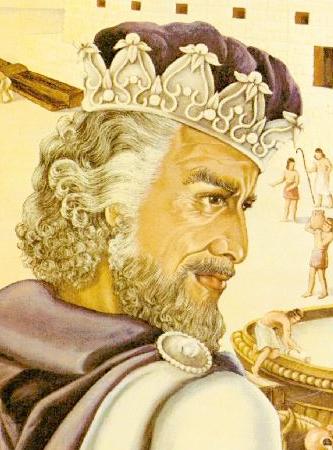
Showing posts with label King Solomon. Show all posts

Tuesday, August 20, 2013

On the Bible, Debt, and Financial Immorality


Penny Nance of Concerned Women for America has a fantastic piece outlining what the Bible says about debt:
1. Repayment of debt is mandatory.
  • "Better not to vow than to vow and not pay." (Ecclesiastes 5:5)
2. Debt presumes upon the future.
  • "Come now, you who say, 'Today or tomorrow we will go to such and such a city, spend a year there, buy and sell, and make a profit'; whereas you do not know what will happen tomorrow. For what is your life? It is even a vapor that appears for a little time and then vanishes away." (James 4:13-14)
3. Debt enslaves the debtor.
  • "The rich rules over the poor, and the borrower is servant to the lender." (Proverbs 22:7)
4. Failure to repay is considered stealing.
  • "The wicked borrows and does not repay, But the righteous shows mercy and gives." (Psalm 37:21)  "If a man makes a vow to the Lord, or swears an oath to bind himself by some agreement, he shall not break his word; he shall do according to all that proceeds out of his mouth." (Numbers 30:2)
5. Debt symbolizes a lack of contentment.
  • "[A]s sorrowful, yet always rejoicing; as poor, yet making many rich; as having nothing, and yet possessing all things. (2 Corinthians 6:10)
  • "Now godliness with contentment is great gain. For we brought nothing into this world, and it is certain we can carry nothing out. And having food and clothing, with these we shall be content." (1 Timothy 6:6-8)
  • "And He said to them, 'Take heed and beware of covetousness, for one's life does not consist in abound of things he possesses." (Luke 12:15)
6. Interest on debt: A waste of resources.
  • "So when they were filled, He said to His disciples, 'Gather up the fragments that remain, so that nothing is lost." (John 6:12)
7. Ignoring debt is dangerous.
      • "Owe no one anything except to love one another, for he who loves another has fulfilled the law." (Romans 13:8)

8. Debt prevents us from receiving God's full blessings.
  • "He who is faithful in what is least is faithful also in much; and he who is unjust in what is least is unjust also in much. Therefore, if you have not been faithful in the unrighteous mammon, who will commit to your trust the true riches? And if you have not been faithful in what is another man's, who will give you what is your own." (Luke 16:10-12)
9. We are to strive to leave our children a solid foundation on which to build.
  • "A good man leaves an inheritance to his children's children, but the wealth of the sinner is stored up for the righteous." (Proverbs 13:22)
  • "But if anyone does not provide for his own, and especially for those of his household, he has denied the faith and is worse than an unbeliever." (1 Timothy 5:8)
10. The end result, debtors bring on themselves their own demise.
  • "The alien who is among you shall rise higher and higher above you, and you shall come down lower and lower. He shall lend to you, but you shall not lend to him; he shall be the head, and you shall be the tail. Moreover, all these curses shall come upon you and pursue and overtake you, until you are destroyed, because you did not obey the voice of the Lord your God, to keep His commandments and His statues which He commanded you." (Deuteronomy 28: 43-45)
 Read the whole thing here.

Thursday, May 23, 2013

The Original, Biblical, Tea Party


From 2 Chronicles 10:

The Revolt Against Rehoboam

10 And Rehoboam went to Shechem, for all Israel had gone to Shechem to make him king. So it happened, when Jeroboam the son of Nebat heard it (he was in Egypt, where he had fled from the presence of King Solomon), that Jeroboam returned from Egypt. Then they sent for him and called him. And Jeroboam and all Israel came and spoke to Rehoboam, saying, “Your father made our yoke heavy; now therefore, lighten the burdensome service of your father and his heavy yoke which he put on us, and we will serve you.”
So he said to them, “Come back to me after three days.” And the people departed.
Then King Rehoboam consulted the elders who stood before his father Solomon while he still lived, saying, “How do you advise me to answer these people?”
And they spoke to him, saying, “If you are kind to these people, and please them, and speak good words to them, they will be your servants forever.”
But he rejected the advice which the elders had given him, and consulted the young men who had grown up with him, who stood before him. And he said to them, “What advice do you give? How should we answer this people who have spoken to me, saying, ‘Lighten the yoke which your father put on us’?”
10 Then the young men who had grown up with him spoke to him, saying, “Thus you should speak to the people who have spoken to you, saying, ‘Your father made our yoke heavy, but you make it lighter on us’—thus you shall say to them: ‘My little finger shall be thicker than my father’s waist! 11 And now, whereas my father put a heavy yoke on you, I will add to your yoke; my father chastised you with whips, but I will chastise you with scourges!’”[a]
12 So Jeroboam and all the people came to Rehoboam on the third day, as the king had directed, saying, “Come back to me the third day.” 13 Then the king answered them roughly. King Rehoboam rejected the advice of the elders, 14 and he spoke to them according to the advice of the young men, saying, “My father[b] made your yoke heavy, but I will add to it; my father chastised you with whips, but I will chastise you with scourges!”[c] 15 So the king did not listen to the people; for the turn of events was from God, that the Lord might fulfill His word, which He had spoken by the hand of Ahijah the Shilonite to Jeroboam the son of Nebat.
16 Now when all Israel saw that the king did not listen to them, the people answered the king, saying:
“What share have we in David?
We have no inheritance in the son of Jesse.
Every man to your tents, O Israel!
Now see to your own house, O David!”
So all Israel departed to their tents. 17 But Rehoboam reigned over the children of Israel who dwelt in the cities of Judah.
18 Then King Rehoboam sent Hadoram, who was in charge of revenue; but the children of Israel stoned him with stones, and he died. Therefore King Rehoboam mounted his chariot in haste to flee to Jerusalem. 19 So Israel has been in rebellion against the house of David to this day.
 See also 1 Kings 12:1-20.

 Background: This section follows the death of King Solomon.  While Solomon had been a godly King in his early years (when he built the temple), in his later years he was swept with the temptations of Earthly power.  Where he originally raised taxes to build the temple (which the people supported), he moved on build palaces and country estates for himself.

Friday, February 8, 2013

King Solomon, Promiscuity, and Child Sacrifice 'gods'


This morning, I was reading about he downfall of King Solomon in 1 Kings 11; it started when the King decided to think with his genitals instead of fearing the Lord:
But King Solomon loved many foreign women, as well as the daughter of Pharaoh: women of the Moabites, Ammonites, Edomites, Sidonians, and Hittites— (v. 1)
Chasing women led King Solomon to engage in some really bad activities:
Then Solomon built a high place ... for Molech the abomination of the people of Ammon. (v.7)
Now who, pray tell, was Molech?!?
One of the practices of the cult that worshiped Moloch was to sacrifice their children.
In other words, pursuing the next orgasm can mess up your moral compass really quickly; there's nothing original about any of our allegedly 'enlightened' and 'modern' attitudes about sex.