Showing posts with label Austin. Show all posts

Friday, February 14, 2020

Does Bush's "Vandalism" Allegation REALLY add up?!?


"Even a child is known by his deeds,
Whether what he does is pure and right."
Proverbs 20:11

[Note: Open Records Requests have been sent.]

George P. Bush posted this to Twitter the other day:

We didn't give this a lot of thought on Tuesday. It seems plausible, given Austin's well documented recent upsurge in crime.  Our first impression was to keep scrolling.

Yesterday, however, we spoke with a source on an unrelated matter.  During the conversation, the source asked whether we were enjoying "George P. Bush as the new Jessie Smolett?!?"  When we were slow to pick up on the reference, this source laid out a hypothesis that Bush staged the whole thing.

Interesting.

At that point, we weren't particularly sold.  But the thought lingered.  Then we saw this report from KVUE:


We also saw this tweet from KVUE:


[Note: There's no way KVUE would have posted this tweet had they not tried to contact Bush through official channels first.]

Here's the thing: If Bush's story is on the level...then why wouldn't he respond to press inquiries.  As long as he's telling the truth, there's nothing but political upside.  He gets to bash the Austin city council on their single most unpopular policy.

But he says nothing.

Which begs a follow up question: What are the odds?!?

Out of all the cars...and all the residents of Austin...it just "happens" to be a statewide elected official whose car gets vandalized.

Furthermore, it just "happens" to be the statewide elected official with the most transparently obvious political ambitions?!?

(Yet no witnesses.)

Maybe...but that's an awfully big coincidence.

To be clear: This is all speculative.  We don't have anything to go on besides a hunch.  That being said, we've had multiple hunches related to George P. Bush pan out in the recent past.

It just seems...convenient.

Bottom Line: The results of the smell test, at least for now, are inconclusive.

Saturday, November 3, 2018

Travis Country turnout number up, but NOWHERE near enough (to change anything)


"Therefore by their fruits you will know them."
Matthew 7:20

Fascinating early vote information:


Turnout is, obviously, up.

What does that mean?!?

Probably nothing.

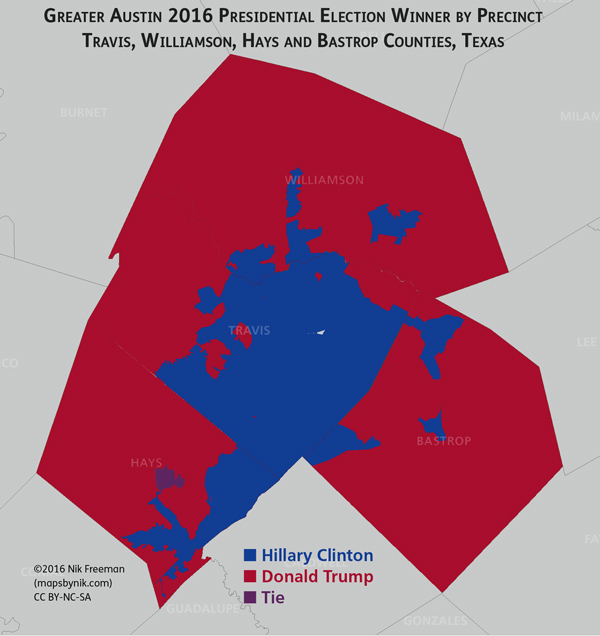
In 2016, Hillary Clinton grossed over 300,000 votes in Travis County and netted over 170K:


She still lost the state by approximately 800k votes:


In other words, a gross of 300k and a net of 170k in Travis County still leads to an 800k loss statewide.

And that's in one of the Democrats' best years in recent memory.

What does this mean?!?

Democrats need to net at least 250k votes out of Travis County to have any hope of competing statewide.  In order to net 250k, they probably have to gross 550k.  And they're not doing the work it would take to produce turnout in those numbers.

And that's before you get to the fact that the GOP's 2018 ticket in Texas is stronger than the 2016 ticket.

Case in point: This author most certainly did not vote for Donald Trump in 2016...but we most certainly did vote for Ted Cruz in 2018.

And there are almost certainly enough conservatives who feel the same way as this author to pump Cruz's numbers 2 or 3 points higher than Trump.

Bottom Line: Until the Democrats start pulling 500k+ in Travis County, nothing much will change statewide.

Friday, August 31, 2018

The National Media Doth Protest Too Much


"and with all unrighteous deception among those who perish, because they did not receive the love of the truth, that they might be saved."
2 Thessalonians 2:10

The other day, RPT sent out three tweets in reference to Robert Francis' unwillingness to debate Ted Cruz (despite obnoxiously grandstanding on the topic for months).  The tweets were a lighthearted attempt to poke fun at Robert Francis that used pictures that have been floating around the internet for months.  To be honest, we thought the tweets in question were dumb and juvenile when we first saw them.

And that could have been the national media's angle: "Texas GOP makes dumb, juvenile, attack against Beto O'Rourke."

Instead we got this:


[Note: Who even knew GQ magazine was still a thing?!?]

And this:


And this:


We could go on.  Dozens of national outlets ran this story.  They all pushed the narrative that the tweets in question made Robert Francis look 'cool' or 'sexy.'

It was an interesting insight into the psychology of people who...aren't eligible to vote in Texas!!!

[Note: That the TEXAS Tribune and the TEXAS Observer haven't touched this story should tell you everything you need to know.]

But back in the real world, in Texas, wearing a dress is a bad look for an alleged male who wants to win statewide office.  It might not be as bad of a look as some people think.  But it's net negative.

Don't believe us?!?  Fine.  Feel free to talk with actual Texas voters.  But make sure you visit Plano, Denton, and Katy.  East Austin doesn't count.

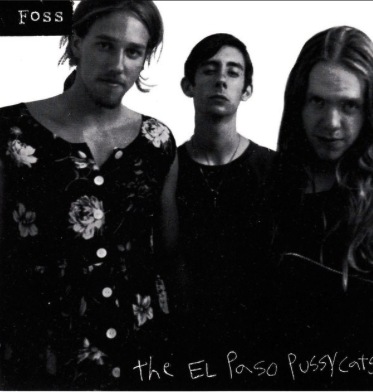
As to the 'substance' of their claims: O'Rourke doesn't even look like a punk rocker in that photo.  He looks like a douche bag Kurt Cobain wannabe.  The only way that photograph can be remotely described as "punk" is if the phrase "snot-nosed" immediately precedes it.

Furthermore, who among us hasn't gotten stuck talking to some guy who was in a band and wouldn't shut up about it?!?  That's exactly how Robert Francis comes across.  Nobody cares.

The biggest shame is that RPT should be using this time to educate the public about how O'Rourke is nothing more than your typical corrupt Texas politician.  But that won't happen because the national media is gullible enough to overreact to a stupid tweet.  Let the intellectually lazy, lowest common denominator, campaign commence!

Bottom Line: If you want to forecast elections in Texas, it might behoove you to speak to people who actually vote in them....

Thursday, August 23, 2018

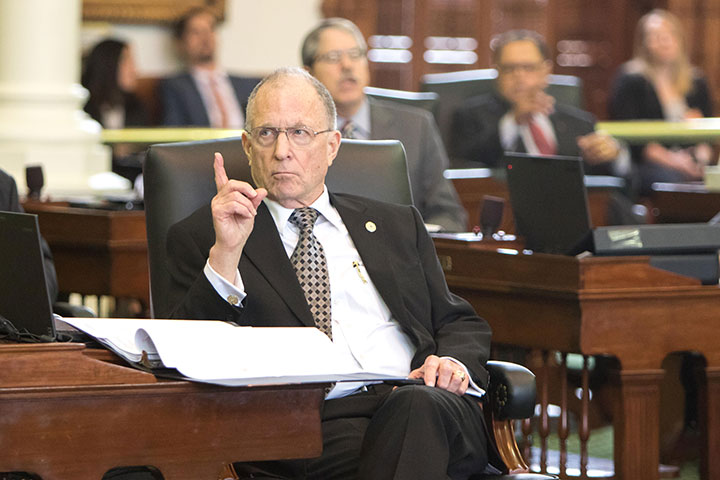
#TXLEGE: Bob Hall discusses power grid reliability....


"And while they went to buy, the bridegroom came, and those who were ready went in with him to the wedding; and the door was shut."
Matthew 25:10

[Note: This interview was recorded a week ago.  Due to a long series of technical issues, it's taken a week to get the recording in a form where it could be presented to the public.  Our friend Chris Williams, of Chris Williams audio, was immensely helpful in that process.]

The recent heat wave has seen a spike in stories about Texas' electric grid; given that backdrop, it seemed like a good time to bring in Senator Bob Hall to discuss grid reliability in more...challenging...circumstances:


Highlights:
  • Power interruption cost businesses A LOT of money.
    • 1 second = $75k for one company.
  • Texas' current grid is pretty reliable...in a benign environment.
  • In the modern world, electricity is the third most important element to sustain life.
  • Lots of bad foreign actors have access to this technology.
  • North Korea was caught attempting to smuggle missiles through the Panama Canal in 2013.
  • North Korea also has potentially hostile satellites orbiting the U.S.
  • Texas spends far more subsidizing wind power than this would cost.
  • Israel already does this.
  • The technological changes are not particularly complicated.
  • We're starting to see action on the federal level.
  • Power reliability is a major factor in determining corporate site locations.
  • The military would probably move additional assets into Texas if we did this.
  • Austin, specifically, has been specifically threatened by North Korea.

Tuesday, June 5, 2018

Cruz's ASTONISHINGLY Good Numbers with African Americans and Hispanics


"Now when He had said these things, He cried with a loud voice, “Lazarus, come forth!
John 11:43

Late last week, a poll came out in the U.S. Senate race that confirmed what everyone who isn't a national media reporter or a resident of East Austin already knows: Ted Cruz will beat Beto by a comfortable margin.

That's such an obvious conclusion that we didn't give the poll much thought until we belatedly saw this analysis from National Review:

Poll: Cruz Leads Beto O’Rourke among Hispanic Voters in Texas Senate Race

From the article:
The poll, which found that Cruz leads O’Rourke 46 to 44 percent among Hispanics, is a troubling sign for O’Rourke, who has tailored his campaign around his advocacy for racial minorities.
 That's pretty impressive, but what we saw next made our jaw drop:
O’Rourke, who currently represents El Paso as a member of the House, does however maintain a significant advantage among black voters, leading Cruz 70 percent to 15 percent.

[Note: Emphasis added.]
Keep in mind: Republicans typically get about 7% of the African-American vote; Cruz has doubled that here.

Obviously, all the usual caveats about "it's just one poll" apply, but it's nevertheless interesting.

If Republicans could get 20% of the African-American vote, it blows up the Democrat coalition in a way that makes it impossible for them to ever win again; this poll suggests Cruz might be getting close.

Bottom Line: It's too soon to draw conclusions, but if this trend continues it would be a monumental development....

Thursday, July 28, 2016

BOOK REVIEW: "The Death and Life of Great American Cities", by Jane Jacobs


"For God has not given us a spirit of fear, but of power and of love and of a sound mind."
2 Timothy 1:7

[Author's Note: We finished this book close to a month ago.  It's taken that long to digest.  While now is the appropriate time to commit these thoughts to writing, we will continue to unpack it in the coming months.]

The Death and Life of Great American Cities. by Jane Jacobs, is the most challenging book we've read in some time.  Written in 1961, the book details the failures of 'urban planning' wrought by the bureaucrats of that era.  Sadly, many of those attitudes have not only persisted among policy makers, it has expanded and become more entrenched.  All of Jacobs' predictions have, unfortunately, come to pass.  At the same time, however, Jacobs investigates and presents common traits of successful urban areas.  The problem is finding political will to implement them.  The final result is a product that, regardless of the political preconceptions one brings to the effort, will confirm some while rocking others to the core.

The biggest takeaway from Jacobs is that successful cities emerge from spontaneous order, not central planning.  Jacobs is SCATHING towards the ethos of the latter that, unfortunately, prevails to this day.  She decries a system where, "[O]nly supermen could understand a great city as a total, or as whole groups of districts, in the detail that is needed for guiding constructive actions and for avoiding unwitting, gratuitous, destructive actions" (410).  Residents of urban neighborhood are victimized by bureaucrats who "too often, we believe, make decisions about it from desks downtown" (122).  Even worse, "[E]xtraordinary governmental financial incentives have been required to achieve this degree of monotony, sterility, and vulgarity" (7).  Ouch.  And that's a small sample.

The biggest area where we were personally challenged was sidewalks.  In Jacobs' view, lively sidewalks are so essential to urban vitality that she devotes three chapters to the subject.  A widely used network of sidewalks is the foundation of public safety.  As Jacobs explains, safety is "kept primarily by an intricate, almost unconscious, network of voluntary controls" (32).  When people use a city street for daily activity, it begets a sufficient number of eyes and ears to maintain public safety.  In the context of a city like Austin, which has a sidewalk deficit stretching back decades, this example illustrates how a modest expenditure on sidewalks could have an additional benefit beyond mobility.

Another critical component of successful streets is multiple uses over the course of the day.  Jacobs explains: "[T]he continuity of this movement (which gives the street its safety) depends on an economic foundation of basic mixed uses" (135).  For example, this concept would encourage the integration of residential and commercial uses over segregation via zoning laws.  When businesses serve their customers, in addition to the obvious economic benefits, it simultaneously creates a level of foot traffic that keeps residents safe.  And that's before we discuss the convenience factor we discuss the convenience factor of completing daily tasks within a short distance.

Speaking of zoning, another fun discussion was land-use restrictions for commercial locations.  Long story short: zoning restrictions create barriers to entry where competitive ecosystems had previously flourished.  This might be the greatest sentence of all time: "This protection -- which is nothing less than commercial monopoly -- is considered very 'progressive' in planning circles" (195).

That being said, nothing could have prepared us for Jacobs' discussion of the origins of sub-urbanization.  It turns out current suburban land use patterns are a New Deal legacy.  We quote Jacobs in full because there's nothing we can add:
The idea of diverting huge sums of money to thin suburban growth at the expense of starving city districts was no invention of the mortgage lenders (although they, as well as suburban builders, have now acquired a vested interesting in this routine).  Neither the ideal nor the method of accomplishing it originated logically within the credit system itself.  It originated with high-minded social thinkers.  By the 1930's, when the FHA methods for stimulating suburban growth were worked out, virtually every wise man of government -- from right to left -- was in favor of the objectives, although they might differ with one another on methods.  A few years previously, Herbert Hoover had opened the first White House Conference on Housing with a polemic against the moral inferiority of cities and a panegyric on the moral virtues of simple cottages, small towns and grass.  At an opposite political pole, Rexford G. Tugwell, the federal administrator responsible for the New Deal's Green Belt demonstration suburbs, explained, "My idea is to go just outside centers of population, pick up cheap land, build a whole community and entice people into it.  Then go back into the cities and tear down whole slums and make parks of them.  (310)
To put it mildly, this website has no use for the legacy of either Herbert Hoover or Franklin Roosevelt.

That's not to say, however, that density is a magic bullet.  Jacobs: "to assume that this is 'the' answer would be to oversimplify outrageously" (204).  To have a central planner decree 'let there be density' and dedicate large sums of money for this purpose would invite the same dangers giving central planners large sums of money always invites.  Instead, density should be encouraged over time, "densities should be raised...gradually rather than in some sudden, cataclysmic upheaval to be followed by nothing more for decades" (216); in other words, spontaneous order over central planning.

Jacobs makes several other fantastic points that we can't work into a coherent narrative, so we list them without comment:

  • Schools can't create 'good neighborhoods' (113).
  • A successful neighborhood has to be big and powerful enough to fight city hall (122).
  • The project that ultimately became the World Trade Center was doomed from the start (157).
  • "Public policy cannot directly inject private enterprise" (167).
  • Old buildings allow businesses that can't support new construction to be economically viable (188).
  • Cities are incubators of new industry (197); thus, it's completely natural for businesses to be in the city during their startup phase and move to the suburbs as they mature and need more space.
  • "The problem with paternalists is that they want to make impossibly profound changes and they choose impossibly superficial means for doing so" (271).
    • Author's Note: That's SERIOUSLY amazing....
  • Allowing neighborhoods to gradually 'unslum' on their own doesn't make special interests rich (288).
  • The federal tax code encourages slumlords (316).
  • Corruption gets "more inventive" over time (355).
  • Food trucks can add tremendous neighborhood diversity at minimal cost (396).
An online review cannot do this book justice.  It's taken a month to collect our thoughts to this point.  Read The Death and Life of Great American Cities for yourself with an open mind and an understanding that Jacobs doesn't fall neatly along the left/right spectrum.

Tuesday, July 12, 2016

#ATXOnline: Plugging the other guys....


"Render therefore to all their due: taxes to whom taxes are due, customs to whom customs, fear to whom fear, honor to whom honor."
Romans 13:7

A couple of other local bloggers have posted must-read pieces with which we fully concur.

First, Andy from Travis Tracker raises good questions about a 'racial reconciliation' event held last night:
If you watched or attended the "ATX Together" forum hosted by KLRU-TV on Monday night, you may have noticed something wasn't quite ...together about it.

It was a noble, town hall-style event, and we stand behind any and all efforts to discuss plans for how to counter the kind of violence we've seen over the past two weeks. No problem there.

Many friends of this publication cheered it on, including Maura Phelan, Republican candidate for District Attorney, who took to Twitter to share her vision of a brighter future for the Travis County justice system. And we were grateful for any effort to seek common ground and bridge a deepening gap between the community and law enforcement.

But there were serious gaps in the patchwork of voices at the forum -- whatever the reason for the oversight may be.

There were no Republicans or notable conservative leaders seen in the audience, which isn't unusual for many Austin events given the local political climate. Yet the Travis County Democratic Party Chairman,Vincent Harding, was one of the emcees. 
.... 
There was no shortage of back-and-forth regarding "checking your privilege," but nothing much said of creating jobs to help the poor improve their economic conditions.
Next, Bill Oakey at Austin Affordability uses a personal anecdote to illustrate how CapMetro's bus service has gotten worse over the past couple years:
As it turns out, I had not ridden the North Lamar bus in the last couple of years. After several minutes went by, reality began to set in. Even before I looked up the schedule, I remembered something bad. North Lamar and Burnet Road are the two busiest routes in the Capital Metro system. In 2014, they thought they had created a wonderful solution by putting in those gigantic, double-sized buses – MetroRapid they are called. They have accordions on them to help navigate turns.
Those giant buses are exactly twice as expensive to ride as the regular ones. And they are “express buses,” which means that they will get you across town faster because they make much fewer stops. But here’s the bad news for the huge number of regular bus riders. When the giant buses went into service, Capital Metro more than doubled the waiting time for the regular buses. And besides that, there may not be a “giant bus stop” anywhere near where you happen to be when you need a bus.
That convenient, every-11-to-12-minute service up and down North Lamar to Guadalupe, past  U.T. into downtown that we enjoyed for 25 or 30 years no longer exists. It has been stretched into 26 minutes. So, if you throw in Murphy’s law, the last bus at my stop probably came about 14 seconds before I walked out of Dan’s Hamburgers. I was in for quite a long wait. Imagine trying to endure that in July, with blistering 100-degree heat and stifling humidity.
Seriously, do read the whole thing(s) here and here.

Tuesday, April 26, 2016

"While You're in Town": An Open Letter to Franklin Graham


"Dishonest scales are an abomination to the Lord,
But a just weight is His delight."
Proverbs 11:1

[Author's Note: If readers are so inclined, they can tweet this post to @Franklin_Graham.]

Dear Reverend Graham,

Welcome to Austin.  I'm a blogger here in town.  My most famous piece of work came in 2013, when I released video of pro-Abortion protesters at the Capitol chanting "Hail Satan."

I'm writing to discuss a frequently overlooked issue on which the Church can be salt and light in the political arena.  Furthermore, salt and light on this issue will disproportionately cleanse the rot at the heart of our political system.  I'm talking about financial righteousness and unwavering opposition to the wicked, unbiblical, practice of economic protectionism.

It doesn't take a genius to see that big business is not our friend.  You live in North Carolina, so you're probably following the corporate bullying closer than me.  Here in Texas, the corrupt merchants at the Texas Association of Business have launched a similar economically fraudulent campaign against religious liberty.  Big business is carrying water for the big government social agenda.  But the solution isn't boycotts.  The solution is competition.  That's why the Church in America needs to support policies and ministries that encourage entrepreneurship and startup culture.

There is a a strong Biblical case for what I propose.  A major theme of Proverbs is the condemnation of unjust accumulation and praise for honest industry.  Whenever a corporation jacks a regulation in its favor or gets a bailout, that's an unjust weight and measure.  The riot at Ephesus was about Economic Protectionism.  For every Bible verse about sex, there are approximately ten about money.

Obviously, the Bible discusses debt and taxes at length.  America is rapidly becoming enslaved to our lenders, and this includes our state and local governments.  Every penny of debt we allow Caesar to impose strengthens this wicked system.  Here in Austin, we've defeated three bonds in the last three years.  While Jesus commands us to pay taxes, He also commands tax collectors to not abuse citizens.  High taxes also played an important role in splitting the ancient kingdom.  Legally cutting off Caesar's lifeblood, from our local communities on up, will pay dividends on numerous other issues.

Here in Austin, we have an example of this approach's success.  One of our local city council members, Don Zimmerman, is a strong Christian who originally developed a reputation as a champion for taxpayers.  His opponent was president of the local gay and lesbian chamber of commerce.  Obviously, the gay and lesbian part demonstrates his support for that agenda.  But, due to the Chamber of Commerce part, he was also on record supporting unpopular "economic development" subsidies for Apple.  Don's opposition to that Apple deal helped get him across the finish line in a very close race.  You read that right: opposition to special interest tax-subsidies helped defeat the rainbow flag!

I do not propose this course of action instead of focusing on the issues in which we are now engaged.  What I'm saying is that a commitment to financial righteousness and opposition to economic protectionism will weaken the forces of the status quo.  Weakening this wicked status quo will give us the space we need to successfully pursue our agenda on life, marriage, and religious liberty.  With every tax abatement, every jacked up regulation, and every subsidy this wicked status quo gains strength.  Every penny of government spending we cut, and restriction upon economic liberty we repeal, weakens it.  Economic protectionism is the unguarded underbelly of the status quo, and there's a strong Biblical case for going after it.  As you travel the country and encourage Christians to engage the political process, I ask you to keep this issue in mind.

Sincerely,
Adam Cahn
Austin, TX
April 26, 2016

Tuesday, March 15, 2016

The Next Great #SxSW Swindle


"Dishonest scales are an abomination to the Lord,
But a just weight is His delight."
Proverbs 11:1

From the Guardian:
Very quietly, and a little secretly, an unprecedented gathering of American mayors has arrived in Austin, Texas.

Twenty mayors, from Kansas City, Sacramento, Portland, Albuquerque, Baltimore and elsewhere, have been drawn here to the SXSW festival, though most have a packed schedule that is closed to journalists and the public. Amazon; Google; Austin’s HomeAway vacation rentals firm; and Maven, General Motors’ ride-sharing service, have been privately pitching to them. They’ve held a little startup shark tank. They’re touring new designs for space-efficient housing and hearing about surveillance technology.

Government has been a hot topic throughout the annual technology conference in Austin. It’s the first time a sitting president has visited, and the event comes at a time when the FBI-Apple debate is stirring tension between civic offices and tech companies. Tech companies seeking to get around regulation are also noticing just how much trouble a mayor can cause.

Over a cocktail reception at city hall, the mayors talked about how to attract engineers to their cities, how to negotiate with union-resistant startups, and what they can do to get Google Fiber to pick them.

“First of all, we’ve all been wanting to come to South By for a while, and this is a great excuse,” said Sacramento mayor Kevin Johnson. “And then there’s just the reality: the biggest problems just can’t be solved without tech right now.”

....

A lot of this, Stanton said, comes down to “coolness”. “The game is talent – a place like Austin built a brand that’s cool. Phoenix is cool, too.”

At the private mayoral shark tank, Stanton sat with his 20 fellow mayors over breakfast burritos and coffee and listened as startups gave their all, hoping to score lucrative city contracts.
Read the whole thing here.

Sunday, February 7, 2016

Revelation 2:12-17 -- The COMPROMISING Church (Part 1)


And to the angel of the church in Pergamos write,

‘These things says He who has the sharp two-edged sword: “I know your works, and where you dwell, where Satan’s throne is. And you hold fast to My name, and did not deny My faith even in the days in which Antipas was My faithful martyr, who was killed among you, where Satan dwells. But I have a few things against you, because you have there those who hold the doctrine of Balaam, who taught Balak to put a stumbling block before the children of Israel, to eat things sacrificed to idols, and to commit sexual immorality. Thus you also have those who hold the doctrine of the Nicolaitans, which thing I hate. Repent, or else I will come to you quickly and will fight against them with the sword of My mouth.

“He who has an ear, let him hear what the Spirit says to the churches. To him who overcomes I will give some of the hidden manna to eat. And I will give him a white stone, and on the stone a new name written which no one knows except him who receives it.”’
Revelation 2:12-17

Pastor Danny Forshee.  Great Hills Baptist Church.  April 13, 2014:


Outline:
  1. Identification (v. 12)
    A. The City -- Pergamos
                        - Lots of Pagan Temples; 3 for emperor worship alone!
                        - Capital City
                        - Similar to Austin
    B. Christ -- Self- Revelation.
  2. Commendation (v. 13)
    A. Works -- Good Deeds.
    B. Dwelling -- Hostile, Pagan place.
    C. Christ-centeredness
         i. "You hold fast to MY name."
        ii. "Did not deny MY faith."
Highlights:
  • This sermon was originally preached on Palm Sunday.
  • John pre-supposes you know your Old Testament.
  • "Them demonic spiders come out of the wood work whenever you preach on Revelation."
  • Church at Pergamos had people in the congregation they refused to discipline.
  • During the middle ages, the Church became VERY compromised.
  • If God does a Good Work in your life, gossip about the gospel.
  • "The things that have God in them are the things that last."
  • Jesus is attracted to commitment and endurance.
  • Don't quit; keep doing the right thing until God intervenes.
  • "Our greatest challenge in the Church in America today is theological heresy and sexual promiscuity."

Wednesday, October 28, 2015

When the latest Planned Parenthood Video Occurs in Your Neighborhood


"Also I heard the voice of the Lord, saying:

“Whom shall I send,
And who will go for Us?”
Then I said, “Here am I! Send me.”
Isaiah 6:8

Yesterday we saw the most personally unsettling episode of the Center for Medical Progress' Planned Parenthood expose:


In the video, the Abortionist discusses performing abortions in the last facility in Austin.  Planned Parenthood South Austin is that last Planned Parenthood facility in Austin that performs abortions.  That facility is two miles from this Author's apartment.

It's impossible to describe how alarming it is to know this level of barbarism is up the street from you until you experience it.  But it is.  Singing louder like the "Christians" in 1930's Germany isn't an option.

Not coincidentally, this facility is the primary focus of the ongoing 40 Days for Life campaign in Central Texas.  Knowing that to be the case, we went out this afternoon to pray at the facility.  We were there for half-an-hour.


During that half hour, we saw five women enter the facility; two were Hispanic, two were Black.

The best way to disrupt the abortion industry is to pray for individual clinic workers.  We'll start there.  Cahnman's Musings asks readers to pray for Amna Dermish.

Bottom Line: Here I am Lord, send me.

Wednesday, September 2, 2015

Austin Planned Parenthood "Clinic" reveals organization's weakness


"He who covers his sins will not prosper,
But whoever confesses and forsakes them will have mercy.."

Proverbs 28:13

Post HB-2, there's only two facilities left in Austin that performs abortions.  One, Planned Parenthood South Austin is located on Ben White blvd.  The local chapter of 40 Days for Life has been doing sidewalk counseling there for years.

The next 40 Days for Life campaign begins on September 23rd.  In preparation for that campaign, it appears Planned Parenthood South Austin had just erected a 6-foot concrete fence that will make it impossible to see outside the facility grounds.  A sidewalk counselor with the Central Texas Coalition for Life took these pictures this morning:


Bottom Line: Strong organizations don't retreat behind 10 foot walls to avoid looking at the truth standing right outside their door.

Wednesday, July 8, 2015

Thriving Austin Pharmacist eschews third-party payment!!!


"As each one has received a gift, minister it to one another, as good stewards of the manifold grace of God."
1 Peter 4:10

Fascinating economic microcosm in yesterday's Statesman:
An experiment birthed 10 years ago when Austin pharmacist Chris Johnson founded an indie drug store to sell discounted medicines to needy Central Texans was more than a crazy idea. It was a crazy idea that had legs.
MedSavers Pharmacy — a rare drug store that doesn’t take insurance — is still dispensing lower-cost generic drugs, still growing and still fun, Johnson, 44, said.
It’s a business, he told the Statesman a year after it was launched, that inspired him to take a drastic pay cut so he could offer cheaper options to brand-name drugs, forge deeper connections with his customers and spend more time with his wife and two children. It was a personal statement against obscenely high drug costs, he said.
“People told me to my face I was crazy, but I just signed another five-year lease,” Johnson said, looking like someone who’s having the last laugh. “When you see the pricing in the marketplace and see that I’m still making a profit, you see the true travesty of what is going on.”
In between greeting customers and answering questions from his pharmacy technicians on a recent morning, Johnson said he’s managed to stay in this unusual business because he doesn’t have the high overhead costs taking insurance would require. He even moved to a larger location five years ago, from a tiny space on Medical Parkway to 1800 W. 35th St., next to Things Celtic.
He supplied a list of 35 drugs that cost less at MedSavers than at three national chain stores. In some cases, MedSavers price was half of the next lowest price. In six instances, MedSavers was at least five times cheaper.
That’s a big deal to customers paying out of pocket.
Johnson said about 80 percent of his estimated 4,000 customers lack insurance, down from about 95 percent when he opened in 2005. The remaining 20 percent can try to use their insurance, but they’ll have to submit the bills themselves.
“When 80 percent of your phone time is taken up by insurance, it takes staff to do that,” said Johnson, a 1995 University of Texas graduate.
A decade ago, MedSavers had one pharmacy technician and one part-time pharmacist. Today, it has seven technicians — three of whom are full-time — and three part-time pharmacists. Johnson says his salary is comparable to what his peers make in Austin, where median pay was $115,631 last year, according to the Texas Workforce Commission. It took him about 3½ years to earn an annual salary comparable to what he made before MedSavers, he said.
Read the whole thing here.

Tuesday, June 16, 2015

Voice and Exit: Practical Radicalism


"And no one puts new wine into old wineskins; or else the new wine bursts the wineskins, the wine is spilled, and the wineskins are ruined. But new wine must be put into new wineskins."
Mark 2:22

Max Marty discusses innovation grounded in reality:


Highlights:
  • In the aggregate, policy matters a lot; individually, it doesn't.
  • Policy tends to move towards centralization.
    • Makes exiting more expensive.
  • Entrepreneurship is practical radicalism.
  • You need something outside the box enough to produce returns, but grounded enough to be feasible.
  • Begin from the existing framework.
  • Traditional public schools are day care.
  • Spot opportunities others won't spot.
  • Have a year's worth of savings and a thick skin.
  • Fortune favors the bold.
-----

Voice and Exit 2015 comes to Austin this Saturday; learn more and sign up here.

Monday, June 15, 2015

Voice and Exit: 9 Megatrends Next Century's Historians will use to describe this one


"And no one puts new wine into old wineskins; or else the new wine bursts the wineskins, the wine is spilled, and the wineskins are ruined. But new wine must be put into new wineskins."
Mark 2:22

Corporate consultant Nancy Giordino examines trends that will shape the next couple decades.


Highlights:
  • Bi-Polar economy
    • "Top 1%" keeps doing better.
  • The internet will be in everything.
  • 3D printers, robotics, biotechnology.
  • Constant change, disruption, and adaptation.
  • Permanent ambiguity.
  • Constantly having access to other people.\
  • New structure being created for sharing.
    • eg. Uber or Air B'N'B
  • Radical solutions require openness to radical ideas.
  • It's ok to say "I don't know."
  • Growth is only possible with suffering.
  • "What would it have been like to stand at the front end of the renaissance?!?"
-----

Voice and Exit comes to Austin this Saturday; learn more and register here.

Saturday, June 6, 2015

Voice and Exit: Inside History's Most Brutal Social Experiment


"And no one puts new wine into old wineskins; or else the new wine bursts the wineskins, the wine is spilled, and the wineskins are ruined. But new wine must be put into new wineskins."
Mark 2:22

Michael Malice details the horrors of life in North Korea:


Highlights:
  • North Korea is the "least free, most brutal" regime on Earth.
  • Kim Il Sung was more oppressive than Stalin.
  • Hostile, Wavering, and Favorable castes.
    • Further subdivided by 51
    • Hostile not allowed near cities or borders.
  • North Korea produces nothing of value.
  • In the midst of famine, 2 meal a day campaign.
  • "Having too many people makes Socialism difficult."
  • "Class traitors" are punished to three generations.
  • Camps are visible from Google Earth.
  • If you kill yourself, your family has to fill your quota.
-----

Voice and Exit 2015 is coming to Austin later this month; learn more and sign up here.

Saturday, May 30, 2015

Voice and Exit: How 3D Bioprinting will transform Medicine


"And no one puts new wine into old wineskins; or else the new wine bursts the wineskins, the wine is spilled, and the wineskins are ruined. But new wine must be put into new wineskins."
Mark 2:22

Laura Bosworth explains how 3D printing can make organ shortages a thing of the past, starting with Breast Cancer survivors:


Highlights:

  • 3D printing has been around for decades, what's changed is that the cost has dropped.
  • Similar to the replicator in Star Trek.
  • Working on 3D printing food.
    • Modern Meadow -- Using cow and pig cells to 3D print pieces of meat.
  • 3D printers have been used to create custom hearing aids for decades.
  • Custom printing for vets who need to have skulls rebuilt.
  • Functioning kidneys printed in China.
  • Functioning livers printed in U.S.
  • 18 people a day currently die due to organ shortages.
  • It could take decades until this is widely available.
  • Nipples for breast cancer survivors is the first step.
-----

Voice and Exit 2015 is coming to Austin next month; learn more and register here.

Saturday, May 23, 2015

Voice and Exit: Why Floating Cities are the Next Frontier


"And no one puts new wine into old wineskins; or else the new wine bursts the wineskins, the wine is spilled, and the wineskins are ruined. But new wine must be put into new wineskins."
Mark 2:22

Joe Quirk from Voice and Exit 2014:


Highlights:
  • The difference between us and a billionaire is miniscule compared to the difference with the bottom billion.
  • Governments are the only technology that does not make progress rapidly and peacefully.
  • The United States was a "breakaway experiment in governance."
  • Cruise ships are an early example of floating cities.
  • Nearly half the world's surface is unclaimed by governments.
  • Governments could only form if you choose to subject yourself to them.
  • The ocean is the largest solar panel in the world.
  • Water will be the next oil.
  • Regulations written in 1970 are holding back innovations in 2020.
  • "We walked on the moon 45 years ago; it's easier to float than fly."
Learn more about Sea Steading and Voice and Exit 2014 here.

-----

Voice and Exit 2015 is coming to Austin next month; learn more and register here.

Wednesday, April 29, 2015

Travis County appraisals up 11% as #TXLEGE reconciles tax proposals


"But the former governors who were before me laid burdens on the people, and took from them bread and wine, besides forty shekels of silver. Yes, even their servants bore rule over the people, but I did not do so, because of the fear of God."
Nehemiah 5:15

Could this be why Lt. Governor Patrick has made property tax relief the Texas Senate's priority?!?
The average residential value rose to $355,312 from $320,032 last year, Marya Crigler, chief appraiser for the Travis Central Appraisal District, said Tuesday.

Taxable residential values — that’s the market value after exemptions — rose 9 percent, to $262,462 from $240,139 last year, Crigler said.

Travis County, as well as cities, school districts and other local taxing entities will use the taxable values to set 2015 property taxes.
Austin Affordability has more:
It’s not a pretty sight!

You will see lots of $60,000 to $90,000+ increases for single family homes. Many of these same homeowners saw appraisal increases last year that were well above 10%. So, guess what that means. Even though there is a 10% cap on the home value used to calculate their tax bill, the assessment amount above the cap sits in the system to haunt the taxpayer in future years.

Even if the taxing entities lower their tax rates slightly to compensate for rising appraisals, tax bills continue to skyrocket.

Think about the longtime Austinites who have already seen their tax appraisals double and even triple in the last 10 or 15 years. Then think about the future. If taxes go up just 5% each year, it would only take 14 and a half years for today’s tax bills to double! That’s becuase [sic] the impact is compunded [sic].
 Your move Mr. Straus....

Wednesday, March 25, 2015

Paxton Rebukes local Austin special interest group


"Dishonest scales are an abomination to the Lord,
But a just weight is His delight."
Proverbs 11:1

Multiple Level Awesomeness:
A dispute over whether the Downtown Austin Alliance should have given $440,000 to last year’s failed light rail campaign, money that overwhelmingly came from a tax on downtown property owners, has moved to the Travis County courthouse.

But as is often the case with such matters, the legal argument is centered on a side issue — whether the alliance is a “governmental body” — and the resolution, when it comes, will not specifically address or bar such campaign contributions in the future.

The nonprofit alliance, under its formal name of Austin DBO Inc., on March 10 sued Texas Attorney General Ken Paxton, asking the court to overrule a March 3 “letter ruling” by Paxton that the alliance is a governmental body and thus must surrender records requested in December by Austin activist Brian Rodgers. The case is pending, as is a nearly identical suit the alliance filed last year in response to a similar ruling by Paxton’s predecessor as attorney general, now-Gov. Greg Abbott.

....

The alliance was founded in May 1992 by a group of downtown property owners as an advocacy group for the central business district. Responding to a petition from downtown property owners, the Austin City Council in 1993 formed a “public improvement district” roughly bounded by Interstate 35, MLK Jr. Boulevard, San Antonio Street and Lady Bird Lake (although the Austin American-Statesman property and the Hyatt south of the lake are also in the district). The city levies an additional 10 cents per $100 of property value in that area, exempting the first $500,000 on each property, and forwards that tax money four times a year to the alliance.

That tax supplied about 98.3 percent of the alliance’s $3.3 million budget in 2014, according to the alliance’s annual report. Travis County contributed another $25,000.

Last year, the alliance made four donations to Let’s Go Austin, eventually providing about 40 percent of the $1.1 million the group spent to support the city’s light rail referendum. The alliance’s then-executive director Charlie Betts (he has since retired) said that the donations were legal and that the group had given to earlier issue-oriented campaigns (though not individual candidates) such as school bond elections and the Central Health vote for a University of Texas medical school.

....

Bill Aleshire, Rodgers’ lawyer and a former Travis County judge, said that if Rodgers prevails, he expects the records will generate anger from the public and legislators. That alone could discourage the alliance from making such contributions in the future, he said.
Read the whole thing here.

Bottom Line: If you have taxing authority, you are a governmental agency for purposes of open records laws.  Kudos to Attorney General Paxton for recognizing this distinction.  Double kudos for recognizing this distinction in the context of last year's urban rail boondoggle.