Showing posts with label Entrepreneurship. Show all posts

Friday, October 18, 2019

Why does THE SAME STATE AGENCY handle Corporate Registrations and Elections Administration?!?


"If you see the oppression of the poor, and the violent perversion of justice and righteousness in a province, do not marvel at the matter; for high official watches over high official, and higher officials are over them."
Ecclesiastes 5:8

Without prematurely disclosing details, this author is in the process of forming a for-profit entity.  It is what it is.  Exciting times and all that.

As we go through this process, however, one question lingers: Why does this go through the office of the Secretary of State?!?

Isn't the Sec'y of State the state agency that handles elections?!?

The truth, of course, is that the Secretary of State's office handles both.  But that's a problem (or at least it should be).  When a large bureaucracy is charged with such wildly different responsibilities, we shouldn't be surprised when it handles them poorly.

To be fair, both corporate registrations and elections administration are valid functions of government.  So there's nothing inherently wrong with the state of Texas being involved in these areas.  Whatever historical accident placed those two duties under the same roof, however, illustrates how government works.

Over the past year, the Secretary of State's office has come under considerable criticism.  Much of it valid.  That being said, having gone through the past week an a half, we can't help wondering if maybe that agency is just trying to do too much.

Bottom Line:  When you throw a bunch of different objectives into a bureaucratic hodge-podge, you shouldn't be surprised when it performs at least some of them poorly.

Tuesday, September 12, 2017

Casar uses service industry as human shields for terrible idea


"Beware of false prophets, who come to you in sheep’s clothing, but inwardly they are ravenous wolves."
Matthew 7:15

No thank you:
Austin City Council Member Greg Casar helped kick off a campaign Monday to get an ordinance passed requiring all employers in the city to provide paid sick leave to their workers.

“Almost 40 percent of Austin’s workforce is not allowed to earn paid sick days by their employers,” Casar said in a news conference at the Workers Defense Project on Manor Road.

“If you are a service sector worker or a construction worker, it’s more likely than not you don’t have paid sick days,” he said. “But this isn’t just low-wage workers. Twenty percent of middle-income Austinites are not allowed to earn paid sick days by their employers.”

About 223,000 Austin workers (37 percent of the total workforce) do not receive paid sick days, according to figures from Work Strong Austin, a coalition of community organizations that launched the campaign Monday.

Casar said he will introduce a resolution at the Sept. 28 City Council meeting and hopes to work with the community, businesses and the rest of the council to get an ordinance passed by the end of February. It would apply to part-time and full-time workers, he said.
Where to begin?!?

Start with the fact that Casar's proposal would lead to fewer jobs and lower cash wages for the jobs that remain.   That's what happens when you mandate higher benefits while the employer's revenues stay the same.  We also wouldn't be surprised if Casar's proposal accelerated the move from 1040's to 1099's.

When you mandate higher costs for something, you shouldn't be surprised when you get less of it;  when Greg Casar wants to mandate higher minimum benefits for each new employee hired, you shouldn't be surprised when a lot fewer people are hired.

Beyond the generally anti-employment nature of Casar's proposal, move on to the fact that for the jobs that remain it would stack the deck in favor of large, established, employers.  That's because large, established companies are more capable of absorbing cost mandates than their smaller, newer, competitors.  Casar's proposal is as anti-startup as it gets.

[Note: Because Casar's proposal would stack the deck in favor of large employers, we wouldn't be surprised if the Chamber ends up supporting it; that's what we would make of any potential "business" support.]

[Note II: We also wouldn't be surprised if Casar's proposal resulted in a new round of wage waivers for big employers.]

Consider some of the Food and Beverage companies currently achieving national prominence that began as Austin-based startups in the past few decades:
  • Amy's Ice Cream
  • Pluckers
  • Chilantro
  • Peached Tortilla
  • Deep Eddy/Tito's/Dripping Springs vodka.
  • Every craft brewery that's sprung up over the past few years.
  • We could continue naming local brands, but we think you get the point.
None of the companies we just listed would have survived their early years if the type of mandate Greg Casar now proposes would have been in place 10 or 20 years ago.  At this point, most of those companies pay higher wages and offer more benefits than the industry average.  But none of those companies could have done so had they been forced to absorb those costs in their early years.

Casar wants to frame this as a fight against McDonalds.  But the truth is that McDonalds is going to be fine either way (and they might even benefit from his scheme).  The reality is that Casar's proposal is a declaration of war against the next Amy's, the next Pluckers, and the next Chilantro.

Finally, there's the personally insulting nature of this entire proposal.  It's not a secret that this author works in the service industry, and we will simply point out that we are perfectly capable of negotiating with our various employers without 'help' from grandstanding politicians.  If anything, by making it more difficult to find another job, the afore mentioned grandstanding politicians decrease our leverage with various employers.

[Note: While we're on the subject of how #atxcouncil mandates have effected us personally, don't tempt us to tell about our experiences navigating the stupid little "ban the box" ordinance they passed last year.]

We understand that Casar et. al. have cherry picked sympathetic examples to justify their position.  That doesn't change the fact that the best way to produce favorable working conditions is to have a robust market with lots of competing employers.  Mandating higher employment costs doesn't help anyone.

Bottom Line: Casar's proposal is kryptonite for local employment.  It would be bad for everyone, but it would be even worse for early stage startups.  Nothing good can come from this mandate.

Friday, January 20, 2017

What Trump's Administration means for Austin Tech....


"Therefore I exhort first of all that supplications, prayers, intercessions, and giving of thanks be made for all men, for kings and all who are in authority, that we may lead a quiet and peaceable life in all godliness and reverence. For this is good and acceptable in the sight of God our Savior,"
1 Timothy 2:1-3

[Author's Note: The discussion starts at the 17:10 mark on the video; the period between 58:15 and 59:55 is the transition between the first speaker and the panel.]

We did not attend this event, and we certainly do not agree with everything that was said, but nevertheless the discussion is all sorts of interesting:


Highlights:
  • Matthew Dowd:
    • Founded four companies.
    • Presidential Election: "Unprecedented but predictable."
      • Shifting of cultural, economic, political tectonic plates.
    • Doesn't use the phrase, but explains the Kondratiev wave pretty much perfectly.
    • Acceleration of everything.
    • Last 15 years = Third industrial revolution.
    • In less than a decade, we've completely redefined marriage and sexuality.
    • Technological change is a double edged sword.
    • Growth in knowledge accompanied by a decrease in wisdom.
    • Social media has increased tribalism; confirmation bias.
    • Bernie Sanders and Trump: "Were basically independents."
    • Entrepreneurs have tremendous opportunity in an environment with this much uncertainty.
    • Government is the last place in the U.S. that has resisted innovation.
    • Founding fathers were entrepreneurs; early U.S. was a startup.
    • "To get to the promised land, it's going to be on the backs of entrepreneurs."
    • No matter what else you think of him, Trump has revealed brokenness of status quo.
    • Trump will neither destroy nor fix the U.S.; either one of those actions can only come about by the actions of its citizens.
    • Author's Note: We fully support Ted Cruz's re-election to the United States Senate and would VIGOROUSLY oppose a potential Dowd candidacy, but we nevertheless found his discussion of the opportunities available to entrepreneurs in the current climate illuminating.
  • Panel:
    • Basically a bunch of SJW's constructing straw man arguments via half-truths.
    • Unpredictability is the only thing you can predict.
    • Blah, blah "climate change."
      • Stupid comparison between 'green' energy and fast internet; compares Oil and Gas to dial-up.
      • Neglects to mention that windmills are 14th century technology.
      • Green energy will miss Obama's "vision" (ie. crony subsidies)
    • The chick talking about immigration willfully misrepresents executive orders and regulations as laws passed by Congress on multiple occasions.
      • Author's Note: This is a textbook example of why so many Americans felt like no one was listening to them in the first place...which created the climate that ultimately allowed Trump to be successful.

Tuesday, April 26, 2016

"While You're in Town": An Open Letter to Franklin Graham


"Dishonest scales are an abomination to the Lord,
But a just weight is His delight."
Proverbs 11:1

[Author's Note: If readers are so inclined, they can tweet this post to @Franklin_Graham.]

Dear Reverend Graham,

Welcome to Austin.  I'm a blogger here in town.  My most famous piece of work came in 2013, when I released video of pro-Abortion protesters at the Capitol chanting "Hail Satan."

I'm writing to discuss a frequently overlooked issue on which the Church can be salt and light in the political arena.  Furthermore, salt and light on this issue will disproportionately cleanse the rot at the heart of our political system.  I'm talking about financial righteousness and unwavering opposition to the wicked, unbiblical, practice of economic protectionism.

It doesn't take a genius to see that big business is not our friend.  You live in North Carolina, so you're probably following the corporate bullying closer than me.  Here in Texas, the corrupt merchants at the Texas Association of Business have launched a similar economically fraudulent campaign against religious liberty.  Big business is carrying water for the big government social agenda.  But the solution isn't boycotts.  The solution is competition.  That's why the Church in America needs to support policies and ministries that encourage entrepreneurship and startup culture.

There is a a strong Biblical case for what I propose.  A major theme of Proverbs is the condemnation of unjust accumulation and praise for honest industry.  Whenever a corporation jacks a regulation in its favor or gets a bailout, that's an unjust weight and measure.  The riot at Ephesus was about Economic Protectionism.  For every Bible verse about sex, there are approximately ten about money.

Obviously, the Bible discusses debt and taxes at length.  America is rapidly becoming enslaved to our lenders, and this includes our state and local governments.  Every penny of debt we allow Caesar to impose strengthens this wicked system.  Here in Austin, we've defeated three bonds in the last three years.  While Jesus commands us to pay taxes, He also commands tax collectors to not abuse citizens.  High taxes also played an important role in splitting the ancient kingdom.  Legally cutting off Caesar's lifeblood, from our local communities on up, will pay dividends on numerous other issues.

Here in Austin, we have an example of this approach's success.  One of our local city council members, Don Zimmerman, is a strong Christian who originally developed a reputation as a champion for taxpayers.  His opponent was president of the local gay and lesbian chamber of commerce.  Obviously, the gay and lesbian part demonstrates his support for that agenda.  But, due to the Chamber of Commerce part, he was also on record supporting unpopular "economic development" subsidies for Apple.  Don's opposition to that Apple deal helped get him across the finish line in a very close race.  You read that right: opposition to special interest tax-subsidies helped defeat the rainbow flag!

I do not propose this course of action instead of focusing on the issues in which we are now engaged.  What I'm saying is that a commitment to financial righteousness and opposition to economic protectionism will weaken the forces of the status quo.  Weakening this wicked status quo will give us the space we need to successfully pursue our agenda on life, marriage, and religious liberty.  With every tax abatement, every jacked up regulation, and every subsidy this wicked status quo gains strength.  Every penny of government spending we cut, and restriction upon economic liberty we repeal, weakens it.  Economic protectionism is the unguarded underbelly of the status quo, and there's a strong Biblical case for going after it.  As you travel the country and encourage Christians to engage the political process, I ask you to keep this issue in mind.

Sincerely,
Adam Cahn
Austin, TX
April 26, 2016

Wednesday, July 8, 2015

Thriving Austin Pharmacist eschews third-party payment!!!


"As each one has received a gift, minister it to one another, as good stewards of the manifold grace of God."
1 Peter 4:10

Fascinating economic microcosm in yesterday's Statesman:
An experiment birthed 10 years ago when Austin pharmacist Chris Johnson founded an indie drug store to sell discounted medicines to needy Central Texans was more than a crazy idea. It was a crazy idea that had legs.
MedSavers Pharmacy — a rare drug store that doesn’t take insurance — is still dispensing lower-cost generic drugs, still growing and still fun, Johnson, 44, said.
It’s a business, he told the Statesman a year after it was launched, that inspired him to take a drastic pay cut so he could offer cheaper options to brand-name drugs, forge deeper connections with his customers and spend more time with his wife and two children. It was a personal statement against obscenely high drug costs, he said.
“People told me to my face I was crazy, but I just signed another five-year lease,” Johnson said, looking like someone who’s having the last laugh. “When you see the pricing in the marketplace and see that I’m still making a profit, you see the true travesty of what is going on.”
In between greeting customers and answering questions from his pharmacy technicians on a recent morning, Johnson said he’s managed to stay in this unusual business because he doesn’t have the high overhead costs taking insurance would require. He even moved to a larger location five years ago, from a tiny space on Medical Parkway to 1800 W. 35th St., next to Things Celtic.
He supplied a list of 35 drugs that cost less at MedSavers than at three national chain stores. In some cases, MedSavers price was half of the next lowest price. In six instances, MedSavers was at least five times cheaper.
That’s a big deal to customers paying out of pocket.
Johnson said about 80 percent of his estimated 4,000 customers lack insurance, down from about 95 percent when he opened in 2005. The remaining 20 percent can try to use their insurance, but they’ll have to submit the bills themselves.
“When 80 percent of your phone time is taken up by insurance, it takes staff to do that,” said Johnson, a 1995 University of Texas graduate.
A decade ago, MedSavers had one pharmacy technician and one part-time pharmacist. Today, it has seven technicians — three of whom are full-time — and three part-time pharmacists. Johnson says his salary is comparable to what his peers make in Austin, where median pay was $115,631 last year, according to the Texas Workforce Commission. It took him about 3½ years to earn an annual salary comparable to what he made before MedSavers, he said.
Read the whole thing here.

Tuesday, June 30, 2015

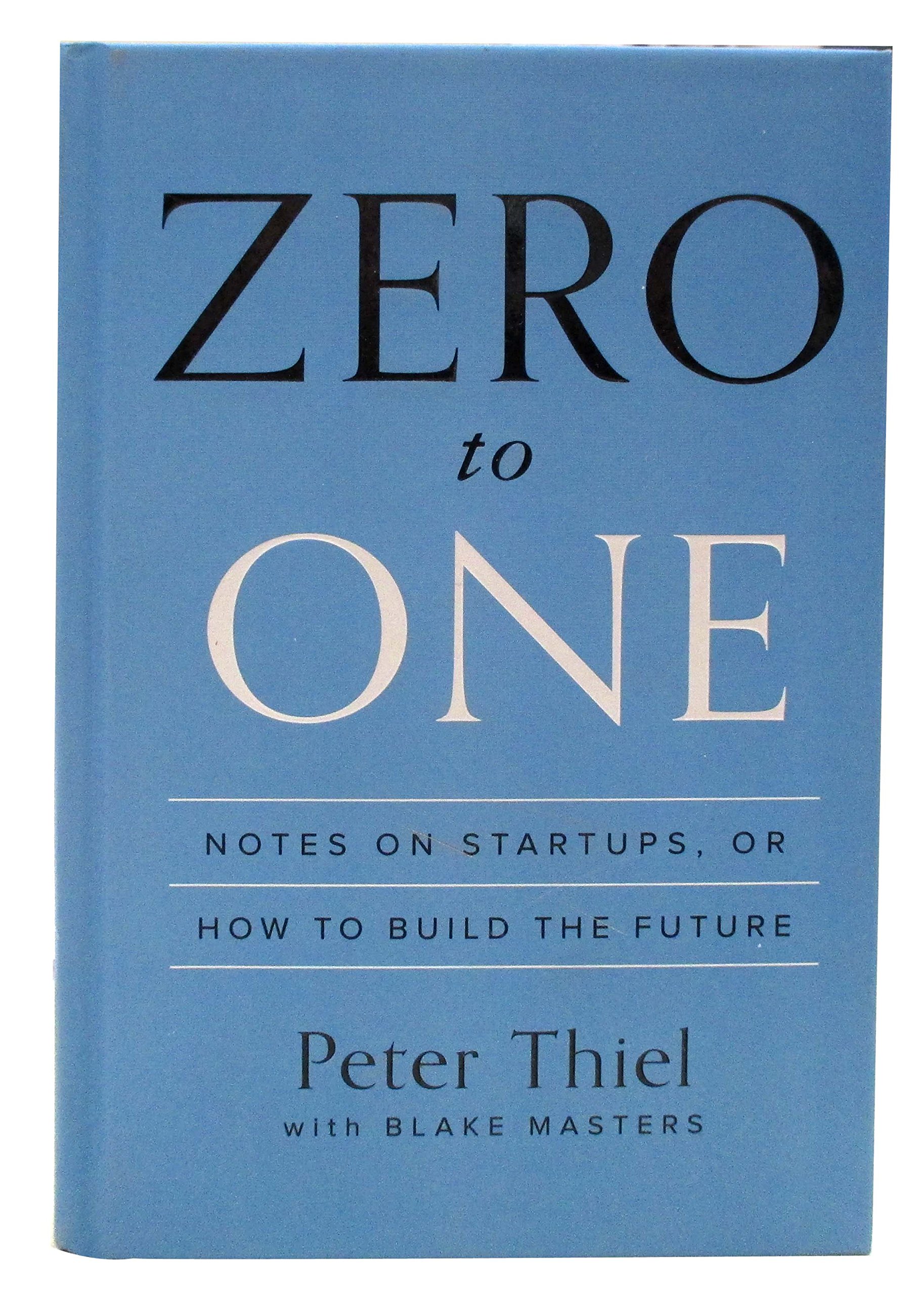
Book Review: Zero to One, by Peter Thiel


"And no one puts new wine into old wineskins; or else the new wine bursts the wineskins, the wine is spilled, and the wineskins are ruined. But new wine must be put into new wineskins."
Mark 2:22

Peter Thiel is one of the most successful American entrepreneurs of the past quarter century; Zero to One is his opus on success.

Success is a difficult concept to discuss, because every successful company is unique.  Thiel encourages would be entrepreneurs to seek "monopoly capitalism" where you create "the kind of company that's so good at what it does that no other firm can offer a close substitute" (24-5).  Unlike government enforced monopolies "[T]he dynamism of new monopolies explains why old monopolies don't strangle innovation...the history of progress is a history of better monopolies businesses replacing incumbents" (33).

Thiel condemns stale, conventional, thinking.  Unfortunately, there's far too much of it across American society, especially in American business.  As he explains: "[E]very moment in business happens only once.  The next Bill Gates will not build an operating system.  The next Larry Page or Sergey Brin won't make a search engine.  And the next Mark Zuckerberg won't create a social network.  If you are copying these guys, you aren't learning from them....The act of creation is singular, as is the moment of creation, and the result is something fresh and strange....Unless they invest in the difficult task of creating new things, American companies will fail in the future no matter how big their profits remain today" (Emphasis added) (1).

Great fortunes require contrarian thinking.  That's why you do something different in the first place.  Thiel identifies four cultural factors that inhibit it: incrementalism, risk aversion, complacency, and 'flatness' (97-8).  Air B'n'b, Netfilx, and Uber are recent examples of companies that embraced contrarian thinking. They figured out "[T]he best place to look for secrets is where no one is looking" (104).

Successful startups usually become 'mature' over the course of 5 to 10 years.  Thus, they require a type of long term thinking that is itself contrarian.  Thiel asks "[W]hy would professional [Venture Capitalists], of all people, fail to see the power law?  For one thing, it only becomes clear over time, and even technology investors too often live in the present" (87).  Short term thinking begets bankruptcy.

While Thiel's book isn't political, it did provide us with one major insight.  In the realm of politics, the Tea Party is the equivalent of a tech startup.  He explains "what a startup has to do: question received ideas and rethink business from scratch" (11).  If there's one trait that defines the Tea Party, it's a rejection of the bogus assumptions that have dominated the political process for far too long.  The proof is in the ending of the Ex-Im bank and the strongest Republican presidential field ever.

When one of the most successful entrepreneurs of the past quarter century speaks, you listen.  Peter Thiel details the pitfalls of conventional thinking and the opportunities available to those who reject it.  Zero to One: Notes on Startups, or How to Build the Future is required reading for anyone interested in changing the world.

Tuesday, June 16, 2015

Voice and Exit: Practical Radicalism


"And no one puts new wine into old wineskins; or else the new wine bursts the wineskins, the wine is spilled, and the wineskins are ruined. But new wine must be put into new wineskins."
Mark 2:22

Max Marty discusses innovation grounded in reality:


Highlights:
  • In the aggregate, policy matters a lot; individually, it doesn't.
  • Policy tends to move towards centralization.
    • Makes exiting more expensive.
  • Entrepreneurship is practical radicalism.
  • You need something outside the box enough to produce returns, but grounded enough to be feasible.
  • Begin from the existing framework.
  • Traditional public schools are day care.
  • Spot opportunities others won't spot.
  • Have a year's worth of savings and a thick skin.
  • Fortune favors the bold.
-----

Voice and Exit 2015 comes to Austin this Saturday; learn more and sign up here.

Wednesday, April 22, 2015

Entrepreneurship and the Texas Future


"Wisdom is the principal thing;
Therefore get wisdom.
And in all your getting, get understanding."
Proverbs 4:7

The Texas Public Policy Foundation opened its new building with a fantastic primer on entrepreneurship; this author especially appreciated the discussion of Biblical financial principles and the role they played in building the businesses.

Jim Lininger:


Highlights:
  • Insurance companies were pulling out of the medical industry in Texas.
    • "I was just offended."
  • "Then I became really passionate about school choice."
  • "Two years later we went public and I owned 98% of the stock."
  • "The schools today are as bad as they were 26 years ago."
Red McCombs:


Highlights:
  • "I was very much aware of the Depression."
  • "I always hustled for the use of time."
  • "I never was money hungry, but I never was opposed to carrying around a little either."
  • "I know how to win, I expect to win, and most of the time I do win."
  • Most great things in the world are driven by entrepreneurs.
  • Do what you're currently doing really well and you'll be noticed.


Highlights:

  • "When you say you're a Christian company, you've got to act like one."
  • "It took us seven years to earn our first million dollars, but the Bible says that which is grown slowly is grown successfully."
  • Never borrowed money until later.
  • Fracking is more like mining for oil and gas than drilling.
  • When you start something, have a plan.
  • Turn hard times into good times.
  • "The harder you work, the luckier you get."
  • "Only those who are doing things are making mistakes."
Q&A:


Highlights:

  • McCombs: "If you're going to be in the field, Texas is the best place to be."
  • The easy way out is never the best way.
  • Christians tend to be harder working and more reliable than most people.
  • If you follow tithing carefully, you'll be blessed.
  • Tithing is foundational.
  • Opportunity knocks by the week, the key is to pick the right one.
  • "The hardest time in the world to get a job is when you're out of a job."

Monday, April 13, 2015

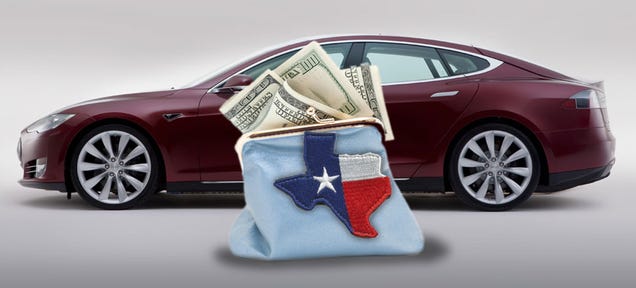
Texas House Tesla Hearing: Cronies Gotta Crony


"Dishonest scales are an abomination to the Lord,
But a just weight is His delight."
Proverbs 11:1

[Author's Note I: If you can stand the wretched economics, you can view the hearing here.]

[Author's Note II: We weren't originally planning on writing about this hearing; then they pissed us off.  Thus we didn't take notes.  This post is from memory.]

In a thinly disguised act of political backscratching, legacy Republicans tonight colluded with legacy auto-dealers to restrict options for Texas' automobile consumers.

HB 1653 would legalize (within numerous limits) direct to consumer automobile sales.  Commonly known as the Tesla bill, the proposed changes could help incubate the next generation of transportation solutions.  The Texas House Committee on Licencing and Administrative procedure, however, clearly telegraphed that they would rather protect middlemen from competition than allow entrepreneurs and consumers to flourish.

We knew this committee was bad news when we learned Charlie Geren was on it.  The committee chairman, Wayne Smith, got a 31 on Empower Texans scorecard last session (fifth lowest score of any Republican).  The vice chair is a Democrat from Joe Straus' home county.  The Democrat who harassed Attorney General Paxton at a restaurant two weeks ago is also on the committee.  At least Geren appeared to be sober.

The hearing opened with a Tesla representative explaining the company's current operation in Texas.  While they have the equivalent of showrooms here, they cannot conduct any part of a commercial transaction in this state.  This leads to situations where company representatives cannot discuss the price of a vehicle with customers.  This legal environment hurts Tesla's ability to serve its customers.  New local free-market think-tank, the R Street institute, joined Tesla in supporting the measure.

The opposition was a cross between Atlas Shrugged and the bar scene in Star Wars.  Predictably, Bill Hammond of the Texas Association of Business opposed the bill.  Hammond was joined by representatives from various trade associations and dealerships.  These legacy industrialists objected to an alleged "carve out" for Tesla that would be available to any competitor who chose to mimic Tesla's business model.  The opposition touted jobs they allegedly create while ignoring the deadweight loss to Texas' economy from inefficiently allocating capital.  We were particularly galled by one GM (yes, THAT GM) dealer who lectured about the rule of law and free market.  Big "charity" also got in on the act, with the Easter Seals testifying that the sky would collapse if auto dealers were forced to work for a living.

The most revealing moment of the hearing came when chairman Wayne Smith "disclosed" that one of the auto dealers testifying against the bill was a member of the same Rotary club as him. In another act of chutzpah masquerading as disclosure, Chairman Smith told the committee he was friends the spouse of another witness.  Not wanting to miss out on the action, representative Doug Miller (Straus Lieutenant) also bragged about his family's history running auto dealerships.

Barring Divine intervention, this bill is dead.  The makeup of the relevant committee guarantees it.  Nonetheless, the willingness of legacy Republicans to disregard the interests of consumers and entrepreneurs to protect legacy industrial interests remains a site to behold.

-----

Chairman Wayne Smith: (512) 463-0733

----

The Trib has more here.

Wednesday, October 22, 2014

TPPF Poverty/Prosperity Summit: Poverty and it's Causes (Luncheon Keynote)


"Open your mouth, judge righteously,
And plead the cause of the poor and needy."
Proverbs 31:9

 Stephen F. Austin Hotel -- TPPF's summit on Prosperity and Poverty continues; Father Robert Siricio is the Luncheon Keynote speaker:

Broadcast live streaming video on Ustream

Highlights:
  • Prosperity is the most important tool to alleviate poverty.
    • Charity good, prosperity more important.
    • The mundane, work-a-day, world of work.
  • Giving stuff away hurts local entrepreneurs
    • At a minimum, means test.
  • We have to respect the dignity of the poor and govt. welfare doesn't do that.
  • Move from aid to enterprise, poverty alleviation to wealth creation, dependency to productivity.
  • At some point, we're gonna hit a critical mass.

Tuesday, September 23, 2014

Deregulation begets Entrepreneurship in Texas


"And may the Lord make you increase and abound in love to one another and to all, just as we do to you,"
1 Thessalonians 3:12

We'd heard about the cottage food movement from some of the libertarian circles in which we hang out in Austin, but this is a fantastic write up:
Texas is enjoying a burst of entrepreneurship after enacting laws that let anyone turn a home kitchen into a business incubator. Under “cottage food” laws, people can sell food baked or cooked at home, like cookies, cakes and jams, if it’s deemed to have a very low chance of causing foodborne illnesses. Crucially, cottage food laws exempt home bakers from having to rent commercial kitchen space.

....

Under the new cottage food law, Padilla reopened Bellissimo Bakery, so she could carry on customizing children’s birthday cakes and selling her cupcakes, in flavors like Kona Kahlua or Death by Chocolate. Since 2011, her sales have increased by 25 percent every year, and she’s predicting an increase of up to 50 percent this year. “Not only do I love creating custom cakes and cupcakes, but I love that my cottage food bakery has the ability to financially make a difference,” she added. “I couldn’t be happier that this law is in effect.”

The Texas cottage food law does not extend to “potentially hazardous” foods, like dishes that have meat or shellfish, so consumers have had few problems with home bakers. After contacting both the Texas Department of State Health Services (DSHS) and environmental health departments for the 25 largest cities and counties in Texas, the Institute for Justice found no complaints regarding foodborne illnesses from a cottage food business.

An exact number of just how many of these operations have sprung up is rather hard to come by. Since Texas does not issue permits or licenses for cottage food production operations, the state does not have a precise way to track them. However, anyone who wants to operate a cottage food business is required to become a certified food handler. In Texas, there are at least two organizations that offer courses specifically designed for cottage food: Texas Food Safety Training and Texas A&M AgriLife Extension. Between the two of them, over 1,400 individuals have purchased and completed courses over the past year. Given that cottage food entrepreneurs can also comply with the state’s regulations by taking a general food handler course, the true number of home baking businesses may be even higher.

For bakers like Masters and Padilla, complying with the state’s regulations is relatively painless. Aspiring entrepreneurs need only pass a “food handler” course to learn common-sense information about food safety, hygiene and cross-contamination. Not only are these courses available online, home bakers can finish one in two hours and for as little as $8. Additionally, Texas requires cottage food businesses to properly package and label their products.

Under the first cottage food law (SB 81) passed back in 2011, Texans were limited to selling only baked goods, jams, jellies and dried herbs. But the state’s second cottage food law (HB 970), enacted September 1, 2013, redefined “cottage food” to make it more encompassing. Now Texans can legally create and sell candy, coated and uncoated nuts, fruit butters, cereal, dried fruits and vegetables, vinegar, pickles, mustard, roasted coffee and popcorn out of their homes. Moreover, HB 970 allows modern-day homesteaders to sell their treats at more locations, including at farmers’ markets, roadside stands and events like county fairs. Previously, the law only permitted selling out of the home directly to consumers.

With HB 970, Texas lawmakers also closed a loophole in the state’s first cottage food law. By enforcing zoning ordinances, local governments could essentially ban bakers from operating out of their homes. One woman in Frisco was told her home-based gluten-free bakery violated the town’s zoning laws. Now state law explicitly bans cities and counties from using zoning to stop cottage food businesses.

Monday, September 8, 2014

"The Passion Economy" is coming to Austin!!!


"And whatever you do, do it heartily, as to the Lord and not to men,"
Colossians 3:23

This is the coolest thing we've seen since BITCOIN:


Highlights:
  • Passion is the most overused, underutilized, word in the English language.
  • The education system is the least passion oriented system in history.
  • Following you passion entails sacrifice.
  • The sharing economy is the foundation.
  • What you will work for for nothing is your most valuable asset and you should be able to make money off of it.
Learn more here and here.

Friday, August 29, 2014

Movie Review: Atlas Shrugged, Part 3; "Who is John Galt?!?"


"Dishonest scales are an abomination to the Lord,
But a just weight is His delight."
Proverbs 11:1

Dallas, TX -- Earlier tonight, we were blessed to attend an advance screening of Atlas Shrugged, Part 3: Who is John Galt?!?  The film followed the arc of creeping, incremental statism to its logical conclusion.  Blackouts, deprivation, and tyranny was the result.

The movie won't please hardcore Randian purists.  Rand's book is 1000 pages long and editorial decisions had to be made.  For everyone else, the film is a worthy tribute to the power of freedom to promote human flourishing.

The film begins with the revelation of John Galt's origins in the takeover of the factory where he worked by new Marxist management.  Moving on, we see Dagny Taggart's time in the Colorado  valley where Galt and the leading entrepreneurs of his day have gone on 'strike' to the outside while creating a prosperous small community.  While she sympathizes with Galt's objectives, she eventually leaves to rescue her family's railroad, which is suffering from mismanagement under her brother Joe Straus James.

James is more interested in cronyism than productive economic activity.  During Dagny's absence, he supported a railroad centralization law.  While the law made him short term blood money, it proved disastrous for the railroad.  Dagny again fixes a problem created by James.  Eventually, James cannot handle the contrast between his crony failures and the successes of his counterparts who believe in freedom.

The climax of the film is John Galt's speech.  The first two-thirds of the film tease a speech by 'head of state' Harrison, where he's supposed to explain to the nation his 'solution' to the economic crisis: MORE STATISM!!!  In a manner reminiscent of Andrew Breitbart with Anthony Weiner, John Galt hacks into the broadcast feed of Harrison's speech and explains the ongoing producer strike.  To the horror of the crony government, Galt's speech becomes a rallying cry to the multitudes who don't support government policies.  Naturally, the government cracks down.

One MAJOR warning: the film contains an unnecessarily graphic sex scene between John Galt and Dagny Taggert.  While no body parts are exposed, they don't have to be.  This website STRONGLY encourages the produces to curtail this scene dramatically before the final cut of the film is released in two weeks.

Statism is a destructive, satanic philosophy that begets death and poverty.  Unfortunately, it also enriches a small crony elite, who go to extreme lengths to protect their blood money (hello Texas House).  Atlas Shrugged Part 3 follows this dangerous philosophy to its natural conclusion.  Blackouts, deprivation, and tyranny is the inevitable result.  Atlas Shrugged, Part 3 hits theaters September 12th.


Wednesday, July 23, 2014

How Decentralization will undermine Cartels


"Dishonest scales are an abomination to the Lord,
But a just weight is His delight."
Proverbs 11:1

Patrick Byrne follows up on his visit last week with Glenn Beck:


Highlights:

  • "Government shouldn't be involved in marriage anymore than it should be involved in first communion."
  • I get my value in marriage from God, not some stupid piece of paper from the government.
  • The point is to take decision making from the centralized institutions to households.

Saturday, July 19, 2014

Glenn Beck, Patrick Byrne, and Radical Innovation


Hear this, you who trample the needy
and do away with the poor of the land,
saying,

“When will the New Moon be over
that we may sell grain,
and the Sabbath be ended
that we may market wheat?”—
skimping on the measure,
boosting the price
and cheating with dishonest scales,
buying the poor with silver
and the needy for a pair of sandals,
selling even the sweepings with the wheat.
Amos 8:4-6

Overstock.com CEO Patrick Byrne stopped by Glenn's studio last week to discuss what's coming in the next decade:


Highlights:

  • "Wall St. doesn't like you at all."
    • In recent decades, Wall St. has gotten Washington "under it's thumb."
    • "That's where republics go to die."
  • The S.E.C. has no teeth and should be moved into the Department of Justice.
  • Orange jumpsuits are the only thing that scares Wall St.
  • "BITCOIN presents a real opportunity because you get to check out of the whole Federal Reserve system."
  • The next disruptive technology is a BITCOIN version of the stock market.

Thursday, July 10, 2014

Greg Abbott Preempts Barack Obama


"Consider the work of God;
For who can make straight what He has made crooked?"
Ecclesiastes 7:13

Greg Abbott preempted Obama's speech in Austin today; his remarks in full below:


Highlights:

  • "While he's here [Obama], hopefully he will learn why Texas is the best state in the nation to create Jobs."
  • Women are a huge part of Texas' economic success.
  • Texas is #1: "Not because of Barack Obama's policies, but in spite of them."
-----


Monday, June 30, 2014

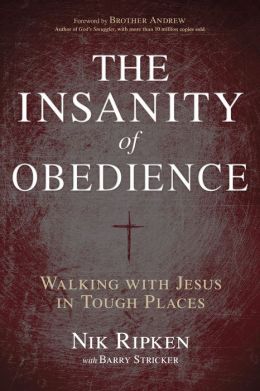
Book Review: The Insanity of Obedience, by Nik Ripken


"Blessed are those who are persecuted for righteousness’ sake,
For theirs is the kingdom of heaven."
Matthew 5:10

Do you, as a believer in Christ, want Jesus to return?!?  If so, it's in your interest to see the gospel preached to all the tribes of the earth.  The Insanity of Obedience uses modern examples to highlight Biblical truths in a way that will benefit believers both in persecution and relative freedom.

In his first book, The Insanity of God, Ripken recounted the stories of persecuted believers he met over two decades of ministry.  In the follow-up, Ripken reports his lessons learned for how Western believers can assist the body of Christ in difficult settings.  In both books, Ripken illustrates how Biblical patterns repeat themselves in modern settings.  As Ripken says: "[E]ven as we try to understand how it is that God brings new believers into His family, it is overwhelming to discover that God continues to do exactly what He has always done" (135).  His actions today are perfectly consistent with patterns seen originally in the Bible (especially the Book of Acts).

A lot of the problems faced in overseas mission work concerns money; this isn't surprising considering that Judas was the guy who complained about money.

One important lesson is for "[T]he goal is always to help local believers to be financially independent from outsiders" (147) (Italics in original).   Financial dependence on the west 'taints' local believers in the eyes of the majority.  Financial independence makes a local believer a much more credible witness for Christ.  The best strategy is to encourage entrepreneurship among the local community (248).  It's worth explicitly pointing out that, at no point in the New Testament, does anyone get a job from being saved.

Another important consideration is that: "[T]he more the faith community is defined by paid clergy, buildings, property, and denominational connections, the easier it is for persecutors to control the Church" (189).  This difference helps explain why the persecuted Church collapsed in the Soviet Union while it thrived in China.  Ripken points out "Western styled Churches with paid clergy and buildings are expensive.  No so with house Churches and bi-vocational leadership" (248).  This is a pattern we have noticed in the American Church.  The statistics about Church debt speak for themselves.

The hardest lesson Ripken teaches is that sometimes outsiders need to allow local believers to suffer for Christ.  Jesus addressed this topic in the quote from the Sermon on the Mount listed above.  Joseph and Paul both went to prison; miracles happened as a result.  Unfortunately, too often Western believers focus on extraction, when "evangelism is impossible when evangelists are extracted" (181).  With all due respect to Ted Cruz, maybe Pastor Saeed needs to stay in that prison.

One way to lessen persecution in a local environment is to focus on evangelizing older men.  When older men start coming to Jesus, it gives the other locals "permission" to do likewise.  This helps mission teams use local cultural mores to their advantage.

On page 113, Ripen writes: "Here's the amazing biblical insight.  One reaps as they sow.  If we sow a one-by-one witness we shall reap a one-by-one harvest.  If we invest our witness to families, families then have the opportunity to come to Jesus together" (italics in original).  We have nothing to add.

The Insanity of Obedience (like the Insanity of God before it) is an incredibly challenging book.  It WILL point out blind spots in your own faith.  The book is worthwhile for spiritual growth alone.  This nine paragraph review doesn't do it justice.  But if you're serious about wanting Jesus to return, you owe it to yourself to read this book.

Wednesday, June 11, 2014

Voice and Exit 2014 Coming to Austin!!!


"No one sews a piece of unshrunk cloth on an old garment; or else the new piece pulls away from the old, and the tear is made worse. And no one puts new wine into old wineskins; or else the new wine bursts the wineskins, the wine is spilled, and the wineskins are ruined. But new wine must be put into new wineskins.”
Mark 2:21-22

Our friend Max Borders is helping to organize the Voice and Exit conference in Austin in two weeks:
Voice & Exit is an event built around a simple idea: human flourishing. We want to explore, celebrate and implement ideas that enable people to find well being, life meaning and stronger connection to others. Sometimes flourishing starts with transformation: speaking up (Voice) or opting out of the status quo (Exit) and creating something new.In a world that is increasingly rife with new insights and innovations that enable flourishing, it can be hard to keep up. Voice & Exit helps navigate all these promising pathways and equips people with the tools for personal and social transformation.

Along with exploring ideas that better enable us to flourish as individuals–such as biohacking, health optimization, positive psychology and expanded consciousness–we explore ways to develop new social operating systems that support happy, healthy, and free societies.

Human flourishing ultimately depends on peaceful cooperation among individuals with overlapping values and complementary preferences. Together we can create a world that supports this vision.

The era of coercion is passing away.

The era of Cooperation and Connection has just begun.
The conference will focus on 12 dimensions of human flourishing and will feature sessions on topics such as:
  • Human Wellness/Optimization
  • Biohacking
  • Startup Culture
  • Decentralization
  • Hacking Willpower & Flow
  • Disrupting Education
There will also be super cool speakers like:
  • Cody Wilson -- 3D printing
  • Laura Bosworth -- 3D Bio Printing
  • T.K. Coleman -- Disrupting Education
  • Zacary Caseres -- Startup Cities
The whole event looks phenomenal; purchase tickets here.

Saturday, May 17, 2014

Radical Entrepreneurship: How to Bankrupt Crony Capitalists.


Do you see a man who excels in his work?
He will stand before kings;
He will not stand before unknown men.
Proverbs 22:29

Max Borders gave a fantastic talk at Liberty on the Rocks last night:


Highlights:

  • The need to decentralize power.
  • How do you dismantle power?!?
  • Crony relationships have happened since time immemorial.
  • Radical Democratization: Air B'n'B and Lyft are early examples.
  • Intrepreurship: Making change within an organization.