Showing posts with label Bill DeBlasio. Show all posts

Saturday, June 27, 2020

"You're going to be disappointed": An open letter to Peter Rex about Austin Texas


"Son of man, I have made you a watchman for the house of Israel; therefore hear a word from My mouth, and give them warning from Me:
Ezekiel 3:17


Dear Mr. Rex,

I read, with great interest, your Wall St. Journal op-ed "I’m Leaving Seattle for Texas So My Employees Can Be Free." You sound like me a decade ago. The only difference is that I moved to Austin from New York City, not Seattle.

Allow me to break some news you need to hear: If perceived differences in public policy are your primary reason for relocation to Austin, you're going to be disappointed. VERY disappointed. It's not 2006 anymore. Dazed and Confused was a quarter century ago.

I understand the urge to flee the Seattle city council. Unfortunately, Austin's city council is no better. Where Seattle has Kshama Sawant and her allies, Austin has Greg Casar. Austin today is Seattle five years ago.

And the trend lines are, unfortunately, identical.

Allow me to illustrate: In 2019, the Austin city council passed an ordinance to encourage camping by the homeless. Homelessness predictably skyrocketed. Sound familiar?!?

Unfortunately, homeless encampments are just the most tangible, visible, manifestation of misgovernance in Austin. They're hardly alone. Over the past decade, Austin has been a laboratory in how to NOT run a city.

Off the top of my head, within recent memory Austin has seen:
  • Multiple attempts at rewriting our land use development code that, while laudable in intent, have descended into lawless farce in practice.
  • A coordinated assault on the integrity of police chief Brian Manley, the only remotely competent official in the entire city government.
But at least they got their boondoggle soccer stadium...and they want to spend $10 Billion on some trains.

Again, you're from Seattle, does any of this sound familiar?!?

-------

But a ha, you say, Texas is a Republican state. And surely the Republicans at the state level will protect me from Democrats at the local level!!!  Right?!?

LOL.

The only difference between the Travis County Democrats and the Texas GOP is that the former will stab you in the front.

When you observe it up close, you will rapidly discover that the Texas legislature is a uniquely wretched collection of cowards, drunks, imbeciles, and perverts. Far too many Texas legislators are more interested in sexually harassing young women than in protecting entrepreneurs and taxpayers. To be fair, there are also plenty of run of the mill financial criminals. Carlos Uresti was all of the above.

The Texas to which you think you are moving is a figment of the collective imaginations of Fox News, Political consultants, and the self-serving politicians who hire them.

Speaking of self-serving politicians, Governor Greg Abbott is worthless and weak.  He has no core convictions beyond Dave Carney's tracking poll. There is a lot that could be said on this topic, although the fact that Greg Abbott put a lobbyist named Mike Toomey in charge of Texas' COVID policy encapsulates it all.

While Greg Abbott's poll driven COVID dithering brought his fecklessness into public view, it's hardly the only example. When Austin passed the afore mentioned homeless camping ordinance, Greg Abbott vowed swift and decisive action. Unfortunately, by Greg Abbott's standards, swift and decisive action means nothing more than running his mouth on Fox News. Greg Abbott could have called a special legislative session to override the Austin ordinance. But Greg Abbott didn't. And Greg Abbott won't. Because Greg Abbott is worthless and weak.

If you're looking for a visual manifestation of Greg Abbott's callow failure, check out the intersection of Burnet Rd. and U.S. Hwy 183...and understand that the state of Texas has 100% jurisdiction over this right of way:


In terms of grandiose rhetoric accompanied by meager results, Greg Abbott is the right-wing Bill DiBlasio.

The less said about Lt. Gov Dan Patrick and house speaker Dennis Bonnen, the better.

-------

There you have it.

That's not to say that everything is bad in Austin anno 2020. Longhorn baseball looks solid. One of these years, the football team is going to click.  Evil MoPac has his moments.

Then again, for one of the highlights to be a parody Twitter account that was founded to ridicule our leaders' inability to fix Austin's endemic traffic speaks volumes.

I wish I had better news to report. I really do. But that's reality. And that's what you're getting yourself into if you relocate here.

Consider yourself warned.

Sincerely, 
Adam Cahn
East Riverside
Austin, TX

P.S. Do feel free to forward this letter to Elon Musk and Joe Rogan.

Wednesday, March 14, 2018

#atxcouncil: Guy who attempted to BAN BBQ "BBQ Shames" Another City....


"The hypocrite with his mouth destroys his neighbor,
But through knowledge the righteous will be delivered."
Proverbs 11:9

Seriously?!?


Obviously, Brooklyn attempting to compete with Texas over BBQ was dumb.  That would be like Texas attempting to compete with Brooklyn over Pizza.  Just not happening.

But, allow us to suggest that Mayor Adler might not be the best messenger to deliver that message.

Austin City Council Agenda, April 2, 2015:


You can learn more about that particularly "glorious" incident in the Austin City Council's recent history here.

Bottom Line: We don't begrudge any Texas politician who wants to have fun at Brooklyn's expense over this BBQ kerfuffle...except the four members of the Austin City Council who co-sponsored the 'ban BBQ' resolution less than three years ago.

Tuesday, October 24, 2017

#TXLEGE: Meanwhile, Straus' Interim Charges are a spend/regulate-athon....


"He who is often rebuked, and hardens his neck,
Will suddenly be destroyed, and that without remedy."
Proverbs 29:1

Joe Straus also released interim charges yesterday:

  • Study the Texas olive and olive oil industry. Provide suggestions to improve, promote, and standardize the industry. Examine current policy related to the industry and examine factors such as research, marketing, labeling, standards, data collection, and the necessity of creating a commodity board or similar type of organization.
    • Note: We wonder which lobbyist is getting paid on this one; also, which major industry player will benefit from this act of protectionism.
  • Study the effects of declining migratory species, such as the monarch butterfly, as well as native and domesticated bee populations on agricultural production and its economic impact on the state. Identify possible causes of the population changes and monitor national trends. Make recommendations on how to improve and promote monarch butterfly and bee populations and habitats in the state.
    • Note: Because, clearly, Texas' state government is capable of "improv[ing] and promot[ing] monarch butterfly and bee populations.
  • Examine the use of federal funds by state agencies responding to the effects of Hurricane Harvey and identify opportunities to maximize the use of federal funds to reduce the impact of future natural disasters. Also, identify the need for state resources to respond to Harvey relief and recovery efforts, as well as opportunities for state investment in infrastructure projects that will reduce the impact of future natural disasters.
    • Note: Spend, spend, spend....all while hitting up the Feds for even more.
  •  Straus' also gives the Appropriations Committee roughly a dozen charges to review the operations of state agencies.  In theory, this could be either a useful exercise or a smokescreen for another spend-a-thon.  We'll let you guess which one we think will happen.
  • Evaluate whether counties have the necessary ordinance-making and enforcement authority to deal with flood risk in unincorporated rural and suburban areas of Texas. Additionally, examine whether counties have adequate resources and authority to ensure that new development in unincorporated areas is not susceptible to flooding.
    • Note: Regulate, regulate, regulate. 
  • Study the feasibility of establishing and mobilizing a volunteer contingency of private boat owners through the boat registration and license database administered by the Texas Parks and Wildlife Department to assist first responders in search and rescue efforts in natural disasters like Hurricane Harvey.
    • Note: If this already happened during Hurricane Harvey without the state government being involved, why does the state government need to get involved at this point?!?
  • Evaluate the ongoing and long-term workforce needs of the state’s businesses and industries. Determine whether state resources are adequate to address shortages and assist with closing existing or future gaps in workforce readiness and skills to ensure the continued economic security and success of the state.
    • Note: Spend, spend, spend.
  • Review Texas’ open meeting laws and related government decision-making policies. Determine if the formal processes prevented the efficient delivery of assistance during Hurricane Harvey. Make recommendations on maintaining the current standards of accountability without limiting government-provided aid during disaster events.
    • Note: That's a loophole you could drive a truck through.
  • Determine, to the extent possible, the scope of financial losses to 2- and 4-year institutions, including facilities, that resulted from Hurricane Harvey. Recommend possible state actions to mitigate any negative impact on institutions and ensure governance structures and parameters allow for effective responses. Review the educational opportunities offered to students displaced by Harvey throughout the state. Recommend any changes that could improve the process and what additional services might be needed for these displaced students.
    • Note: Spend, spend, spend.
  • Study aggressive driving in Texas and review the causes and current mitigation efforts. Make recommendations for legislative action.
    • Note: Regulate, regulate, regulate.
  • Study the use of appraisal processes under property insurance policies in Texas, including the effects of court decisions on the use of these processes and the impact of their use on insurers and policyholders.
    • Note: Regulate, regulate, regulate. 
  • Review local and state zoning and land use regulations. Determine if current rules provide an adequate balance of disaster preparedness and deference to private property rights.
    • Note: Regulate, regulate, regulate.
  • Examine Texas’ eminent domain statutes to ensure a balance between necessary infrastructure growth and fair compensation for landowners. Review available public information and data relating to the compensation provided to private property owners. Make recommendations to improve the accountability, as well as successful development, of the entities granted eminent domain authority.
    • Note: Nice property rights you've got there, be a shame if anything happened to them
  • In fairness to Straus, he gives the Licencing and Administrative procedures committee a couple of charges that might be helpful.
    • Note: Stopped clock, twice a day, and whatnot....
  • Examine the potential value, the necessary elements, and the implications of a broad-based information and awareness campaign regarding water issues in Texas. Consider input from water stakeholders, educators, and communications experts.
    • Note: Spend, spend, spend.
  • Evaluate the governance structures, including investment oversight, of the Employee Retirement System (ERS), Teacher Retirement System (TRS), Texas Municipal Retirement System, Texas County and District Retirement System, and Texas Emergency Services Retirement System. Identify best practices and make recommendations to strengthen oversight within the systems.
    • Note: In theory this could either be useful or a spend-a-thon; we'll let you guess which will happen.
  • Determine, to the extent possible, the scope of financial losses, including facilities, that resulted from Hurricane Harvey. Recommend possible state actions, such as changes to student counts or property valuation, to mitigate any negative impact on districts and ensure governance structures and parameters allow for effective responses.
    • Note: Spend, spend, spend.
  • Review current state mechanisms for identifying and rewarding educators through state-level strategies. Examine how providing additional funding to enhance compensation in districts facing a shortage of experienced, highly rated teachers would affect retention and teacher quality, in addition to whether it would encourage teachers to provide additional services through extracurricular activities, tutoring, and mentoring.
    • Note: Didn't the Governor propose doing this during the special session?!?
  •  Examine programs in public schools that have proven results meeting the needs of and improving student achievement for students with disabilities, with an emphasis on programs specializing in autism, dysgraphia, and dyslexia. Recommend ways to support and scale innovative programs for these students, including providing supplemental services, or incentivizing public-private partnerships or inter district and charter school collaborations. Monitor the implementation and funding for the pilot programs authorized in H.B. 21 (85R) and review the Texas Education Agency's compliance with S.B. 160 (85R), which prohibits special education student caps.
    • Note: Spend, spend, spend.
  • Review the charter school system in Texas. Determine if changes are needed in the granting, renewal, or revocation of charter schools, including the timeline for expansions and notification of expansions to surrounding districts. Review the educational outcomes of students in charter schools compared to those in traditional schools, and to what extent schools participate in the alternative accountability system. Monitor the implementation of facilities funding for charter schools. Consider differences in state funding for charter schools compared to their surrounding districts and the impact on the state budget. Consider admissions policies for charters, including 33 appropriate data collection to assess demand for additional charter enrollment, compliance with access by students with disabilities and the effect of exclusions of students with criminal or disciplinary histories. Consider differences in charter and district contributions to the Teacher Retirement System on behalf of their employees and make appropriate recommendations to support the retirement benefits of all public school teachers.
  • Study treatment of traumatic brain injury, Alzheimer's, and dementia, and recommend opportunities for advancing treatment and cures.
    • Note: Spend, spend, spend. 
  • Study and make recommendations to improve services available for identifying and treating children with mental illness, including the application of trauma- and grief-informed practices. Identify strategies to assist in understanding the impact and recognizing the signs of trauma in children and providing school-based or community-based mental health services to children who need them. Analyze the role of the Texas Education Agency and of the regional Education Service Centers regarding mental health. In addition, review programs that treat early psychosis among youth and young adults.
    • Note: Parental rights be damned.  
  • Study the efficacy of existing transportation finance mechanisms from state, regional, and local perspectives. Identify opportunities to improve existing transportation finance mechanisms and investigate the feasibility of developing new ones.
    • Note: Spend, spend, spend. 
  • Monitor and evaluate the need for affordable housing in urban and rural areas across the State of Texas. Examine whether existing housing programs are adequately addressing the needs for affordable housing. Identify prospective and innovative ideas and solutions to address affordable housing needs in Texas.
    • Note: Subsidize, subsidize, subsidize.
  • Examine local government oversight of abandoned and substandard buildings, including buildings of historical significance. Identify ways to best address these issues in an efficient and effective manner.
    • Note: Regulate, regulate, regulate.
Read the full list of Interim Charges here.

Tuesday, April 19, 2016

Cruz Radio Ad DISEMBOWELS DeBlasio....


saying, “Let us alone! What have we to do with You, Jesus of Nazareth? Did You come to destroy us? I know who You are—the Holy One of God!”
Luke 4:34

DADGUM:


Highlights:

  • DeBlasio's socialist policies are tearing this city apart.
  • Murder's up nearly 10%; he treats cops like criminals and criminals like freedom fighters.
  • Now he's meddling in the Republican primary, campaigning against Cruz, because when Cruz is President, DeBlasio's done.

Wednesday, August 13, 2014

Urban Affordability: How "Progressive" governance Kneecaps middle class families


"Dishonest scales are an abomination to the Lord,
But a just weight is His delight."
Proverbs 11:1

3 fantastic articles on how big government at the local level ALWAYS begets higher cost of living and fewer jobs at lower pay.

First up is City Journal on the cautionary tale that is NYC:
Throughout his speech, de Blasio said little about what he thought was causing the city to get so unaffordable for so many. If he’d been honest with himself, though, he would have to see the very government that he leads—and the expansion of which he enthusiastically supports—as a major contributor to the economic difficulties of the city’s non-wealthy, especially middle-class families. From its arcane regulatory regime to the nosebleed taxes and fees it imposes on firms and individuals—usually amplifying similar measures radiating out from the state government in Albany—New York City government drives up the cost of living and working in the city dramatically, making it harder for ordinary New Yorkers to get ahead. Unfortunately, the mayor’s policy agenda—demanding that businesses grant employees paid sick leave and compelling real-estate developers “to build affordable homes for everyday people,” among other steps—will only make the problem worse.

[Author's Note: Emphasis added]

....

A recent New York Times story, summing up research on urban income differences, noted that income inequality “is closely tied with the availability of affordable housing.” Places where housing becomes very expensive, the report observed, tend to hemorrhage middle-class residents and instead become communities made up primarily of the rich, who can afford stratospheric housing prices, and the poor, who can get government housing subsidies. And New York, according to information from real-estate website Trulia that the Times cited, has the highest housing prices, relative to incomes, of any American city except San Francisco. In New York, the typical middle-class family can afford only about a quarter of available homes, the data suggest.

....

Yet de Blasio neglected to mention a far more significant reason that housing is so pricey in New York: it’s incredibly expensive to build in the city. Perhaps the most comprehensive examination of New York construction costs is a 2005 study by three policy experts from the New York City School of Law, released under the auspices of New York University’s Furman Center for Real Estate and Urban Policy and the Robert F. Wagner Graduate School of Public Service. The report found that the price tag for building a 15-story, multiunit apartment building in New York had become the highest of any city in America (San Francisco was second).

....

Needless to say, the expense pushes up rental rates in the city’s unregulated apartments. A 2010 study by the Association for Neighborhood and Housing Development estimated that covering the cost of financing, building, and operating a new apartment building in New York City, including taxes, required a minimum rent for its units of $2,100 per month. To live comfortably with such rent, a family would need an income of at least $86,000. Further, developers become understandably unwilling to construct apartment buildings where they can’t be assured of such rent premiums. The high construction costs result not only in inflated rents in new buildings, therefore, but in an overall shortage of housing, which drives up the price of already-constructed unregulated units.

And it’s New York’s tentacular state and local government that helps make it so wildly expensive to build. The NYU study found a host of government policies that drive construction prices higher. For starters, city agencies responsible for overseeing and regulating building were often openly hostile to new construction, the study discovered. “The Buildings Department is still one of the major drivers of the high cost of housing in New York City, rather than an agency dedicated to reducing expense and facilitating development,” the report observed. Even experienced builders, the study found, now typically employed well-paid “expediters” to move their projects through the city’s foot-dragging approval process, adding an average cost of about $200,000 per building.

Taxes and fees tied specifically to development—many of them rare in other cities—are another factor in Gotham’s sky-high building costs. For example, New York levies a transfer tax on land when a developer buys a plot, and then a mortgage-recording tax when a builder borrows to finance his project. And the builder faces significant sales taxes on construction materials, too. For a hypothetical New York apartment building, going up on a plot of land bought for, say, $5 million, real-estate, mortgage, and sales taxes would add $1.6 million to the development price tag.

New York’s local and state elected officials also write laws and codes that curry favor with various special interests with a financial stake in development, raising prices higher still. Litigation-friendly New York State makes it easy to sue builders and developers, for instance, which benefits construction-worker unions and trial lawyers, two powerful Albany lobbies, but makes insurance on the construction of an apartment building as much as 8 percent to 10 percent of total costs—twice the national average. The Scaffold Law may be the most striking example of this kind of legislation. Unique in the country, it mandates that a developer or contractor is completely liable if an employee gets injured on a job site, even if worker negligence played a role. Even workers found to be drunk on the job have won big judgments.

Another costly government barrier to building is the city’s excessive fondness for historic preservation. Initiated in the mid-1960s as a way of protecting truly exceptional structures—a fallout from the unfortunate demolition of the original Penn Station—the city’s landmarking process has morphed over time into a way for local activists and progressive politicians to stymie development of any new construction in neighborhoods often all but devoid of historic value. Nowadays, notes Harvard economist and City Journal contributing editor Edward Glaeser, nearly 16 percent of buildable land in Manhattan resides in historic-preservation districts, and about half of it is largely off-limits to development. (See “Preservation Follies,” Spring 2010.) In a city desperately needing housing construction, the preservation districts lost an average of 46 units of housing per tract during the 1990s, according to Glaeser’s research. Not surprisingly, the cost of housing in these districts has risen substantially faster than in other areas of the city.

The authors of the NYU study calculate that easing or eliminating the impediments that they identified could reduce housing construction expenses by 19 percent to 25 percent—a massive savings. Further, they add, these figures “likely underestimate the full impact of the recommendations because they do not take into account the supply effects of the proposals to make additional land available for residential use.” If enacted, the changes could cause rents to fall by as much as 26 percent, the authors projected.

....

“My name is Matiur,” a landlord who owns a rent-regulated building with six apartments in Queens testified to the rent board last year. “I moved to the United States from Bangladesh 36 years ago and have owned my building since 1997. Unfortunately, low rents [including one apartment that rents for just $280 a month] make it impossible for me to maintain my building.” Landlords worry about the city’s rising taxes on multiunit residences—increases that outpace rents. Since 2003, property-tax collections in the city have soared from $9.9 billion to $19.8 billion, thanks to rising assessments and a major tax increase engineered by the Bloomberg administration. As landlord Michael Vinocur said at a rent hearing last year, “My taxes are 80 percent higher now than five years ago, and my rent revenues have gone up less than 20 percent.”

....

New York puts additional pressure on residents and businesses through its extraordinarily high taxes, which ripple throughout the economy and raise prices for everyone, “everyday people” included.

....

New York imposes other strains on non-wealthy residents in the form of additional heavy business taxes and fees and intrusive business regulations. These measures curb job growth—above all, in middle-income occupations—and make it tough for new firms in the city to survive, let alone flourish and provide their owners with an entrepreneurial route to the middle class. The IBO study found that New York levies business taxes at nearly double the average found in other big cities—$1.06 per $100 in taxable income, compared with 55 cents per $100.

....

Companies remain willing to keep their highest-paid executives in New York because those workers thrive in a global business capital, and low-income jobs for unskilled workers follow because the city still needs service workers—those employed by restaurants, retailers, and hotels—to provide basic amenities. But companies derive little payoff from keeping middle-income jobs in pricey New York when technology allows them to situate these positions in less expensive locales....Average pay in Manhattan for a financial-services job is now $246,000 annually; in New Jersey, the securities industry is more of an upper-middle-income business, with average pay at $97,600 annually.

It’s also incredibly cumbersome to start a business in New York City. A recent study by the finance site WalletHub.com ranked New York a discouraging 126th out of America’s 150 largest cities in the ease of launching a firm. A recent World Bank report noted that a would-be entrepreneur needs to obtain six permits, on average, to start a new venture in the United States (compared with just one in business-friendly New Zealand). But according to NYC Business Express, he’d need ten—six local and four from the state—to open, say, a simple office-supply business in the city. A study by the Kauffman Foundation and Thumbtack.com gave New York City a D for welcoming entrepreneurs.

All these impositions and requirements snuff out growth and opportunity. The NYC Jobs Blueprint study released by the Partnership for New York City last September estimated that it costs 50 percent more to build a business in Gotham than in the U.S. in general. One consequence, the study pointed out, is that New York businesses aren’t “scaling up”—that is, they’re not growing larger at an encouraging rate. Between 2003 and 2010, New York City saw no rise in the number of firms with 50 or more employees. Another worrisome sign: the city experienced a net loss during that time span of so-called tradable companies—firms in industries with the capacity to do business outside the five boroughs, and hence possessing the largest growth potential. “Because companies in a high-growth mode need all available resources to invest in people, New York is less attractive as a job expansion location than lower cost alternatives,” the study observed.

....

Putting still another strain on ordinary citizens, New York’s government pushes up the prices at establishments that do business directly with consumers, such as retailers and restaurants. For decades, the city’s politicians have tended to meddle in these industries for their own political aims, often keeping out disfavored firms and squelching competition....A 2009 study by the Bloomberg administration estimated that New York needed 100 more supermarkets to serve its residents adequately and was losing $1 billion in sales a year as shoppers left the city to buy food.

New York’s political class has similarly thwarted the efforts of America’s largest retailer, Wal-Mart, to open a branch in the city. Elected officials, many backed by labor organizations, have justified denying permits to the firm by charging that it exploits working people and ruins neighborhood prosperity. “Wal-Mart has blazed a path of economic and social destruction in towns throughout the U.S,” then-congressman Anthony Weiner told the New York Times in 2005. New Yorkers, however, think far more highly of the retailer. In 2012, the company says, basing its finding on credit-card receipts, city residents spent a staggering $215 million at its New York metropolitan area stores outside the city. And surveys show that New Yorkers overwhelmingly want the stores, with their low prices and broad selection.

The higher prices that inevitably result from these restrictions on commerce are a substantial burden to ordinary New Yorkers, who can’t regularly leave to shop in the suburbs.

....

All these factors—the expensive housing, fat tax bills, and high prices—have a direct and powerful effect on people’s daily lives. In a 2008 City Journal article, Glaeser calculated that, after including the costs of housing, taxes, and transportation, the average Houston family wound up with 50 percent more income to spend than the average New York family. The difference in real dollars: about $32,000 in spendable money for the typical Houston family, compared with just $21,000 for the New York family. (See “Houston, New York Has a Problem,” Summer 2008.) In a similar study of median incomes adjusted for cost of living in 50 metro areas, City Journal contributing editor Joel Kotkin and the Praxis Strategy Group’s Mark Schill determined that Houston workers enjoyed the nation’s highest effective pay: the annual average Houston salary of $67,279 was worth $75,256 when adjusted for the city’s lower-than-average cost of living. By contrast, in New York, the average annual salary of a worker, $77,640 on an unadjusted basis, shrank to $50,169 when corrected for the city’s high costs—above all, housing and taxes (see Figure 4). That left New York a poor 41st among metro areas in average annual effective pay.
 Next we have Max Borders:
Some people think cool cities are just expensive. And advocates of smart growth think the cool draws people and the growth has to be “managed.” Those who live there are happy to tolerate the planners for all sorts of reasons, but signaling one’s ideological bona fides is surely high among them. There is also the (generally unstated) desire to curb the growth—that is, to keep out the newbies before they ruin everything. Your favorite dive bar could become a chain restaurant, god forbid. And many well-heeled urbanites will go without cars and cram themselves into all manner of tiny dwellings to indulge environmental self-congratulation.

Smart growth thus becomes a catch-all: a cluster concept for socially engineering your way to bourgeois bohemia and treating everything in town as the property of an enlightened elite (which every self-respecting progressive goes along with lest she be considered unenlightened, or worse, not a member of said elite).

If they’re being honest with themselves, however, denizens of such places have to admit there is not only a growing gap between rich and poor in these towns, but a disappearing middle class. Much of this gap in San Francisco, for example, comes from the fact that some of the largest companies in the world are headquartered there, even among folks who self-identify as progressives. That’s a lot of rich people.

....

U cities

I shamelessly borrow the term “U city” from entrepreneur Gary Hoover, who is used to doing business in developing countries where a lot of the major cities are U cities. Here’s the idea: When you have a strong middle class, the population—when mapped on a curve—looks more or less like an inverted U (X is the number of people, Y is the level of income.) But the inverted U can get flipped to a regular U when, for example, the middle class starts to leave, the rich come and stay, and the poor are trapped by incentives. U cities predominate in the third world, primarily due to rampant cronyism—which limits possibilities for a middle class to emerge. In the United States cronyism is a factor, too. But so also are urban planning and growth management policies.

Smart growth

To understand how wealth disparities worsen in cities like these, we have to look at clusters of policies that go under the name "smart growth." They aren’t the only policies that create U cities, but these three areas drive the U city pattern, so they’re a good place to start the conversation:

  • strict zoning regulations and building codes 
  • rent control and low-income housing subsidies 
  • rail investments preferred over roads

These three points alone suffice to set any city on the path to being a U city. (Austin, where I live, is trending that way.)

[A]dd in strict zoning regulations and building codes. In a relatively free housing market, the cost of creating new housing supply is generally far lower. So, for example, city planners don’t have to approve a townhome or building for mixed use, declare it residential only, or whatever—if it can be built at all. Not so in areas with byzantine building codes and zoning. In these areas the stock of housing is limited and restricted to certain areas of the city. Of course, this makes housing far more expensive. Now, that’s okay for wealthier people. Indeed, they’re content with paying more. Once they’re there, they really like the idea that not so many more people are moving into the area. If you’re a middle-class earner, this makes life considerably more difficult as housing is far less affordable.

....

By now the progressive town fathers have likely picked up on the fact that this is happening. So they expand or maintain policies like rent control and subsidized housing for the poor. Poor people who’ve been there for a while cling to their rent-controlled or subsidized housing—as is reasonable to do given the incentives (but which sadly represents another “poverty trap” for the poor.) Of course, basic economics tells us that rent control exacerbates the problems of a limited housing supply, as developers have far fewer incentives to build properties and tenants have great incentives to stay put. The rental market is therefore less dynamic and the price controls distort the housing market even more—further limiting the availability of affordable housing. Non-rental properties may get built. But as we say, their supply is artificially limited, too, so these are reserved for tech execs.

....

For conscientious social signalers in progressive cities, the only thing that’s going to pull them out of their Priuses is rail transit. The trouble is, light rail is really, really (really) expensive. In fact, on average, rail transit is four times more expensive than driving per passenger mile, according to Cato transportation analyst Randall O’Toole.

Not only is light rail profoundly wasteful in cost-efficiency terms, it means resources that could have gone to increasing road capacity or building bus networks are lost (not that buses benefit town cronies). People who idealize walkable cities are simply kidding themselves, as most people drive their cars anyway and grumble about the awful commuting times—which new rail line thruways end up making worse.

Now, let’s not forget that rail is an expensive proposition. To give you an example of just how expensive it is, consider that the average U.S. light rail rider only pays in his/her fare about 10 percent of the total cost of the ride. Boosters rarely bring up costs, and cost overruns always plague such projects once voters take the bait. The people who do use rail don’t see or feel the budgetary nightmares their (in most cases, mostly empty) train cars create.

That’s because a lot of the costs get shifted onto people who will never see or take light rail in their lives—people who live in cities without rail, or people who live in rural areas. So much of the tax burden for these rolling pyramids falls disproportionately on the poor and middle class. After all, funding for such projects—even if they benefit rich, urban progressives—comes from sales and property taxes (which are not progressive taxes).

....

Now what about inverted-U cities? We could call these “fried-egg” cities, but that’s not terribly sexy. I prefer “galaxy cities” for obvious reasons. The idea behind galaxy cities is that, all things equal, you’ll not only get a fat bell of a middle class on the graph, but you’ll also get a galactic distribution of housing options if you look from above. Some call this sprawl, because more affordable housing extends outward from a denser core, phasing out at the periphery after the suburbs and exurbs. Not-so-obvious reasons for the galaxy metaphor include dynamics that have been unpacked in the work of the Santa Fe Institute (SFI), a group that studies all sorts of phenomena in complex systems.

....

Future cities

Galaxy cities of the future will be far smarter than any city that adopts smart growth, as galaxy cities will do the following:

Eliminate unreasonable zoning restrictions and costly building codes. Some believe that cities without zoning laws and building codes will have collapsing structures and factories moving in next to residential housing. It would take us too far afield to explain why free prices and a robust system of common law would help settle conflicts that might arise from the absence of zoning and municipal codes. Suffice it to say that with prices undistorted, property rights well established, and municipal courts using tort principles to settle disputes, cities will continue to find equilibria that will make galaxy cities far more hospitable to people across the income spectrum (especially the middle class). And if, god forbid, poor or middle-class people have to live in the same zone as a warehouse, at least they’ll be able to afford it.

Get rid of rent control and, instead, voucherize housing for the poor. Assuming full privatization of housing is not politically viable, then cities should simply get rid of government housing projects and rent control. Instead, the municipal government can offer housing vouchers for the poor based on an income scale specific to that city’s cost of living.

Think of any given citizen as needing to go to any given point in the city. Instead of going from point A to point G—with only points B, C, D, E, F in between—galaxy cities will build travel networks that assume people want to get from point A to point n (read: “any point among millions”) as quickly, efficiently, and safely as possible. To accommodate galaxy-city travelers, they will create distributed networks and vascular systems. And until there are flying cars, these systems will be built around cars. There are a number of great ways to build car-centric systems:
  • Remove regulations against ride-sharing technologies, such as Uber and Lyft; 
  • Prepare for the coming age of driverless cars (We have the technology!); 
  • Convert as many intersections as possible to traffic circles; 
  • Optimize traffic lights using computer modeling; 
  • Use congestion pricing and hot lanes, where possible; 
  • Liberalize and privatize all bus and van services; 
  • End municipal transport and taxi cartels; 
  • Let resources follow cars rather than hoping cars (or people) follow resources; 
  • Respect the urban ecosystem as it is rather than as you would hope for it to be.
The extent to which planning for transportation is a market-based phenomenon is the extent to which cities will become more convenient, cost-effective, and dynamic for everyone.
 Finally, Ross Kecseg of Empower Texans details the situation closer to home:
Texas still has the second highest, per person local debt in the United States. And although it appears that the growth over the last twelve months has slowed when compared to past years, the long-term trajectory is alarming.

So which local governments are borrowing on your behalf?

Cities and school districts are the largest taxing, borrowing and spending entities, making up two-thirds of the overall debt burden.

....

Although necessary in some cases, debt financing is an extremely expensive way to pay for government services. Although Texans have received $200 billion in tangible assets for local government entities, they will pay an additional $128 billion in interest expense alone; a tangible cost without a tangible benefit.

In other words, taxpayers will pay $328 billion for only $200 billion in actual benefits.
 Each of the articles is worth reading in full; see here, and here, and here.

Wednesday, April 23, 2014

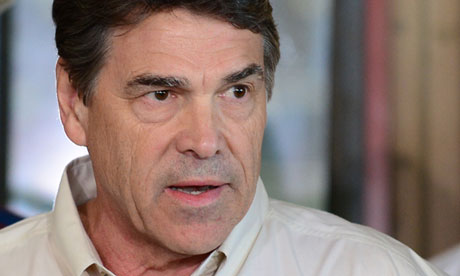
Rick Perry Tells Cuomo and DiBlasio to Pound Sand


"He trusted in the Lord God of Israel, so that after him was none like him among all the kings of Judah, nor who were before him."
2 Kings 18:5

Following a suggestion we made late last year, Governor Perry is in NYC this week; Breitbart Texas reports:
New York City will get a brief taste of Lone Star State economics, as Texas Governor Rick Perry travels there to speak to various business leaders. TexasOne is hosting a reception from April 22-24, focused around Texas' pro-business policies and their positive effects on companies.

A press release from Perry's office stated that the governor plans to tout "Texas' message of low taxes, smart regulations, and job creation" during his brief stay in New York City.

TexasOne aims to market Texas "nationally and internationally as a prime business destination."

Indeed, Texas has consistently been ranked as one of the nation's best place to start a business and find a job. Perry's release pointed to a recent CNBC survey, which polled over 700 CEOs, has ranked Texas as the best U.S. state in which to conduct business for nine consecutive years.

Breitbart Texas has reported extensively on Texas' booming economy, which continues to extend into numerous industries.

....

Meanwhile, New York is home to one of the least business-friendly environments. CNBC ranked the state as the 49th best state to conduct business in.

It is not surprising that the Big Apple is rapidly losing inhabitants to Texan cities. Breitbart Texas previously reported on new data released by the federal government which shows that people from America's biggest cities, like New York and L.A., are moving to Texas cities. Using the new data, Bloomberg Businessweek compiled a list of the top fastest-growing large metros. Four Texas cities made the top ten: Austin (which ranked number one), San Antonio, Houston, and Dallas. The bountiful job market and business-friendly environment have unquestionably been the driving forces behind the ever-increasing populations in Texan cities.
Perry is also airing this ad while he's in New York:


As someone born and raised in NYC, this topic hits home.  New Yorkers who want to keep their guns and their money have an option.  Move to Texas!!!

Tuesday, November 26, 2013

On January 2014: An Open Letter to Rick Perry


Dear Mr. Governor,

I'm writing to discuss your first economic development trip of 2014: You need to go to New York City.

On November 5, 2013, New York City elected an open communist.  He gets inaugurated on January 1st.  You need to show up on the second.

Bill DeBlasio will inspire major capital flight.  That capital will seek a haven where it can earn a decent rate of return.  Why not Texas?!?

Having grown up in New York, Mr. Governor, I know multiple small/medium entrepreneurs who are ready to jump ship.  They're already tired of the bullshit taxes and regulations, they're not interested in serving as cannon fodder for some Daniel Ortega wannabe.  They're looking to risk their capital and earn a decent rate of return; they only need an invitation.

You understand why hard working entrepreneurs deserve thanks, not derision; it's your favorite topic:


The contrast couldn't be more obvious:


The coming capital flight from New York City is a once in a generation opportunity for Texas.  Billions of dollars are going to flee Bill DeBlasio's utopian fantasies.  Invite them to Texas, starting January 2nd.

Sincerely,
Adam Cahn
Austin, TX (formerly of NYC)
November 26, 2013